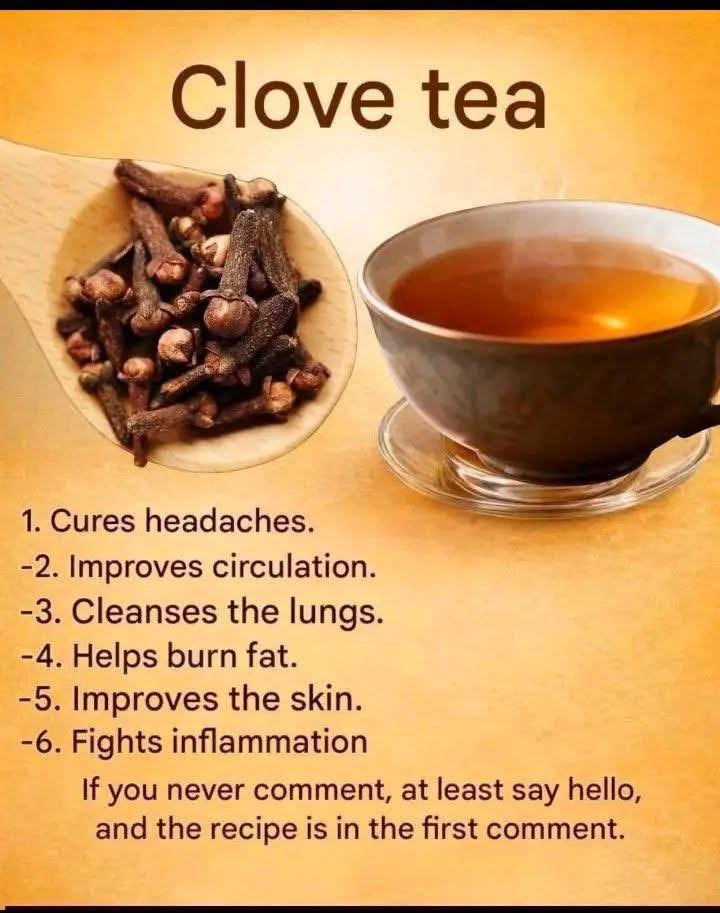
Clove tea is a traditional drink made by steeping whole cloves in hot water. Cloves are widely used as a culinary spice because of their distinctive aroma and warm flavor, but they have also attracted attention for their possible health effects.
Online posts often claim that clove tea can cure headaches, improve circulation, cleanse the lungs, burn body fat, improve the skin and eliminate inflammation. These claims can make a simple homemade drink sound like a treatment for several medical conditions. However, it is important to separate traditional uses and preliminary research from proven medical benefits.
Cloves contain several naturally occurring compounds, including eugenol, which has antioxidant and antimicrobial properties. This makes cloves an interesting ingredient to study, but it does not mean that drinking clove tea can cure diseases or replace medical treatment.
What Is Clove Tea
Clove tea is usually prepared by placing whole dried cloves in hot water and allowing them to steep. The resulting drink has a strong, spicy flavor and can be consumed plain or combined with ingredients such as cinnamon, ginger or lemon.
Unlike concentrated clove oil, clove tea contains a much lower concentration of the compounds found in cloves. This distinction is important because natural does not automatically mean risk-free, and concentrated preparations can behave very differently from ordinary food quantities.
Cloves have traditionally been used as a spice and in various traditional health practices. Modern research has investigated compounds in cloves, particularly eugenol, but evidence for many of the health claims circulating online remains limited.
Can Clove Tea Help With Headaches
One of the claims frequently associated with clove tea is that it can relieve headaches.
Cloves contain aromatic compounds that may have biological effects, and their traditional use has included applications related to discomfort. However, there is not enough reliable clinical evidence to conclude that drinking clove tea is an established treatment for headaches.
Headaches can have many different causes, including dehydration, lack of sleep, stress, infections, medication effects, migraines and other medical conditions. Treating the underlying cause is more important than relying on a particular herbal drink.
If someone experiences frequent, severe or unusual headaches, they should discuss the symptoms with a healthcare professional rather than repeatedly treating them with home remedies.
Does Clove Tea Improve Circulation
Another popular claim is that clove tea improves blood circulation.
There is scientific interest in the biological effects of compounds found in cloves, but this should not be confused with evidence that a cup of clove tea can treat poor circulation.
Circulation problems can have many causes, including cardiovascular disease, diabetes, smoking, blood vessel disorders and other medical conditions. Symptoms such as persistent cold or painful feet, swelling, numbness or changes in skin color should not automatically be attributed to poor circulation that can be fixed with an herbal tea.
Maintaining regular physical activity, avoiding smoking, eating a balanced diet and managing conditions such as high blood pressure and diabetes are much more established ways of supporting cardiovascular health.
Does Clove Tea Cleanse the Lungs
The phrase “cleanses the lungs” is particularly common in social media health posts.
The lungs already have natural mechanisms that help remove particles and mucus from the respiratory system. Drinking clove tea does not literally wash toxins or accumulated substances out of the lungs.
Cloves may contain compounds with antioxidant and antimicrobial activity, but this does not establish clove tea as a lung detoxification treatment.
For lung health, avoiding cigarette smoke and other harmful airborne substances is far more important. People who smoke should consider evidence-based smoking cessation support. Persistent coughing, shortness of breath, chest pain or coughing up blood requires appropriate medical evaluation.
Can Clove Tea Burn Fat
Clove tea is also sometimes promoted as a natural fat-burning drink.
There is a major difference between a food containing compounds that are being studied in laboratories and a beverage that has been proven to cause meaningful fat loss in humans.
Drinking an unsweetened herbal tea can be a healthier alternative to sugary beverages because it may provide flavor without adding large amounts of calories. However, that does not mean the tea itself melts body fat.
Sustainable weight management generally depends on overall eating patterns, physical activity, sleep and other lifestyle factors. There is no need to rely on a single spice or drink as a weight-loss solution.
Cloves and Skin Health
Cloves contain antioxidant compounds, which is one reason they have attracted scientific interest.
Antioxidants are substances that can help protect cells from oxidative stress. However, the presence of antioxidants in a food does not automatically mean that consuming it will produce a noticeable cosmetic improvement in the skin.
Healthy skin is influenced by many factors, including genetics, age, sun exposure, nutrition, hydration and overall health.
A balanced diet containing fruits, vegetables, whole grains, protein sources and healthy fats provides a much broader range of nutrients than depending on one herbal drink.
People should also be careful about applying concentrated clove oil directly to the skin. Concentrated essential oils can cause irritation or other reactions, especially when used incorrectly.
Clove Tea and Inflammation
Cloves contain eugenol and other plant compounds that have been investigated for their biological effects, including antioxidant and anti-inflammatory activity.
Laboratory findings can be useful for identifying substances that deserve further research, but they do not automatically prove that a homemade cup of clove tea can treat inflammatory diseases.
Inflammation is also not a single disease. It is part of many different conditions, ranging from temporary responses to injuries to chronic diseases that require professional treatment.
Therefore, it is more accurate to say that cloves contain compounds of scientific interest rather than claiming that clove tea cures inflammation.
A Simple Way to Prepare Clove Tea
For people who enjoy the flavor, clove tea can be prepared as an ordinary food beverage.
A simple method is to place a small number of whole cloves in a cup of hot water and allow them to steep for several minutes. The cloves can then be removed before drinking.
There is no medically established recipe that makes clove tea capable of treating multiple diseases. Increasing the amount of cloves does not necessarily make the drink more beneficial and can increase exposure to active compounds.
It is also better to avoid turning a traditional beverage into a highly concentrated preparation.
Clove Tea Is Not the Same as Clove Oil
This distinction is extremely important.
Clove oil is a concentrated product containing high levels of compounds such as eugenol. It should not be treated as though it were equivalent to a mild clove infusion.
MedlinePlus warns that swallowing significant amounts of eugenol or clove oil can cause serious poisoning. Reported effects can include breathing problems, nervous system symptoms, vomiting and liver injury.
For this reason, people should never assume that because cloves are commonly used in cooking, concentrated clove oil is safe to swallow in large amounts.
Who Should Be Careful With Clove Products
People who take medications or have chronic medical conditions should be particularly cautious about concentrated herbal products.
The safety of herbal products can depend on the preparation, quantity and individual circumstances. The National Center for Complementary and Integrative Health notes that herbal products can interact with medicines and that there are important safety considerations when using complementary products.
Pregnant or breastfeeding individuals, children and people with significant medical conditions should ask a qualified healthcare professional before using concentrated herbal preparations.
Anyone taking regular medication should also avoid replacing prescribed treatment with clove tea.
Clove Tea and a Healthy Lifestyle
If you enjoy clove tea, it can be included as part of a balanced lifestyle. The important point is to think of it as a beverage rather than a miracle treatment.
A healthy routine can include:
- Eating a varied diet rich in vegetables and fruits
- Choosing whole grains and nutritious protein sources
- Drinking enough water
- Staying physically active
- Getting adequate sleep
- Avoiding tobacco products
- Limiting excessive alcohol consumption
- Managing stress
- Following medical advice for diagnosed conditions
These habits have a much stronger foundation in health research than claims that one particular drink can cure several unrelated diseases.
What the Science Really Says
The most responsible way to look at clove tea is to distinguish between what is biologically interesting and what has been demonstrated in people.
Cloves contain compounds such as eugenol that have antioxidant and other biological properties. Researchers continue to study these compounds.
However, evidence that a homemade clove tea can cure headaches, cleanse the lungs, burn fat, dramatically improve circulation or treat inflammatory diseases is not strong enough to make those claims as established medical facts.
NCCIH emphasizes that evidence for natural products needs to be evaluated carefully and that safety and effectiveness cannot simply be assumed because a product is natural.
Frequently Asked Questions
Is clove tea healthy?
Clove tea can be enjoyed as a flavorful herbal beverage. However, its potential benefits should not be exaggerated, and it should not be considered a treatment for serious medical conditions.
Can clove tea make you lose weight?
There is not enough evidence to claim that ordinary clove tea directly causes significant fat loss. Replacing sugary drinks with an unsweetened beverage may reduce calorie intake, but that is different from a specific fat-burning effect.
Does clove tea clean the lungs?
No reliable evidence shows that clove tea literally cleanses or detoxifies the lungs. Avoiding smoking and harmful pollutants is much more important for respiratory health.
Can clove tea cure headaches?
Clove tea should not be considered a proven treatment for headaches. Recurrent or severe headaches should be evaluated to determine their cause.
Is clove oil the same as clove tea?
No. Clove oil is much more concentrated than a typical tea infusion. Large amounts of eugenol or clove oil can be dangerous and may cause serious poisoning.
Can I drink clove tea every day?
Individual tolerance varies, and there is no universal medically established daily amount for using clove tea as a health treatment. If you plan to consume concentrated preparations regularly, especially while taking medication, speak with a healthcare professional first.
Final Thoughts
Clove tea can be a pleasant traditional beverage, and cloves contain interesting natural compounds that continue to be studied. But popular claims that this drink can cure headaches, dramatically improve circulation, cleanse the lungs, burn fat, transform the skin or eliminate inflammation go beyond what current evidence can establish.
The healthiest approach is to enjoy cloves as part of a varied diet rather than treating them as a replacement for medical care. For persistent symptoms or diagnosed conditions, evidence-based treatment and professional medical advice should remain the priority.
Health disclaimer: This article is for general educational purposes only and is not a substitute for professional medical advice, diagnosis or treatment. Do not stop prescribed medication or delay medical care because of information about herbal drinks or natural remedies.