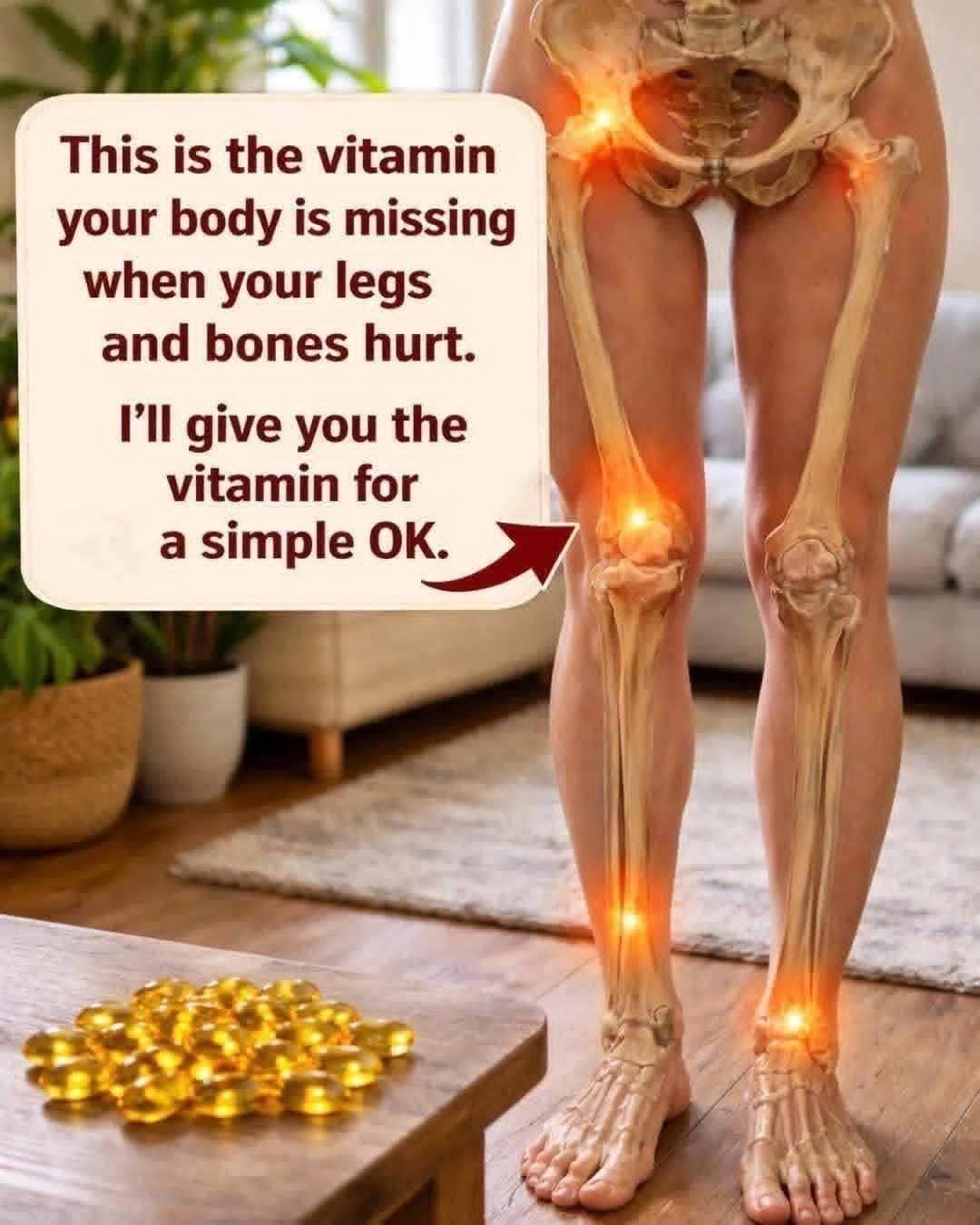
Vitamin D plays an important role in maintaining healthy bones and supporting normal muscle function. It helps the body absorb calcium, which is essential for maintaining bone strength.
Online posts sometimes suggest that leg or bone pain automatically means a person is deficient in vitamin D. This is not necessarily true. Bone or muscle discomfort can have many different causes, and vitamin D deficiency can only be confirmed appropriately through medical evaluation and, when necessary, blood testing.
What Is Vitamin D
Vitamin D is a fat-soluble vitamin that helps the body absorb calcium and phosphorus.
The body can produce vitamin D when skin is exposed to sunlight. It can also be obtained from certain foods and, when appropriate, supplements.
Vitamin D is particularly important for normal bone development and maintenance throughout life.
Vitamin D and Bone Health
Adequate vitamin D helps the body use calcium effectively.
When vitamin D levels are too low, calcium absorption can be reduced, which can negatively affect bone health over time.
Maintaining adequate vitamin D as part of a healthy lifestyle is therefore important for supporting normal bones.
However, taking extra vitamin D when it is not needed does not automatically make bones stronger.
Can Vitamin D Deficiency Cause Bone or Muscle Pain
Vitamin D deficiency can sometimes be associated with bone or muscle discomfort, weakness, or other symptoms.
However, pain in the legs, knees, hips, or other parts of the body does not automatically mean that you are deficient in vitamin D.
Joint problems, muscle strain, arthritis, injuries, nerve conditions, nutritional deficiencies, and other health conditions can cause similar symptoms.
If pain persists or becomes severe, it is important to determine the underlying cause rather than assuming it is a vitamin deficiency.
Foods That Contain Vitamin D
Vitamin D is naturally present in relatively few foods.
Sources can include:
- Fatty fish such as salmon, sardines, and trout
- Egg yolks
- Some mushrooms
- Foods fortified with vitamin D
- Fortified dairy or plant-based beverages
Food choices vary by country, so checking nutrition labels can help identify fortified products.
Sunlight and Vitamin D
The body can produce vitamin D through exposure to sunlight.
However, the amount produced varies depending on factors such as season, location, skin characteristics, age, clothing, and time spent outdoors.
Sun exposure should not be increased excessively in an attempt to obtain vitamin D because ultraviolet radiation can damage the skin.
A healthcare professional can advise whether dietary sources or supplementation may be appropriate.
Vitamin D Supplements
Vitamin D supplements can be useful for people who do not obtain enough vitamin D from normal sources or who have been advised to take them by a healthcare professional.
More is not always better.
Taking unnecessarily high doses of vitamin D over time can cause excessive calcium levels and other health problems.
For this reason, avoid treating unexplained leg or bone pain with high-dose vitamin D without appropriate medical advice.
Vitamin D and Muscle Function
Vitamin D contributes to normal muscle function.
Low vitamin D levels may be associated with muscle weakness in some people.
Nevertheless, muscle pain or weakness has many possible causes. A healthcare professional can help determine whether vitamin D is relevant to the symptoms.
Vitamin D and Older Adults
Maintaining good bone and muscle health becomes increasingly important with age.
Older adults may have a higher risk of vitamin D insufficiency for several reasons, including reduced vitamin D production in the skin and changes in dietary intake.
Regular physical activity, adequate nutrition, and appropriate medical care can all contribute to maintaining healthy bones and muscles.
Vitamin D Is Not a Painkiller
It is important to distinguish between correcting a deficiency and treating pain directly.
If someone has a vitamin D deficiency, correcting it may be important for overall health. However, vitamin D should not be considered a general painkiller or a universal treatment for knee, hip, leg, or back pain.
Persistent pain deserves an appropriate evaluation.
When to Speak With a Healthcare Professional
Consider speaking with a healthcare professional if you experience:
- Persistent bone or muscle pain
- Unexplained muscle weakness
- Frequent falls
- Difficulty walking
- Significant or worsening joint pain
- Pain after an injury
- Severe or sudden pain
- Symptoms that interfere with normal daily activities
A healthcare professional can consider the person’s symptoms, medical history, diet, medications, and other factors and determine whether testing is appropriate.
A Balanced Approach to Bone Health
Vitamin D is only one part of maintaining healthy bones.
Other important habits include eating a varied diet, getting adequate calcium from appropriate food sources, staying physically active, maintaining muscle strength, avoiding smoking, and following medical advice when necessary.
Weight-bearing activities and resistance exercises can also support bone and muscle health when they are appropriate for the individual.
Frequently Asked Questions
Is Leg Pain Always Caused by Vitamin D Deficiency?
No. Leg pain has many possible causes. Vitamin D deficiency is only one possibility.
Should Everyone Take Vitamin D Supplements?
Not necessarily. Supplement needs vary between individuals. A healthcare professional can advise whether supplementation is appropriate.
Can Vitamin D Make Bones Stronger?
Adequate vitamin D supports normal calcium absorption and bone health. However, taking excessive amounts does not provide unlimited benefits.
Can Vitamin D Cure Knee Pain?
Vitamin D should not be considered a general treatment for knee pain. Knee discomfort can have many different causes.
Can I Get Vitamin D From Food?
Yes. Fatty fish, egg yolks, some mushrooms, and fortified foods can provide vitamin D.
Is Sunlight Enough?
Sunlight can help the body produce vitamin D, but the amount varies considerably between individuals and circumstances. Excessive ultraviolet exposure should be avoided.
Final Thoughts
Vitamin D is an important nutrient for maintaining normal bone and muscle health. Adequate vitamin D helps the body absorb calcium and supports healthy bones.
However, the claim that all leg or bone pain means you are missing vitamin D is too simplistic. Pain can have many different causes, and a healthcare professional can help determine what may be responsible.
The safest approach is to maintain a balanced diet, stay physically active, obtain appropriate vitamin D from food, sunlight, or supplements when needed, and seek professional advice when symptoms persist.