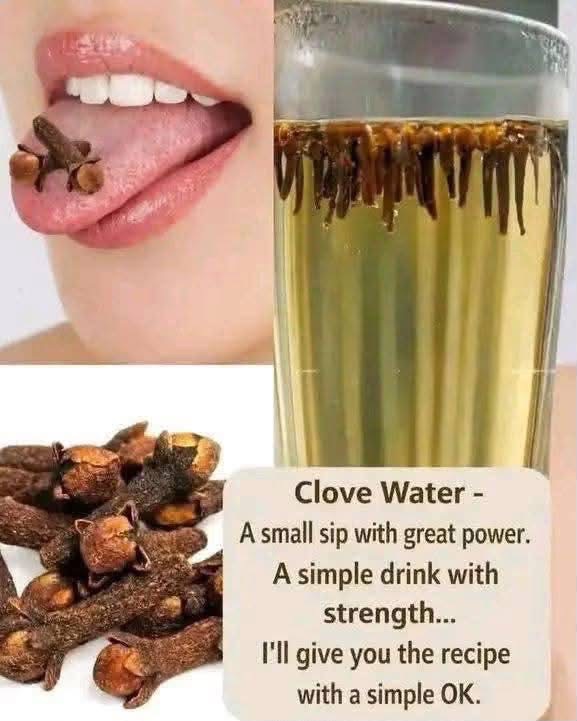
Clove water has become popular online as a simple homemade drink that may support oral health, digestion, immunity, and overall wellness. Social media posts often describe clove water as a powerful natural remedy and sometimes suggest that drinking a small amount can solve dental problems or provide major health benefits.
Cloves are a traditional spice and contain naturally occurring compounds, including eugenol, that have been studied for their antioxidant and antimicrobial properties. However, laboratory research on cloves should not be confused with proof that drinking clove water can treat or cure a medical condition.
This article explains what clove water is, what is known about cloves, what remains uncertain, and how to use cloves more safely.
What Is Clove Water
Clove water is usually made by placing whole dried cloves in water and allowing them to soak or simmer. The resulting liquid contains some compounds extracted from the cloves.
The amount of these compounds can vary significantly depending on:
- The number of cloves used
- The amount of water
- The soaking or cooking time
- The temperature
- The type and quality of cloves
Because homemade preparations are not standardized, one glass of clove water does not necessarily contain the same amount of active compounds as another.
This is important when evaluating health claims because research performed using concentrated extracts or essential oils cannot automatically be applied to a homemade glass of clove water.
Why Are Cloves Interesting to Researchers
Cloves contain several natural compounds. One of the best-known is eugenol, an aromatic compound responsible for much of the characteristic smell and flavor of cloves.
Eugenol has been investigated for several biological properties, including antimicrobial and antioxidant activity.
Some laboratory studies have found that clove extracts or clove oil can affect certain microorganisms. These findings help researchers understand why cloves have traditionally been used in oral-care and food applications.
However, laboratory results are not the same as clinical evidence in humans.
A substance can show an effect against bacteria in a laboratory environment without proving that drinking the substance will eliminate an infection inside the human body.
Can Clove Water Help With Tooth Pain
This is one of the most common claims associated with clove water.
Cloves have a long history of traditional use for dental discomfort. Eugenol is also well known in dentistry and has been used in certain dental materials.
The presence of eugenol helps explain why cloves may produce a temporary soothing or numbing sensation.
However, tooth pain can have many causes, including:
- Tooth decay
- Dental infection
- Gum disease
- A cracked tooth
- Tooth sensitivity
- An abscess
- Damage to the dental pulp
Clove water does not remove a cavity, repair a damaged tooth, or reliably eliminate a dental infection.
If tooth pain continues, the underlying cause needs to be identified and treated.
Can Clove Water Kill Oral Bacteria
Clove extracts and clove oil have demonstrated antimicrobial activity in laboratory research.
This is scientifically interesting, but it is important to understand the difference between laboratory evidence and human treatment.
A laboratory experiment may expose bacteria directly to a concentrated clove preparation. Drinking diluted clove water is a completely different situation.
The concentration reaching the mouth may be much lower, and the preparation may not remain in contact with bacteria long enough to produce the same effect observed in a laboratory.
Therefore, clove water should not be considered a replacement for brushing with fluoride toothpaste, flossing, professional dental cleaning, or dental treatment.
Does Clove Water Cure Cavities
There is no good evidence that drinking clove water can cure cavities.
A cavity occurs when acids produced by bacteria contribute to the breakdown of tooth enamel and other tooth structures.
Very early tooth-surface changes can sometimes be managed or reversed with appropriate preventive care, particularly fluoride exposure. But an established cavity may require professional dental treatment.
Once a significant hole has formed in a tooth, drinking a herbal preparation cannot rebuild the missing tooth structure.
Clove water may be used as a traditional beverage, but it should not delay dental treatment.
Possible Antioxidant Properties
Cloves contain compounds with antioxidant activity.
Antioxidants are substances that can help protect cells from oxidative damage in certain biological systems. This is one reason cloves are frequently discussed as a source of beneficial plant compounds.
However, saying that a food or drink contains antioxidants does not mean that it can prevent or cure specific diseases.
Overall health depends on many factors, including diet, physical activity, sleep, genetics, environmental exposures, and medical conditions.
Clove water should therefore be viewed as a beverage rather than a cure-all remedy.
Can Clove Water Improve Digestion
Cloves have traditionally been used in different cultures as a spice and digestive aid.
Some people report that herbal preparations containing cloves feel soothing after meals. However, strong evidence that homemade clove water treats digestive disorders is limited.
Digestive symptoms such as persistent abdominal pain, vomiting, severe heartburn, unexplained weight loss, blood in the stool, or ongoing diarrhea should not be treated solely with homemade remedies.
Persistent symptoms deserve proper medical evaluation.
Can Clove Water Boost Immunity
Claims that clove water dramatically strengthens the immune system are common online, but these claims are often exaggerated.
Cloves contain plant compounds that can interact with biological systems, but that does not mean drinking clove water can prevent infections or replace vaccination, good nutrition, sleep, hygiene, or medical treatment.
A healthy immune system depends on many interconnected factors.
There is no reason to consider clove water a substitute for evidence-based preventive healthcare.
Is Clove Water Good for the Mouth
Using cloves as part of traditional oral care has a long history.
The antimicrobial properties observed in laboratory studies make cloves an interesting subject for dental research. However, the strongest evidence for preventing cavities still supports established oral-health practices.
For everyday dental care, it is important to:
- Brush twice a day with fluoride toothpaste
- Clean between the teeth regularly
- Limit frequent consumption of sugary foods and drinks
- Drink water regularly
- Have dental checkups when appropriate
- Treat dental problems before they become more serious
Clove water should not replace these practices.
How to Use Cloves More Safely
If you enjoy cloves as a culinary spice, they can generally be used in normal food quantities.
Homemade clove water is more difficult to standardize because the concentration depends on preparation.
More is not necessarily better.
Using very large quantities of cloves or consuming concentrated clove preparations can increase exposure to compounds such as eugenol.
Extra caution is needed with clove essential oil. Essential oils are highly concentrated and should not be treated like ordinary food ingredients.
Why Clove Oil Is Different From Clove Water
Clove water and clove essential oil are not equivalent.
Clove essential oil contains highly concentrated compounds and can be much stronger than a diluted homemade infusion.
Swallowing concentrated essential oils can be dangerous, especially for children. Direct application of concentrated essential oils inside the mouth may also cause irritation or tissue injury.
For this reason, concentrated clove oil should not be swallowed or casually applied to painful teeth or gums.
When Tooth Pain Requires Professional Care
A painful tooth should not simply be ignored because a home remedy appears to provide temporary relief.
Seek dental care if you have:
- Severe or persistent tooth pain
- Facial or gum swelling
- A swollen jaw
- Fever associated with dental pain
- Pus or a bad taste in the mouth
- Difficulty swallowing
- Difficulty breathing
- Pain that keeps returning
- A broken or severely damaged tooth
Dental infections can become serious when they are not properly treated.
Temporary relief does not necessarily mean that the underlying problem has disappeared.
Common Myths About Clove Water
Myth One: Clove Water Can Cure Tooth Decay
There is no reliable evidence that drinking clove water can repair an established cavity.
Myth Two: Clove Water Can Replace a Dentist
It cannot replace professional diagnosis or treatment.
Myth Three: Stronger Clove Water Is Always Better
A stronger preparation is not automatically more effective and may increase the risk of irritation or unwanted effects.
Myth Four: Clove Water Kills Every Harmful Bacteria
Laboratory antimicrobial activity does not mean that clove water eliminates all harmful bacteria in the human body.
Myth Five: Natural Means Completely Safe
Natural substances can still cause side effects, interactions, irritation, or toxicity when used incorrectly.
A Better Way to Think About Clove Water
Clove water can be considered a traditional homemade beverage containing compounds found naturally in cloves.
It may have an interesting nutritional and botanical profile, but it should not be described as a miracle drink.
The most responsible approach is to separate traditional use from proven medical treatment.
Cloves are a useful culinary spice, and scientific research into their compounds continues. Some laboratory findings are promising, particularly regarding antimicrobial activity. However, much more human research is needed before making strong claims about drinking clove water for specific health conditions.
Final Thoughts
Clove water has gained attention because cloves contain naturally occurring compounds such as eugenol. Research has identified antioxidant and antimicrobial properties in clove preparations, which may help explain some of their traditional uses.
However, the evidence does not support presenting clove water as a cure for cavities, dental infections, chronic diseases, or other serious medical conditions.
If you enjoy cloves, using them as a culinary spice or a mild beverage can be part of an ordinary diet. The key is to avoid exaggerated health claims and concentrated preparations.
For tooth pain, proper dental care remains essential. A temporary soothing effect from cloves does not mean that decay or infection has been eliminated.
The best health decisions combine traditional knowledge with reliable scientific evidence and professional medical or dental advice when symptoms require it.
Frequently Asked Questions
Is clove water good for tooth pain
Cloves contain eugenol, which has been associated with soothing and numbing effects. However, clove water does not treat the underlying cause of tooth pain and should not replace dental care.
Can clove water remove cavities
No. There is no reliable evidence that drinking clove water can remove or repair established cavities.
Can I drink clove water every day
There is not enough evidence to establish that daily concentrated clove water provides special health benefits. If you choose to consume it, avoid excessive amounts and very concentrated preparations.
Is clove essential oil safe to drink
Concentrated clove essential oil should not be casually swallowed. Essential oils are highly concentrated and can be harmful when ingested, particularly by children.
Can clove water replace brushing
No. Brushing twice daily with fluoride toothpaste remains an important part of preventing tooth decay.
When should I see a dentist for tooth pain
See a dental professional when pain is persistent, severe, recurrent, or accompanied by swelling, fever, pus, or other signs of infection. Difficulty swallowing or breathing requires urgent medical attention.
Health Disclaimer
This article is provided for general educational purposes only and does not replace professional medical or dental advice, diagnosis, or treatment. Clove water should not be used as a substitute for appropriate treatment. If you have persistent tooth pain, swelling, fever, or signs of infection, consult a qualified healthcare or dental professional.