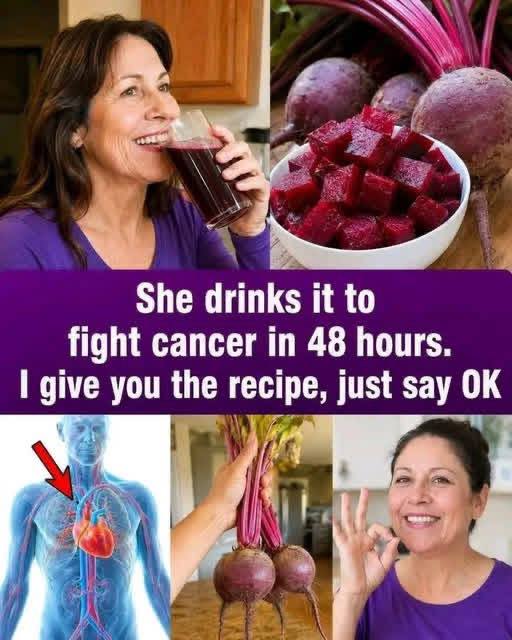
Beetroot is a colorful root vegetable that has become increasingly popular in health and wellness discussions. Beetroot juice, in particular, is often promoted online for its nutrients, antioxidants, and possible effects on blood flow and physical performance.
Some social media posts go much further, claiming that drinking beetroot juice can fight or eliminate cancer within only 48 hours. These claims can be alarming and misleading, especially for people who are dealing with cancer themselves or caring for someone who is.
Beetroot can certainly be part of a healthy diet, but there is no reliable evidence that drinking beetroot juice can cure cancer or eliminate cancer cells in 48 hours.
The National Cancer Institute explains that there is no proof that a particular food, vitamin, mineral, supplement, herb, or dietary trend can slow or cure cancer.
This article explains what beetroot can realistically offer, what researchers are studying, and why it should not be used as a replacement for cancer treatment.
What Is Beetroot
Beetroot, also called beet, is a root vegetable known for its deep red or purple color.
It can be eaten:
- Raw
- Cooked
- Roasted
- Pickled
- Added to salads
- Blended into smoothies
- Prepared as juice
The strong color of beetroot comes partly from natural pigments called betalains.
Beetroot also contains nutrients and plant compounds that have attracted scientific interest.
What Nutrients Does Beetroot Provide
Beetroot can contribute several nutrients to the diet.
Depending on the serving size and preparation method, beetroot can provide:
- Folate
- Potassium
- Fiber
- Natural carbohydrates
- Various plant compounds
- Antioxidant compounds
Beetroot juice contains some of the compounds found in whole beetroot, but juicing removes much of the fiber found in the whole vegetable.
This means whole beetroot and beetroot juice are not nutritionally identical.
Does Beetroot Cure Cancer
No.
There is currently no reliable evidence that eating beetroot or drinking beetroot juice cures cancer.
Cancer is not a single disease. It includes many different diseases involving abnormal cell growth, and different cancers can require very different treatments.
The National Cancer Institute notes that laboratory studies may show potentially anticancer activity from isolated compounds, but findings from laboratory experiments do not automatically demonstrate that a food can treat cancer in people.
Cancer Research UK has also specifically addressed claims about beetroot and cancer, explaining that there is no good evidence that a particular food can treat cancer.
Can Beetroot Kill Cancer Cells in 48 Hours
The claim that beetroot can fight cancer in 48 hours is not supported by clinical evidence.
This type of claim may come from confusion between laboratory research and treatment in humans.
Scientists sometimes study plant compounds by exposing cancer cells in a laboratory to concentrated extracts or isolated substances. If those cells respond, the result may be useful for future research.
But a laboratory result does not mean that eating the original food will produce the same effect inside the human body.
The dose, absorption, metabolism, distribution, and many other biological factors are different.
For a food to be considered a cancer treatment, researchers need appropriate human clinical evidence demonstrating meaningful outcomes.
Why Laboratory Research Can Be Misleading
Laboratory experiments are an important part of scientific research.
Researchers can expose cells to specific substances and observe changes in cell growth, survival, or other biological processes.
However, cells in a laboratory dish are not the same as a human body.
When a person drinks beetroot juice, the compounds are digested and processed. Only certain substances and amounts may reach particular tissues.
This is why a compound showing an effect against cancer cells in a laboratory cannot automatically be described as a cancer cure.
The same principle applies to many other foods and herbal products.
Does Beetroot Have Antioxidants
Yes.
Beetroot contains naturally occurring antioxidant compounds, including pigments such as betalains.
Antioxidants are substances that can interact with molecules involved in oxidative processes.
This is one reason beetroot is scientifically interesting.
However, the word antioxidant should not be interpreted as meaning cancer treatment.
Many fruits and vegetables contain antioxidant compounds, but that does not mean that any single food can cure cancer.
A healthy diet is based on variety rather than relying on one particular ingredient.
Beetroot and Blood Flow
One area where beetroot has attracted scientific interest is blood flow.
Beetroot contains dietary nitrates. These can contribute to the production of nitric oxide in the body, a molecule involved in blood vessel dilation.
The National Cancer Institute notes that beetroot juice contains relatively high levels of nitrates and that nitrate conversion to nitric oxide may influence blood flow and blood pressure.
This is different from saying that beetroot treats cancer.
Research into beetroot and cardiovascular or exercise-related effects is a separate question from research into cancer treatment.
Can Beetroot Lower Blood Pressure
Some research has investigated beetroot juice and blood pressure because of its nitrate content.
The biological pathway involving dietary nitrate and nitric oxide is scientifically plausible and has been studied in humans.
However, anyone with high blood pressure should not replace prescribed medication with beetroot juice.
Blood pressure management depends on the individual, and some people require medication or other interventions.
If you want to include beetroot as part of your diet, it can be discussed with your healthcare professional alongside your normal treatment plan.
Beetroot and Exercise Performance
Beetroot juice has also attracted attention in sports nutrition.
Dietary nitrate may influence nitric oxide production and blood flow, which is one reason researchers have investigated beetroot products in relation to exercise performance.
The potential effect depends on factors such as the amount consumed, type of exercise, and individual response.
This research does not mean that beetroot juice is a universal performance enhancer.
It also does not provide evidence that beetroot can treat cancer.
Whole Beetroot Versus Beetroot Juice
Whole beetroot and beetroot juice have different nutritional characteristics.
Whole beetroot contains fiber, which can contribute to digestive health and help with fullness.
Juice can provide fluid and some nutrients and plant compounds but generally contains much less fiber.
For everyday nutrition, including whole vegetables as part of a varied diet is often a useful approach.
Juice can still be enjoyed, but it should not be treated as a medicinal product.
Does Beetroot Prevent Cancer
This question is more complicated than simply asking whether beetroot cures cancer.
Scientists study dietary patterns and individual foods to understand whether certain eating habits may be associated with cancer risk.
The National Cancer Institute explains that research into diet and cancer is complex and that evidence from laboratory studies does not automatically prove that a specific dietary component prevents cancer in humans.
Therefore, it would be inaccurate to tell people that eating beetroot guarantees protection against cancer.
A healthier message is that vegetables, including beetroot, can be part of an overall nutritious eating pattern.
Can Cancer Patients Eat Beetroot
For many people, beetroot can be included as part of a normal balanced diet.
However, cancer treatment is highly individualized.
People receiving chemotherapy, radiation therapy, surgery, targeted therapy, immunotherapy, or other treatments may have specific nutritional needs.
Some supplements and concentrated products can also interact with medications or treatments. The National Cancer Institute recommends discussing supplements, herbs, and dietary changes with a healthcare professional during cancer treatment.
Eating beetroot as a normal food is different from taking concentrated beetroot supplements or large quantities of a particular extract.
Should Beetroot Replace Cancer Treatment
Absolutely not.
This is one of the most important points.
Cancer treatment may include surgery, chemotherapy, radiation therapy, immunotherapy, targeted therapy, hormone therapy, or combinations of these depending on the type and stage of cancer.
Replacing proven treatment with a food or homemade drink can delay appropriate care.
The fact that a food contains potentially beneficial compounds does not make it an alternative cancer treatment.
Why Viral Cancer Claims Are Dangerous
Statements such as “fight cancer in 48 hours” can create unrealistic expectations.
Someone who has recently received a cancer diagnosis may be especially vulnerable to claims promising a quick natural cure.
Cancer treatment requires careful diagnosis and an individualized medical plan.
A social-media image cannot determine:
- The type of cancer
- The cancer stage
- Whether the cancer has spread
- Which treatment is appropriate
- Whether a particular food or supplement is safe
- Whether a treatment is working
These questions require qualified healthcare professionals and appropriate medical testing.
Healthy Ways to Include Beetroot
If you enjoy beetroot, there are many simple ways to include it in your diet.
You can try:
- Roasted beetroot
- Beetroot salad
- Cooked beetroot
- Beetroot soup
- Beetroot hummus
- Beetroot mixed with other vegetables
- A moderate serving of beetroot juice
Combining beetroot with other vegetables, whole grains, legumes, nuts, seeds, and appropriate protein sources can create a more balanced meal.
The goal should be dietary variety rather than depending on one food.
Possible Considerations When Drinking Beetroot Juice
Beetroot juice can temporarily change the color of urine or stool to pink, red, or reddish-purple.
This can look alarming but may simply be related to the natural pigments in beetroot.
However, if you notice blood in the urine or stool or have other concerning symptoms, do not automatically assume beetroot is responsible. Medical advice may be appropriate.
People with specific medical conditions or those taking medications should also discuss regular consumption of concentrated beetroot products with their healthcare professional.
Beetroot Is a Food Not a Cancer Medicine
This is perhaps the simplest way to understand the issue.
Beetroot can be nutritious.
It contains plant compounds that scientists continue to study.
It may have potential benefits related to blood flow and other aspects of health.
But none of these facts means that beetroot is a cancer medicine.
A healthy food can be valuable without being a cure.
Common Myths About Beetroot and Cancer
Myth One: Beetroot Kills Cancer in 48 Hours
There is no reliable clinical evidence supporting this claim.
Myth Two: Beetroot Juice Can Replace Chemotherapy
There is no evidence that beetroot juice can replace established cancer treatments.
Myth Three: Antioxidants Automatically Prevent Cancer
Antioxidant activity in food does not automatically translate into cancer prevention or treatment.
Myth Four: More Beetroot Juice Means More Health Benefits
More is not necessarily better. Concentrated products can have different effects from ordinary food portions.
Myth Five: Natural Cancer Treatments Are Always Safer
Natural does not automatically mean safe or effective. Some supplements and concentrated products can interact with medications or medical treatments.
What the Science Really Says
Beetroot is a nutritious vegetable containing folate, potassium, natural pigments, dietary nitrates, and other compounds.
Research has investigated beetroot juice for effects related to blood flow, blood pressure, and exercise performance.
Researchers are also interested in plant compounds and their potential biological effects.
But the evidence does not show that drinking beetroot juice can eliminate cancer within 48 hours.
The National Cancer Institute states that there is no proof that any specific food, vitamin, mineral, supplement, herb, or dietary trend can slow or cure cancer.
That distinction is extremely important.
Final Thoughts
Beetroot can be a healthy and colorful addition to a balanced diet. It provides nutrients and plant compounds that make it an interesting food from a nutritional and scientific perspective.
Beetroot juice has also been studied for possible effects on blood flow and physical performance.
However, the viral claim that beetroot juice can fight or eliminate cancer in 48 hours is not supported by reliable clinical evidence.
People with cancer should not stop, delay, or replace their prescribed treatment because of a social-media recipe or homemade drink.
Instead, beetroot can simply be enjoyed as one nutritious food among many.
Good nutrition can support overall health, but it should be kept separate from claims about curing serious diseases.
Frequently Asked Questions
Can beetroot cure cancer?
No. There is no reliable evidence that beetroot or beetroot juice cures cancer.
Can beetroot fight cancer in 48 hours?
There is no clinical evidence showing that beetroot can eliminate cancer in 48 hours.
Is beetroot healthy?
Yes. Beetroot can contribute nutrients such as folate, potassium, fiber, nitrates, and naturally occurring plant compounds.
Can cancer patients drink beetroot juice?
Many people can include beetroot as part of their diet, but people undergoing cancer treatment should discuss major dietary changes, concentrated juices, or supplements with their healthcare team.
Does beetroot improve blood flow?
Beetroot contains dietary nitrates that can contribute to nitric oxide production, which may affect blood vessel dilation and blood flow.
Is beetroot juice better than whole beetroot?
Not necessarily. Whole beetroot provides fiber that is reduced or removed during juicing. Both can fit into a balanced diet.
Can beetroot replace cancer medication?
No. Beetroot should never be used as a replacement for prescribed cancer treatment.
Why does beetroot turn urine red?
Natural beetroot pigments can sometimes cause reddish or pink urine or stool. However, unexplained blood should not automatically be attributed to beetroot.
Health Disclaimer
This article is for general educational purposes only and does not replace professional medical advice, diagnosis, or treatment. Beetroot and beetroot juice should not be used as a substitute for cancer treatment. If you or someone you know has cancer, speak with the treating healthcare team before making major dietary changes or using concentrated supplements.