Garlic is one of the most popular ingredients in kitchens around the world. It has a strong aroma, a distinctive taste, and a long history of use in traditional cooking and wellness practices.
For centuries, people have included garlic in meals because of its flavor and its naturally occurring plant compounds. Modern research has also examined garlic and its components, particularly compounds associated with its characteristic smell and taste.
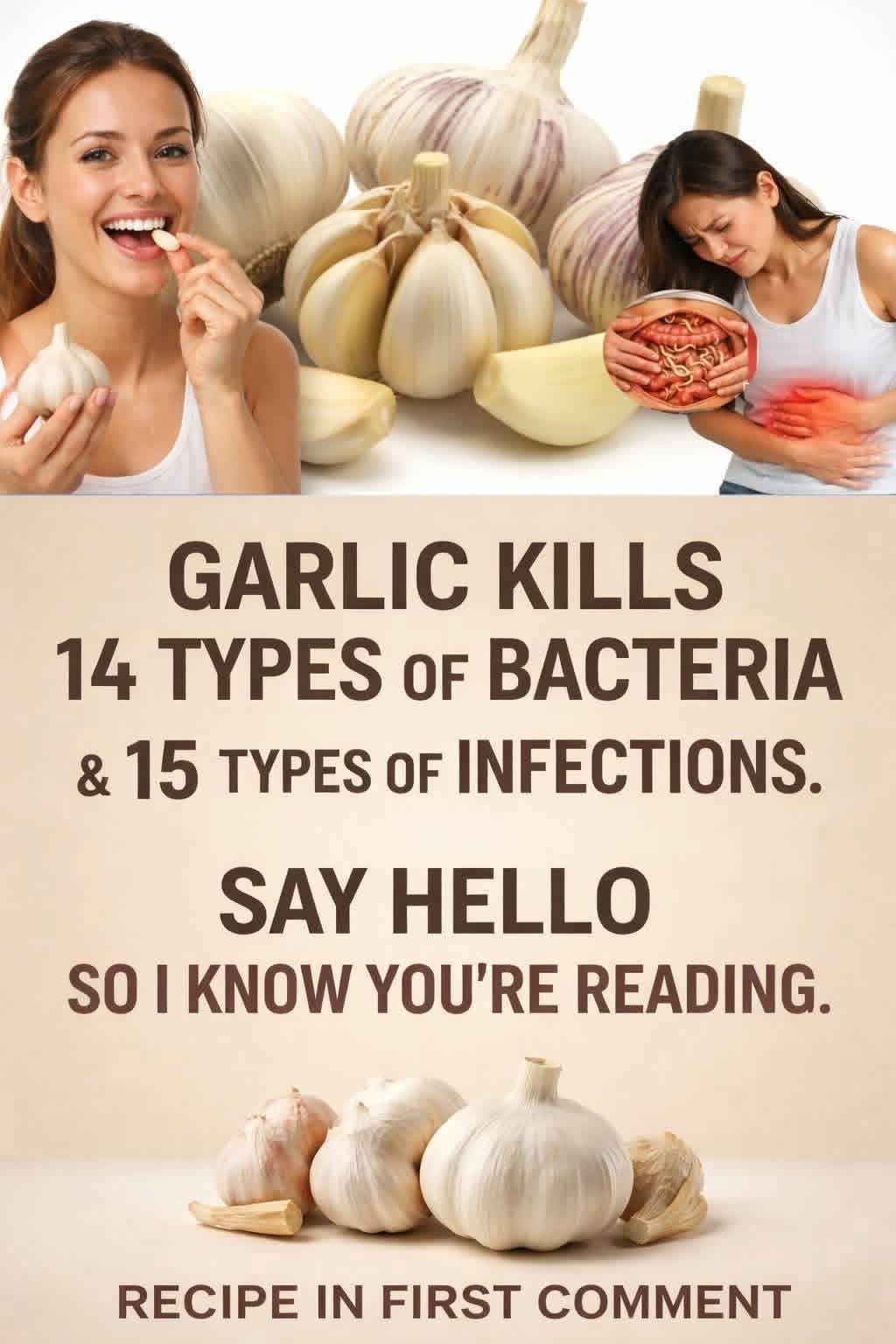
The image suggests that garlic can “kill” many types of bacteria and infections. Such claims are often shared online, but they can be misleading. Although garlic contains compounds that have demonstrated antimicrobial activity in laboratory studies, eating garlic is not the same as treating a bacterial infection. Garlic should not replace antibiotics or professional medical treatment when an infection is diagnosed.
That said, garlic can be a nutritious and flavorful addition to a balanced diet.
What Is Garlic?
Garlic is a member of the Allium family, which also includes onions, leeks, shallots, and chives.
The part most commonly eaten is the bulb, which is made up of individual cloves. These cloves are surrounded by a thin papery covering that protects them.
Garlic can be eaten raw or cooked and is commonly added to vegetables, meat, seafood, sauces, soups, pasta, rice, marinades, and many traditional dishes.
Its strong flavor comes from sulfur-containing compounds that are released when garlic is cut, crushed, or chopped.
Why Is Garlic So Popular?
Garlic has several qualities that make it valuable in everyday cooking.
A small amount can dramatically change the flavor of a meal. It can add depth to soups, sauces, roasted vegetables, and meat dishes without requiring large quantities.
Garlic is also easy to store and can be used in many different forms, including:
- Fresh garlic cloves
- Minced garlic
- Chopped garlic
- Roasted garlic
- Garlic powder
- Garlic paste
- Garlic-infused foods
Fresh garlic is particularly popular because crushing or chopping it releases compounds responsible for its characteristic aroma.
Garlic Contains Allicin
One of the best-known compounds associated with fresh garlic is allicin.
Allicin is formed when garlic is damaged or crushed. It is responsible for much of the strong smell associated with freshly crushed garlic.
Researchers have studied allicin and other garlic compounds for their antimicrobial and antioxidant properties.
However, laboratory findings should not be interpreted as proof that eating garlic can cure infections in humans. The amount of a compound present in food, how it is absorbed, and what happens inside the human body are all important factors.
Garlic and Antioxidant Compounds
Garlic contains several naturally occurring compounds with antioxidant properties.
Antioxidants are substances that help protect cells from oxidative stress. Many foods contain antioxidants, including fruits, vegetables, herbs, nuts, seeds, and whole grains.
Adding garlic to meals can therefore contribute to the variety of plant compounds in your diet.
However, there is no need to consume large amounts of garlic to obtain health benefits. A varied diet is generally more important than relying heavily on a single food.
Garlic and Heart Health
Garlic has been studied in relation to cardiovascular health, including blood pressure and cholesterol.
Some research suggests that certain garlic preparations may have modest effects on cardiovascular risk factors. Results can vary depending on the type of garlic, preparation, amount consumed, and individual characteristics.
This does not mean that garlic can replace medication or treatment prescribed for high blood pressure or high cholesterol.
If you have a cardiovascular condition, continue following your healthcare professional’s recommendations.
Using garlic in place of excessive amounts of salt, butter, or highly processed sauces can also be a practical way to add flavor to meals while maintaining a balanced eating pattern.
Garlic and the Immune System
Garlic is frequently promoted online as an immune-boosting food.
Garlic contains various plant compounds, and researchers have investigated its potential relationship with immune function. Some studies have examined whether garlic preparations may influence the frequency or duration of certain common illnesses.
However, garlic should not be described as a cure for viral infections or as a substitute for vaccination, medical treatment, sleep, nutrition, or other healthy habits.
A strong immune system depends on many factors, including adequate nutrition, sleep, physical activity, and overall health.
Can Garlic Kill Bacteria?
This is one of the most common claims associated with garlic.
Certain garlic compounds have demonstrated antibacterial activity in laboratory settings. This is an interesting area of scientific research.
However, there is an important difference between antibacterial activity in a laboratory and treating an infection inside the human body.
A bacterial infection may require medical evaluation and an appropriate antibiotic or other treatment. Eating raw garlic does not guarantee that harmful bacteria causing an infection will be eliminated.
For this reason, garlic is best viewed as a food rather than an antibiotic.
Garlic and Digestive Health
Garlic contains plant compounds and, when consumed as part of a balanced diet, can contribute to overall dietary variety.
Some people enjoy garlic in cooked meals, while others prefer it raw. Raw garlic has a much stronger flavor and may be more difficult for some people to tolerate.
Eating large quantities of raw garlic can cause stomach discomfort, heartburn, bloating, or other digestive symptoms in some individuals.
If garlic regularly causes discomfort, reducing the amount or choosing cooked garlic may be more comfortable.
Raw Garlic or Cooked Garlic?
Both raw and cooked garlic can be used in the kitchen, but they have different characteristics.
Raw garlic has a much stronger flavor and releases compounds when it is crushed or chopped.
Cooked garlic has a softer and sweeter flavor, especially when roasted slowly.
Heat can change some of garlic’s naturally occurring compounds. For this reason, the nutritional and chemical properties of raw and cooked garlic are not identical.
The best option is often the one you enjoy and can comfortably include in a varied diet.
How to Add Garlic to Your Meals
Garlic is extremely versatile.
You can add chopped or minced garlic to:
- Vegetable soups
- Tomato sauces
- Pasta
- Rice dishes
- Roasted potatoes
- Chicken
- Fish
- Beans
- Lentils
- Stir-fried vegetables
- Homemade dressings
- Marinades
Roasted garlic is another popular option. Roasting gives the cloves a softer texture and a mild, slightly sweet flavor.
Simple Garlic Recipe
If you want a simple way to enjoy garlic, try garlic roasted vegetables.
Ingredients
- Fresh vegetables of your choice
- 2–4 garlic cloves
- A small amount of olive oil
- Black pepper
- Herbs of your choice
Instructions
- Wash and cut the vegetables.
- Place them on a baking tray.
- Add sliced or crushed garlic.
- Add a small amount of olive oil.
- Season with herbs and black pepper.
- Roast until the vegetables are tender and lightly browned.
- Serve while warm.
This is an easy way to add garlic to a nutritious meal without treating it as medicine.
Garlic and Weight Management
Garlic itself does not cause weight loss.
However, it can be useful when preparing healthy meals because it adds significant flavor without requiring large amounts of calories.
For example, garlic can make vegetables, beans, lean proteins, and whole grains more enjoyable.
Healthy weight management depends on the overall balance of your diet and lifestyle rather than one particular ingredient.
Garlic and Blood Sugar
Garlic has also been studied in relation to blood sugar regulation and metabolic health.
Some research has investigated whether garlic preparations may have an effect on blood glucose, but evidence is not strong enough to recommend garlic as a treatment for diabetes.
People with diabetes should follow their treatment plan and discuss supplements or concentrated garlic products with their healthcare professional.
Garlic can certainly be included as a flavoring ingredient in many healthy meals.
Can Garlic Treat Infections?
Garlic should not be used as a substitute for medical treatment when an infection is suspected.
Symptoms such as persistent fever, severe pain, difficulty breathing, swelling, pus, painful urination, or rapidly worsening symptoms can require professional evaluation.
Although garlic contains compounds with antimicrobial properties, this does not mean that eating a clove of garlic will eliminate an infection.
Using home remedies instead of appropriate treatment can sometimes delay necessary medical care.
Garlic and Skin Care
Garlic is sometimes recommended online as a homemade treatment for acne, fungal infections, or other skin problems.
However, applying raw garlic directly to the skin can cause significant irritation and even chemical-like burns in some cases.
For this reason, raw garlic should not be used as a DIY skin treatment.
If you have a persistent rash, fungal infection, wound, or unusual skin change, an appropriate medical or dermatological treatment is safer.
Garlic Supplements
Garlic is also available in supplement form, including capsules, tablets, aged garlic extracts, and other concentrated preparations.
Supplements can provide much larger amounts of garlic compounds than normal culinary use.
More is not necessarily better. Concentrated garlic products may interact with certain medications, particularly medicines that affect blood clotting.
Anyone taking prescription medication or preparing for surgery should discuss garlic supplements with a healthcare professional before using them.
Possible Side Effects
Garlic is generally well tolerated when eaten as a food, but some people may experience side effects.
Possible problems include:
- Heartburn
- Stomach discomfort
- Bloating
- Nausea
- Bad breath
- Body odor
- Skin irritation from direct contact with raw garlic
People who notice repeated digestive discomfort after eating garlic may want to reduce the amount they consume or choose cooked garlic instead.
How to Store Fresh Garlic
Whole garlic bulbs should be kept in a cool, dry, well-ventilated place.
Avoid storing whole bulbs in an area with excessive moisture because this can encourage mold or sprouting.
Once garlic has been peeled or chopped, it should be handled and stored appropriately to reduce food-safety risks.
Homemade garlic preserved in oil deserves particular caution because improperly prepared and stored garlic-in-oil mixtures can create conditions that allow dangerous bacteria to grow.
Final Thoughts
Garlic is much more than a flavorful kitchen ingredient. It contains a variety of naturally occurring sulfur compounds and other plant substances that have been studied for their antioxidant and antimicrobial properties.
Research into garlic continues, particularly regarding cardiovascular health and other areas of human health. Nevertheless, popular claims that garlic can “kill” numerous bacteria or cure infections should not be taken literally.
Garlic can be a healthy addition to a varied diet, but it is not a replacement for medical treatment.
The simplest way to enjoy its potential benefits is to include it regularly in balanced meals alongside vegetables, fruits, whole grains, beans, nuts, healthy fats, and quality sources of protein.
If you suspect that you have an infection or another medical condition, seek appropriate medical advice rather than relying on garlic alone.