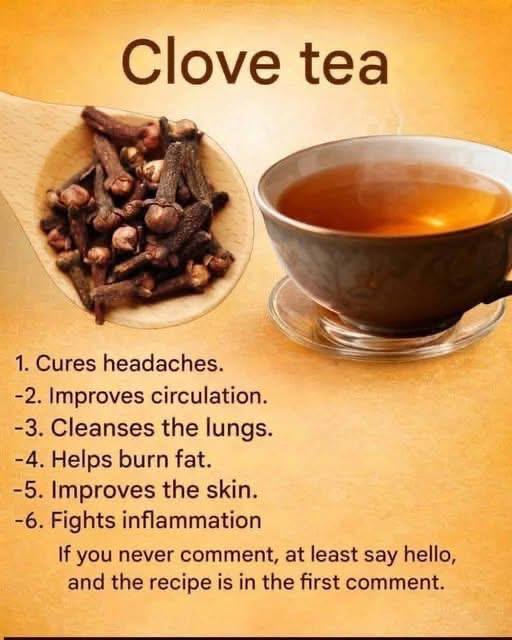
Clove tea is a warm and aromatic drink made by steeping whole cloves in hot water. Cloves are a common kitchen spice with a distinctive flavor and aroma, and they have been used traditionally in different cultures for generations.
Online posts often describe clove tea as a drink that can cure headaches, cleanse the lungs, burn fat, improve circulation, make the skin look better, and eliminate inflammation. Some of these claims are much stronger than the available evidence supports.
Cloves contain several naturally occurring plant compounds, including eugenol, which has antioxidant and antimicrobial properties in laboratory studies. However, these properties do not mean that clove tea can cure diseases or replace medical treatment.
Clove tea can be enjoyed as a flavorful beverage and may fit comfortably into a balanced lifestyle when consumed in moderate amounts.
What Are Cloves
Cloves are the dried flower buds of the clove tree. They are usually sold whole or ground and are commonly used to flavor foods, baked goods, sauces, and warm beverages.
Whole cloves have a strong, spicy aroma and a slightly sweet and warming taste.
Because cloves are highly concentrated in flavor, only a small amount is usually needed when preparing tea.
What Makes Cloves Interesting
Cloves contain naturally occurring compounds that have attracted scientific interest.
One of the best known compounds is eugenol, an aromatic substance found in clove oil and other plants.
Eugenol has been studied for antioxidant and antimicrobial activity. Cloves also contain small amounts of various vitamins, minerals, and other plant compounds.
However, the presence of these compounds does not automatically mean that drinking clove tea will produce a specific medical effect.
Laboratory findings and traditional uses should not be confused with proven treatments in humans.
How to Make Clove Tea
Preparing clove tea is simple and requires only a few ingredients.
Ingredients
- 3 to 5 whole cloves
- 1 cup of water
- A small amount of lemon if desired
- Honey if desired
The amount of cloves can be adjusted according to taste.
Because cloves have a strong flavor, starting with a small amount is usually preferable.
Preparation Method
Bring one cup of water to a gentle boil.
Add the whole cloves.
Reduce the heat and allow the cloves to simmer gently for several minutes, or remove the water from the heat and let the cloves steep for around 5 to 10 minutes.
Strain the liquid into a cup.
Allow it to cool slightly before drinking.
You can add a small amount of lemon or honey if you prefer.
The resulting drink has a warm, spicy flavor and can be enjoyed as an occasional beverage.
Clove Tea for Headaches
One of the claims commonly associated with clove tea is that it can cure headaches.
There is not enough evidence to describe clove tea as a proven treatment for headaches.
Headaches can have many different causes, including dehydration, lack of sleep, stress, tension, illness, caffeine changes, and other factors.
Some people may find a warm drink relaxing, and the aroma of cloves may be pleasant, but this does not mean that clove tea treats the underlying cause of a headache.
A persistent or unusually severe headache should be evaluated by a healthcare professional.
Clove Tea and Circulation
Cloves contain plant compounds that have been studied for their biological effects, but claims that a cup of clove tea dramatically improves circulation are not well established.
Blood circulation is influenced by many factors, including cardiovascular health, physical activity, blood pressure, smoking, medications, and underlying medical conditions.
Regular movement, a balanced diet, avoiding tobacco, and managing cardiovascular risk factors are much more important for long term circulatory health than relying on a particular herbal drink.
Does Clove Tea Cleanse the Lungs
The phrase “cleanses the lungs” is often used in natural remedy advertisements.
The lungs have their own natural mechanisms for clearing mucus and particles from the respiratory system.
There is no good evidence that drinking clove tea physically cleans the lungs of toxins or reverses lung damage.
If you enjoy clove tea, you can drink it as a warm beverage, but it should not be promoted as a lung cleansing treatment.
People experiencing persistent coughing, shortness of breath, chest pain, wheezing, or coughing up blood should seek appropriate medical attention.
Can Clove Tea Burn Fat
Clove tea is sometimes promoted as a natural fat burning drink.
There is no strong evidence that drinking clove tea by itself causes meaningful fat loss.
Weight management is influenced by overall energy intake, physical activity, sleep, genetics, medications, and many other factors.
A drink containing very few calories can be included in a healthy diet, especially if it replaces a high sugar beverage. However, that is different from saying that the drink actively burns body fat.
There is no need to rely on a special tea for weight management.
Cloves and Digestion
Cloves have traditionally been used in food and herbal preparations after meals.
The warm aroma and flavor can make clove tea an enjoyable drink after eating.
However, digestive symptoms can have many causes. Persistent bloating, abdominal pain, nausea, vomiting, reflux, or changes in bowel habits should not automatically be treated with herbal tea.
If symptoms continue or become severe, professional medical advice is appropriate.
Clove Tea and Skin Health
Cloves contain antioxidant compounds, which is one reason they are often discussed in relation to skin health.
However, drinking clove tea should not be expected to remove wrinkles, clear every skin problem, or dramatically change the appearance of the skin.
Healthy skin is supported by a combination of factors, including nutrition, adequate sleep, sun protection, gentle skin care, and overall health.
A balanced diet containing a variety of fruits, vegetables, whole grains, legumes, nuts, seeds, and suitable protein sources is more useful than focusing on one spice.
Cloves and Inflammation
Clove compounds, particularly eugenol, have demonstrated biological activity in laboratory and experimental research.
This has led to interest in their possible relationship with inflammatory processes.
However, it is not accurate to conclude from this that drinking clove tea can treat inflammatory diseases.
Inflammation is a complex biological process, and different medical conditions require different approaches.
If you have a diagnosed inflammatory condition, follow the treatment plan provided by your healthcare professional.
Antioxidants in Cloves
Cloves are rich in naturally occurring plant compounds with antioxidant activity.
Antioxidants are substances that can help protect cells from oxidative damage.
Many foods contain antioxidants, including berries, vegetables, fruits, herbs, spices, nuts, and seeds.
The best approach is to obtain a variety of plant compounds from a diverse diet rather than relying on one concentrated food or drink.
Clove tea can be one small part of that dietary variety.
Clove Tea Is Not a Detox Drink
A common online claim is that clove tea “detoxes” the body.
The body already has organs such as the liver and kidneys that perform important functions involved in processing and eliminating substances.
There is no need for a special tea to cleanse the body of everyday toxins.
Drinking fluids can support normal hydration, but that does not mean that a particular herbal drink provides a special detoxification process.
The word “detox” is often used as a marketing term rather than a precise medical description.
How Often Can You Drink Clove Tea
There is no universally established amount of clove tea that everyone should drink for health benefits.
Because cloves are strongly flavored, a small amount is generally sufficient for preparing a cup.
Clove tea can be treated like other herbal beverages rather than a medicine that needs to be consumed in large quantities.
More is not necessarily better.
If you have a medical condition, take medication regularly, are pregnant or breastfeeding, or plan to consume concentrated clove preparations, it is sensible to ask a healthcare professional for individualized advice.
Whole Cloves Versus Clove Oil
It is important to distinguish between whole cloves used in cooking and concentrated clove oil.
Clove oil contains much higher concentrations of compounds such as eugenol.
Essential oils are not equivalent to culinary spices, and they should not automatically be swallowed or used internally.
Concentrated preparations can have stronger effects and may cause adverse reactions if used incorrectly.
For a simple homemade beverage, whole cloves are a much more appropriate ingredient than concentrated essential oil.
Possible Side Effects
Cloves are generally used in small quantities as a culinary spice.
However, concentrated clove preparations may cause problems for some people.
Large amounts may irritate the digestive system, and concentrated clove oil can be particularly potent.
Some people may also experience sensitivity or allergic reactions.
If you notice unusual symptoms after consuming a clove preparation, stop using it and seek medical advice if the symptoms are significant or persistent.
Cloves and Medications
People who take medications should be cautious about using concentrated herbal products.
Clove contains compounds that may affect biological processes, and concentrated preparations may not be appropriate for everyone.
This is especially relevant for people taking medications that affect blood clotting or those preparing for surgery.
A culinary amount of cloves used in food is very different from taking concentrated clove supplements or oils.
If you regularly take medication, discuss concentrated herbal products with a qualified healthcare professional before using them.
A Simple Lemon and Clove Tea
For a refreshing variation, prepare the basic clove tea and add a little fresh lemon juice after steeping.
The lemon provides a bright citrus flavor that complements the warm spice of cloves.
You can add a small amount of honey if you prefer a sweeter drink.
Remember that honey contributes added sugar, so it is best used in moderation.
Clove and Ginger Tea
Ginger is another popular ingredient that pairs well with cloves.
Add a few slices of fresh ginger to the water along with the cloves.
Allow the ingredients to steep for several minutes.
Strain the drink before serving.
This combination creates a warm and spicy beverage that can be especially enjoyable during colder weather.
It should still be considered a beverage rather than a treatment for illness.
How to Make Clove Tea Taste Better
Clove tea has a strong flavor, so you can experiment with simple additions.
Cinnamon can add warmth.
Lemon can provide freshness.
Ginger can add a mild spicy taste.
A small amount of honey can provide sweetness.
You can also adjust the number of cloves used in each cup.
There is no need to make the drink extremely concentrated.
Choosing Good Quality Cloves
When buying whole cloves, look for a clean product with a strong natural aroma.
Store cloves in a tightly closed container away from heat, moisture, and direct sunlight.
Proper storage helps preserve their aroma and flavor.
Whole cloves generally retain their flavor longer than ground cloves because less of their surface is exposed to air.
A Balanced Lifestyle Matters More
No herbal tea can replace healthy lifestyle habits.
If your goal is to support general health, focus on the basics.
Eat a varied diet.
Stay physically active.
Get adequate sleep.
Drink appropriate amounts of fluids.
Avoid smoking.
Limit excessive intake of highly processed foods and added sugars.
Attend recommended medical checkups.
Manage known health conditions according to professional advice.
These habits have a much stronger foundation than claims about miracle drinks.
Why Viral Health Posts Can Be Misleading
The image associated with clove tea lists several impressive benefits, including cleansing the lungs and burning fat.
Such statements can make a simple food or beverage appear to have pharmaceutical effects.
However, a social media image is not evidence that a treatment works.
The fact that cloves contain biologically active compounds does not prove that a cup of clove tea can produce the same effects observed in laboratory experiments.
When evaluating health information online, look for evidence from reliable medical and scientific sources rather than relying only on testimonials, photographs, or viral posts.
Who Should Be More Careful
Most healthy adults can use cloves as a culinary spice.
Extra caution is appropriate with concentrated clove products.
People who are pregnant or breastfeeding, children, people with bleeding disorders, people taking medications that affect clotting, and people preparing for surgery should seek professional advice before using concentrated clove preparations.
This does not mean that ordinary culinary use is automatically dangerous. The important distinction is between normal food use and concentrated supplements or oils.
Final Thoughts
Clove tea is a simple, aromatic beverage that can be prepared by steeping a few whole cloves in hot water.
Cloves contain naturally occurring compounds such as eugenol and can contribute interesting flavors and plant compounds to the diet.
However, viral claims that clove tea can cure headaches, cleanse the lungs, burn fat, dramatically improve circulation, or eliminate inflammation are stronger than the available evidence supports.
It is more accurate to enjoy clove tea as a flavorful beverage rather than a miracle remedy.
If you want to prepare it at home, use a small amount of whole cloves, steep them in hot water, strain the drink, and add lemon or a little honey if desired.
People with medical conditions or those taking regular medication should be particularly careful with concentrated herbal products.
The most important principle is simple: natural ingredients can be part of a healthy lifestyle, but they should not replace professional medical care or evidence based treatment.
Important Disclaimer
This article is intended for general educational and informational purposes only. It is not intended to diagnose, treat, prevent, or cure any disease or medical condition.
Clove tea is a food and beverage, not a substitute for medical treatment. Concentrated clove oil and supplements can be substantially stronger than culinary amounts of cloves and may not be suitable for everyone.
If you have persistent or severe symptoms, take prescription medication, are pregnant or breastfeeding, or have concerns about using herbal products, consult a qualified healthcare professional before making significant changes to your routine.