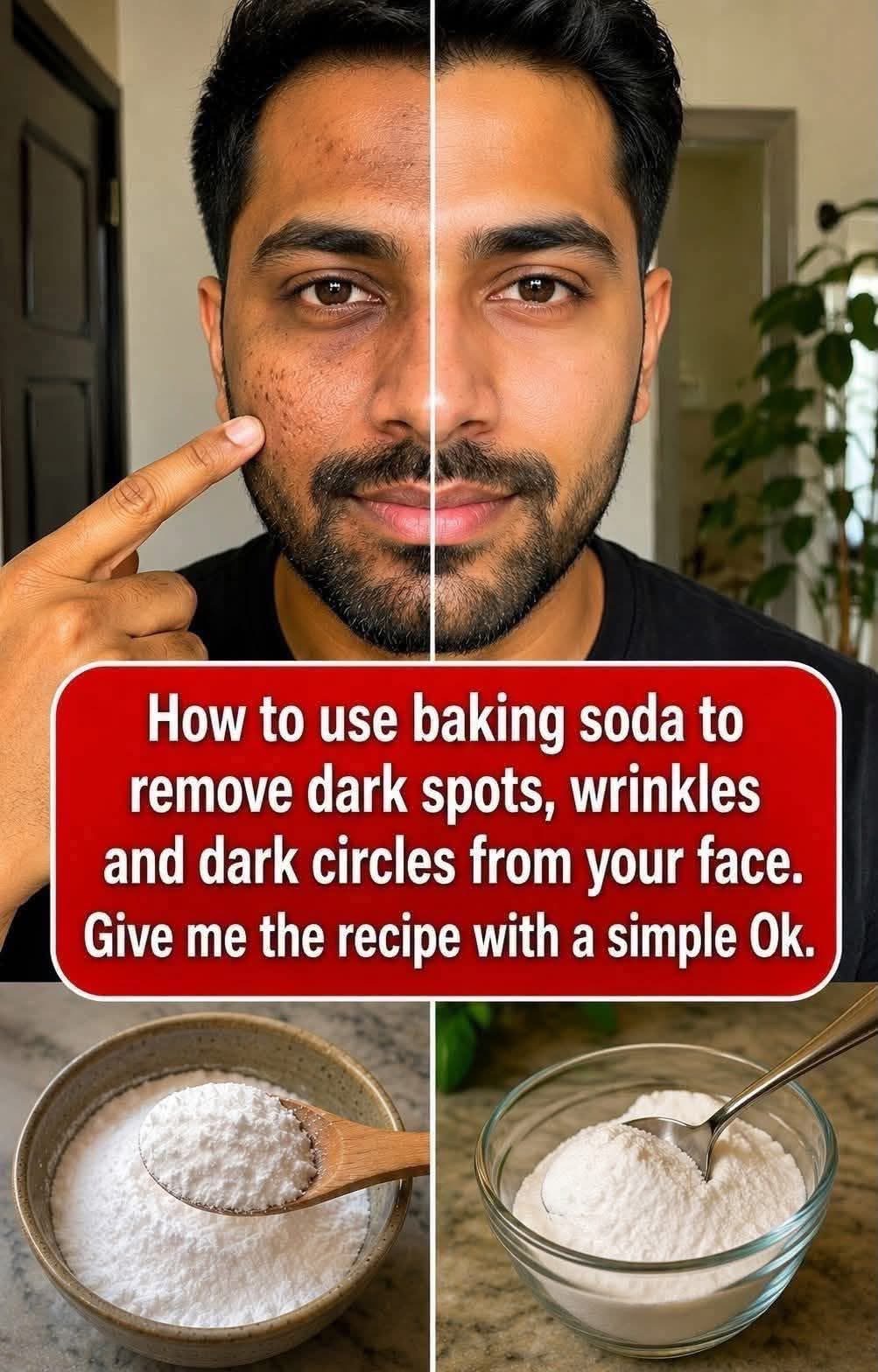
Baking soda is a common household ingredient that many people use for cooking, cleaning, and simple home remedies. In recent years, it has also become popular in homemade skin care recipes, especially in social media posts that claim it can remove dark spots, wrinkles, and dark circles.
However, popular online claims are not always supported by reliable evidence. Baking soda can affect the skin because it is alkaline, while healthy skin normally has a mildly acidic surface. Applying it directly to the face may therefore cause dryness, irritation, redness, or discomfort, particularly for people with sensitive skin.
This does not mean that every homemade skin care idea is dangerous, but it is important to understand what an ingredient can realistically do before putting it on your face.
This article explains the relationship between baking soda and skin care, why some people use it, the possible drawbacks, and safer approaches for improving the appearance of uneven skin tone and signs of aging.
What Is Baking Soda
Baking soda is also called sodium bicarbonate. It is a white, alkaline powder commonly used in baking and household applications.
Because baking soda is mildly abrasive and alkaline, it may temporarily make the skin feel smoother or cleaner when used in certain ways. These temporary effects are sometimes interpreted as evidence that baking soda is treating deeper skin problems.
It is important to distinguish between a temporary cosmetic effect and an actual treatment.
For example, exfoliating the surface of the skin may make it feel smoother for a short time. That does not necessarily mean that the ingredient is removing pigmentation or reversing wrinkles.
Can Baking Soda Remove Dark Spots
Dark spots can develop for many reasons. Sun exposure, inflammation, acne, hormonal changes, and skin injuries can all contribute to increased pigmentation.
There is not strong clinical evidence that ordinary household baking soda can safely remove dark spots from the face.
Some people may notice a change after using abrasive substances because they remove some surface skin cells. However, aggressive exfoliation can sometimes make pigmentation worse, especially when the skin becomes irritated.
For people who want to improve uneven pigmentation, gentle skin care is generally a better approach.
Products containing ingredients such as niacinamide, vitamin C, azelaic acid, or certain exfoliating acids may be used in evidence-based skin care routines. The appropriate ingredient depends on the individual’s skin type and the reason for the pigmentation.
Sun protection is also extremely important because ultraviolet exposure can contribute to persistent dark spots and make existing pigmentation more noticeable.
Can Baking Soda Reduce Wrinkles
Wrinkles are a normal part of skin aging. They develop because the skin gradually changes in its collagen, elastin, hydration, and structural support.
Baking soda cannot be considered a proven anti-aging treatment.
A homemade baking soda mixture may temporarily change how the surface of the skin feels, but this should not be confused with rebuilding collagen or reversing established wrinkles.
A more practical anti-aging routine focuses on protecting the skin from ultraviolet radiation, maintaining adequate moisturization, and using ingredients with evidence for improving the appearance of photoaged skin.
Retinoids, for example, have been extensively studied in dermatology. However, they can cause irritation and are not suitable for everyone, so professional advice may be useful when choosing a stronger anti-aging treatment.
What About Dark Circles
Dark circles under the eyes are particularly difficult to treat because they can have several causes.
Genetics, pigmentation, visible blood vessels, shadows caused by facial structure, allergies, lack of sleep, and age-related changes can all contribute to the appearance of dark circles.
The skin around the eyes is also delicate.
For this reason, applying baking soda near the eyes is not a good idea. Accidental contact with the eyes can cause significant irritation.
If dark circles are persistent, identifying the likely cause is more useful than relying on a single homemade ingredient.
Why Baking Soda May Irritate the Skin
Healthy skin has a protective barrier that helps retain moisture and protects against environmental factors.
The surface of the skin is naturally somewhat acidic. Baking soda is alkaline, meaning it can raise the pH of the skin when applied.
Frequent use may interfere with the skin’s normal barrier and contribute to dryness or irritation.
Possible reactions include redness, burning, itching, tightness, flaking, or increased sensitivity.
People with sensitive skin or existing skin conditions may be particularly likely to experience problems.
Another concern is physical abrasion. Baking soda has a powdery texture, and rubbing it aggressively against the skin can create additional irritation.
Irritated skin may become more uncomfortable and, in some cases, may develop post-inflammatory pigmentation.
Should You Put Baking Soda Directly on Your Face
Using concentrated household baking soda directly on the face is generally not a skin care method I would recommend.
This is especially true around the eyes, lips, or areas that are already irritated, sunburned, scratched, or affected by acne.
A popular social media recipe does not automatically mean that the recipe has been tested for safety or effectiveness.
Skin care products formulated specifically for facial use are generally designed with factors such as pH, concentration, stability, and skin compatibility in mind.
That is an important difference between a cosmetic formulation and a kitchen ingredient.
A Safer Simple Skin Care Routine
If your goal is healthier-looking skin, a simple routine can often be more useful than experimenting with aggressive homemade treatments.
Step One Cleanse Gently
Use a gentle facial cleanser that removes dirt, sweat, and excess oil without leaving the skin feeling extremely tight or dry.
Avoid excessive scrubbing.
The goal of cleansing is to remove unwanted material while maintaining the skin barrier.
Step Two Moisturize
A moisturizer can help support the skin barrier and reduce dryness.
Choose a product appropriate for your skin type. People with oily skin may prefer lightweight formulations, while people with dry skin may prefer richer moisturizers.
Step Three Use Sun Protection
Daily sun protection is one of the most important steps for preventing premature skin aging and helping reduce the worsening of pigmentation.
A broad-spectrum sunscreen can help protect against ultraviolet radiation.
Sun protection is particularly important if you are already trying to improve dark spots or uneven skin tone.
Step Four Choose Targeted Ingredients
Instead of using baking soda for every concern, choose an ingredient based on the specific problem.
For example, niacinamide is commonly used in skin care for uneven tone and barrier support. Vitamin C is another popular ingredient for antioxidant skin care.
Other ingredients, including azelaic acid and retinoids, may be appropriate for certain concerns.
However, stronger active ingredients can cause irritation when used incorrectly. Starting gradually and following product instructions is important.
What Can Help With Dry Skin
Dry skin is often better addressed by reducing irritation and improving moisturization rather than exfoliating aggressively.
Look for moisturizers containing ingredients such as glycerin, ceramides, or hyaluronic acid.
Avoid repeatedly using harsh scrubs or multiple active ingredients at the same time.
If the skin becomes red, painful, cracked, or persistently itchy, stop experimenting with home remedies and consider speaking with a qualified health professional.
What Can Help With Uneven Skin Tone
Uneven skin tone may result from sun exposure, previous acne, inflammation, or other causes.
A consistent routine is usually more realistic than expecting an overnight transformation.
Gentle cleansing, regular moisturizing, sun protection, and carefully selected skin care ingredients can support a more even-looking complexion over time.
It is also important to have realistic expectations. Most pigmentation concerns do not disappear within a few days.
Why Viral Skin Care Claims Can Be Misleading
Social media images often use dramatic before-and-after comparisons.
Lighting, camera settings, makeup, filters, facial expressions, and image editing can all make two photographs look very different.
A photograph cannot establish that a particular ingredient caused the improvement.
Claims such as “remove wrinkles in three days” or “erase dark circles overnight” should therefore be approached carefully.
Real skin biology generally does not change that quickly.
When a post promises an immediate transformation from a simple household ingredient, it is worth asking whether the claim is supported by reliable evidence.
Patch Testing Homemade Skin Care
If someone decides to experiment with any new topical ingredient, testing a small area first can help identify obvious irritation before applying it more widely.
However, a patch test does not guarantee that a product is completely safe for the face or around the eyes.
If burning, swelling, severe redness, blistering, or significant discomfort occurs, the product should be washed off and discontinued.
For people with known allergies, eczema, rosacea, very sensitive skin, or other persistent skin problems, professional advice is preferable to experimenting with strong home remedies.
When to See a Dermatologist
Persistent pigmentation, unusual changes in the skin, painful rashes, severe acne, or rapidly changing spots deserve professional evaluation.
A dermatologist can determine whether a cosmetic concern is actually related to pigmentation, inflammation, infection, an allergic reaction, or another condition.
Professional evaluation can also help identify treatments that are appropriate for a person’s particular skin type.
Final Thoughts
Baking soda is a useful household ingredient, but that does not make it a proven facial treatment.
There is no good reason to believe that applying baking soda to the face will reliably remove wrinkles, erase dark spots, or eliminate dark circles. Its alkaline nature and abrasive texture may actually irritate the skin when used improperly.
A better approach is to keep your routine simple and consistent. Gentle cleansing, moisturizing, daily sun protection, and carefully selected skin care ingredients are more sensible choices for maintaining healthy-looking skin.
Most importantly, avoid expecting dramatic results in just a few days. Healthy skin care is usually about consistency, protection, and choosing treatments that match the actual cause of the concern.
If a viral recipe claims that one household ingredient can completely transform the skin overnight, treat the claim as a social media claim rather than established medical advice. Your skin deserves products and treatments that are both appropriate and supported by reliable evidence.