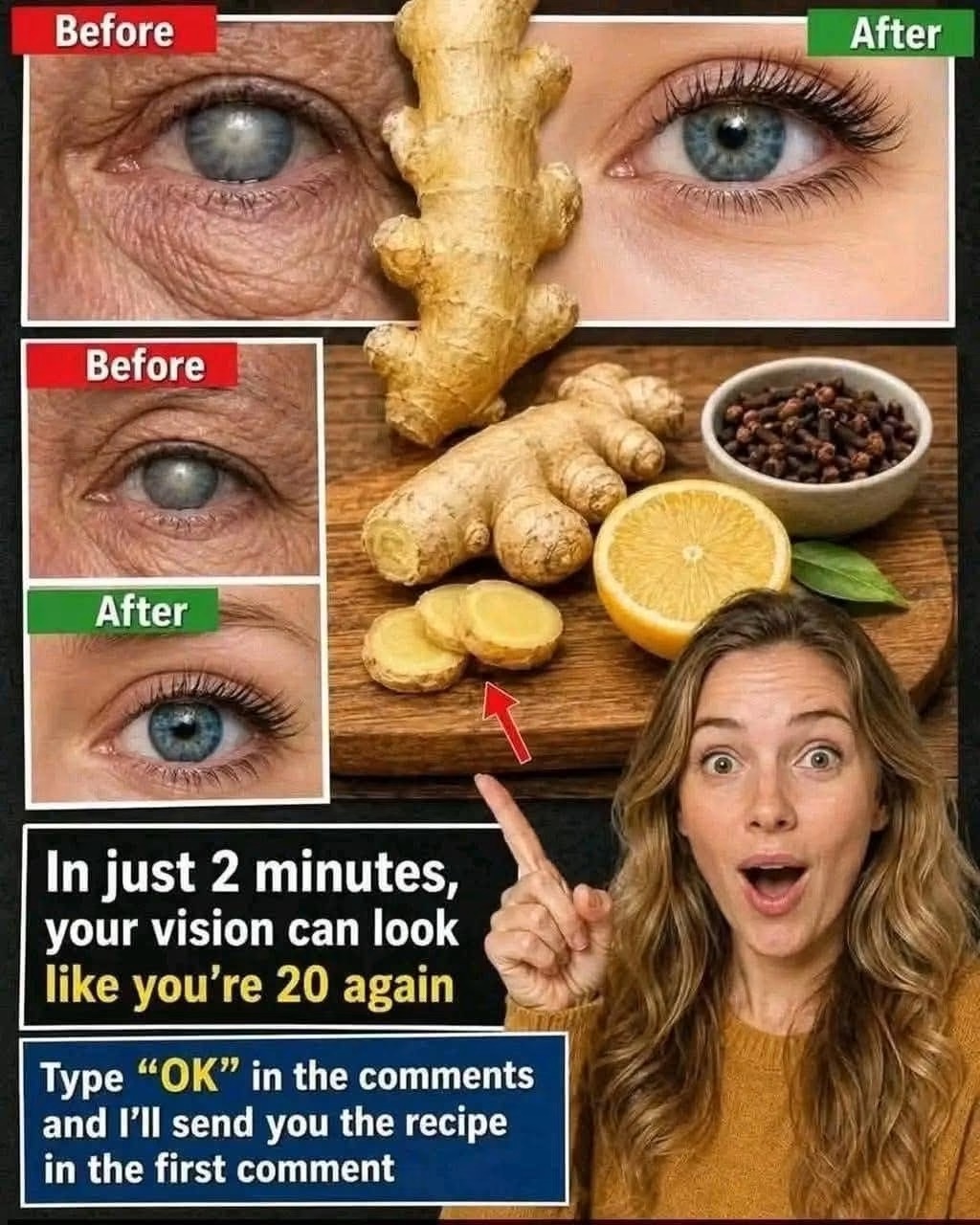
Natural ingredients such as ginger, cloves, and citrus fruits are often featured in homemade beauty and wellness recipes. Their strong flavors, aromas, and naturally occurring plant compounds have made them popular in traditional practices.
However, it is important to separate traditional beauty ideas from proven medical treatments. A homemade mixture cannot reliably restore vision, remove cataracts, eliminate wrinkles around the eyes, or make a person’s eyesight look like it belongs to someone much younger.
The eye is also a particularly sensitive organ. Ingredients such as ginger, lemon, or cloves should never be placed directly into the eyes because they can cause irritation and discomfort.
Instead, these ingredients can simply be discussed as part of a healthy lifestyle and general wellness routine.
Why Eye Care Matters
Good eye care is an important part of overall health.
Vision can change naturally over time, and different factors can affect how clearly a person sees. Age, genetics, prolonged screen use, certain health conditions, medications, and environmental factors can all influence eye comfort and vision.
A healthy lifestyle cannot guarantee perfect eyesight, but everyday habits can support general well-being.
Regular eye examinations are also useful, particularly when someone notices changes in their vision.
Ginger and Eye Wellness
Ginger is a widely used culinary ingredient with a distinctive flavor and aroma.
It contains naturally occurring plant compounds and is commonly included in foods and beverages around the world.
Adding ginger to meals or drinks can be part of a varied diet. However, eating ginger should not be described as a treatment for poor eyesight or age-related eye conditions.
Most importantly, fresh ginger should not be rubbed onto the eyes or placed inside them.
The skin around the eyes is delicate, and ginger can cause significant irritation if it comes into contact with the eyes.
Cloves as a Food Ingredient
Cloves are aromatic spices commonly used in cooking and beverages.
They contain naturally occurring compounds and have traditionally been used in different culinary and cultural practices.
Cloves can be included in a balanced diet in normal food quantities.
However, this does not mean that clove water or clove mixtures can restore eyesight.
Clove essential oil should also never be placed directly into the eyes.
Essential oils are highly concentrated and may cause irritation or injury if they come into contact with sensitive tissues.
What About Lemon
Lemon is an excellent source of vitamin C when consumed as part of a normal diet.
Fresh lemon can be added to water, meals, salads, and other foods to provide flavor.
However, lemon juice should never be put directly into the eyes.
Its acidity can cause intense burning and irritation.
There is also no safe reason to use lemon juice as an eye treatment for blurry vision, cataracts, dark circles, or wrinkles.
Can These Ingredients Improve Vision in Two Minutes
There is no reliable basis for claiming that ginger, cloves, or lemon can restore eyesight within two minutes.
Vision problems have different causes, and the appropriate solution depends on the underlying problem.
For example, blurry vision can sometimes be related to refractive errors, dry eyes, temporary eye strain, or other conditions.
Some causes require glasses or contact lenses, while others may require professional medical treatment.
A homemade drink or skincare recipe should therefore never be presented as a replacement for an eye examination.
Be Careful With Homemade Eye Remedies
The eyes should be treated differently from ordinary skin.
A substance that seems harmless when eaten or used in cooking may not be safe when applied to the eye.
Homemade eye drops made from kitchen ingredients can introduce bacteria, irritate the surface of the eye, or cause other problems.
For this reason, do not prepare homemade eye drops using:
- Lemon juice
- Ginger juice
- Clove water
- Essential oils
- Baking soda
- Vinegar
- Raw food extracts
- Homemade herbal mixtures
These substances are not designed to be sterile ophthalmic products.
How to Support General Eye Health
Instead of relying on a quick homemade remedy, focus on practical everyday habits.
Eat a Balanced Diet
A varied diet containing vegetables, fruits, whole grains, legumes, nuts, and other nutritious foods can contribute to overall health.
Foods containing vitamins and other nutrients are part of a healthy eating pattern.
No single food, however, can guarantee perfect eyesight.
Take Breaks From Screens
Spending long periods looking at phones, computers, or other digital screens can contribute to temporary eye discomfort for some people.
Taking regular breaks can make screen use more comfortable.
A simple approach is to periodically look away from the screen and focus on something farther away.
Get Enough Sleep
Adequate sleep is important for general health and can also help reduce feelings of tiredness and discomfort.
If your eyes frequently feel extremely tired despite getting enough rest, consider discussing the issue with an eye-care professional.
Protect Your Eyes Outdoors
Bright sunlight can be uncomfortable and excessive ultraviolet exposure can contribute to long-term eye health concerns.
When appropriate, use sunglasses that provide suitable ultraviolet protection.
A hat can also provide additional protection from direct sunlight.
When to Have Your Eyes Checked
An eye examination can help identify vision problems and other concerns.
You should consider professional evaluation if you notice:
- Persistent blurry vision
- Sudden changes in eyesight
- Eye pain
- Persistent redness
- New flashes of light
- A sudden increase in floaters
- Loss of part of your vision
- Significant sensitivity to light
Sudden or severe changes in vision should not be treated with homemade remedies.
Seek appropriate medical attention instead.
Caring for the Skin Around the Eyes
Although kitchen ingredients should not be placed in the eyes, you can still take simple steps to care for the skin surrounding them.
Use gentle skincare products designed for the face.
Avoid rubbing the eye area aggressively.
Remove makeup gently.
Keep the skin moisturized if it feels dry.
Use sun protection appropriate for the face.
Remember that dark circles and fine lines can have many causes, including genetics, skin structure, pigmentation, aging, and lack of sleep. There is no single homemade recipe that works for everyone.
Why Before and After Pictures Can Be Misleading
Online posts often show dramatic before-and-after photographs.
However, differences in lighting, camera settings, makeup, facial expression, image editing, and image quality can make two photographs look very different.
A photograph alone cannot prove that a particular food, spice, or homemade mixture caused the change.
For health-related content, it is better to avoid presenting dramatic photographs as proof of a medical result.
A Safer Way to Use Ginger, Cloves, and Lemon
These ingredients can be enjoyed as part of food and beverages.
For example, you can prepare a simple warm drink using water, a small piece of fresh ginger, and a little lemon for flavor.
A small amount of clove can also be used as a spice.
The purpose of such a drink should be enjoyment and hydration rather than treating an eye condition.
Do not use the drink as homemade eye drops.
Simple Daily Eye Care Habits
A practical routine can be very simple.
Keep screens at a comfortable distance.
Take regular breaks during extended screen use.
Avoid rubbing your eyes with unwashed hands.
Remove contact lenses according to the instructions provided for them.
Keep contact lens equipment clean and follow proper care instructions.
Wear appropriate eye protection when working in situations where dust, chemicals, or flying particles may reach the eyes.
And most importantly, arrange an eye examination when you experience persistent vision problems.
Frequently Asked Questions
Can Ginger Restore Eyesight?
There is no reliable evidence that consuming or applying ginger can restore lost eyesight. Ginger can be enjoyed as a food ingredient, but it should not replace professional evaluation or treatment for vision problems.
Can Lemon Improve Vision?
Lemon provides vitamin C as part of the diet, but drinking lemon water does not guarantee improved eyesight. Lemon juice should never be placed directly into the eyes.
Can Cloves Remove Eye Problems?
Cloves are a culinary spice and should not be presented as a treatment for eye diseases or vision loss.
Can I Put Ginger Juice in My Eyes?
No. Ginger juice can irritate the eye. Homemade substances should not be used as eye drops.
Can I Put Lemon Juice Around My Eyes?
It is best to avoid applying lemon juice close to the eyes. It can irritate sensitive skin and may cause significant discomfort if it enters the eye.
Can a Homemade Remedy Improve Vision in Two Minutes?
There is no reliable basis for promising that a homemade recipe can restore or significantly improve vision within two minutes.
Final Thoughts
Ginger, cloves, and lemon are familiar natural ingredients that can be included in food and beverages. They can be part of a balanced lifestyle, but they should not be presented as quick treatments for vision problems.
In particular, never put ginger juice, lemon juice, clove preparations, essential oils, or other homemade mixtures directly into the eyes.
If you experience blurry vision, eye pain, sudden changes in eyesight, or other persistent symptoms, a qualified eye-care professional can help determine the cause and appropriate treatment.
Natural ingredients can have a place in everyday cooking and wellness, but when it comes to the eyes, safety should always come first.
Disclaimer: This article is intended for general informational purposes only. It does not diagnose, treat, cure, or prevent any eye disease or vision condition. Homemade ingredients should not be used as eye drops or as a substitute for professional eye care. If you experience persistent or sudden changes in vision, consult a qualified healthcare professional or eye-care specialist.