Collagen is one of the most important proteins found naturally in the human body. It helps provide structure and strength to the skin, bones, cartilage, tendons, ligaments, and other connective tissues.
As people get older, natural collagen production gradually changes. This is one reason why skin may become less firm over time and why maintaining a balanced diet becomes increasingly important.
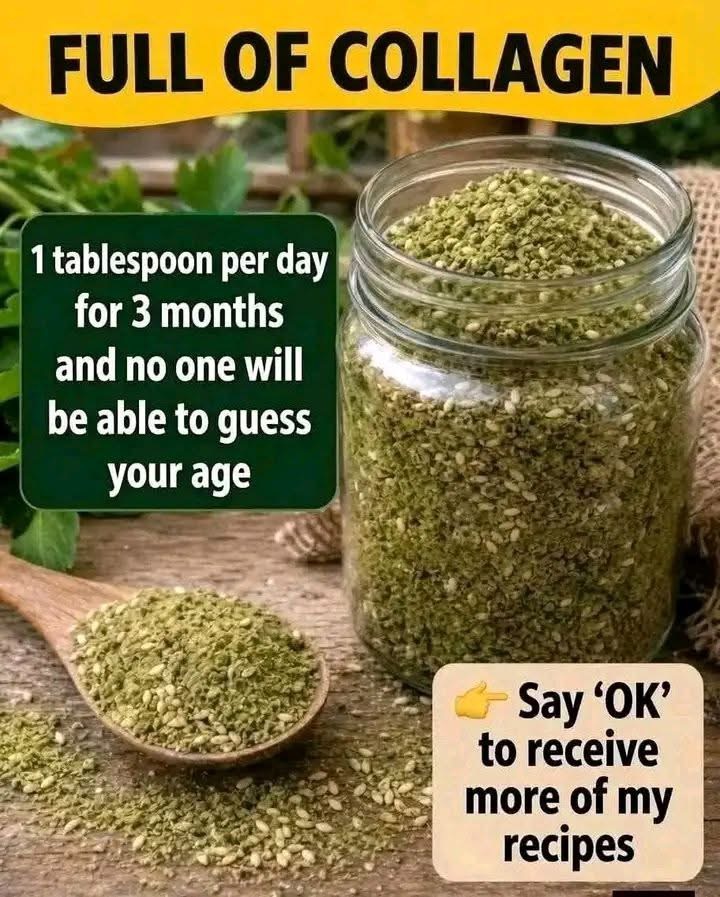
The image associated with this topic presents a green seed or herb mixture and claims that eating one tablespoon every day for several months can make a person look much younger. While nutritious seeds and plant foods can certainly be part of a healthy diet, it is not accurate to say that one particular ingredient is guaranteed to restore collagen or make someone look younger.
Collagen production is influenced by many factors, including age, genetics, overall nutrition, sun exposure, smoking, sleep, and general lifestyle.
This article explains what collagen is, which nutrients are involved in normal collagen production, and how you can build a balanced diet that supports healthy skin and connective tissues.
What Is Collagen
Collagen is a structural protein that occurs naturally throughout the body.
It is particularly important in connective tissues and provides a framework that helps tissues maintain their structure.
Collagen is found in areas such as:
- Skin
- Bones
- Cartilage
- Tendons
- Ligaments
- Blood vessels
- Other connective tissues
The body produces collagen using amino acids and several nutrients that participate in normal collagen formation.
Because collagen is produced inside the body, eating a food described as “full of collagen” does not necessarily mean that the body’s collagen levels will immediately increase.
Does a Green Seed Powder Contain Collagen
Plant foods do not generally provide collagen in the same way that animal connective tissues do.
If the ingredient shown in a social media image is a seed, herb, or plant powder, it should not automatically be described as a collagen-rich food.
Some plant foods can nevertheless provide nutrients that the body uses in normal collagen production.
This is an important distinction.
A food does not need to contain collagen itself to contribute to a diet that supports normal collagen formation.
Nutrients Important for Collagen Production
Collagen formation depends on adequate nutrition.
Several nutrients are particularly relevant, including vitamin C, protein, zinc, and copper.
These nutrients are found in many ordinary foods.
Eating a varied diet is therefore a more reliable approach than relying on one particular powder or seed.
Vitamin C and Collagen
Vitamin C plays an important role in normal collagen formation.
Good dietary sources include:
- Oranges
- Lemons
- Kiwi
- Strawberries
- Bell peppers
- Broccoli
- Tomatoes
- Guava
- Other fruits and vegetables
Including vitamin C rich foods regularly can help provide the nutrients required for normal collagen production.
A colorful diet containing several types of fruits and vegetables is an easy way to increase dietary variety.
Protein and Collagen
Collagen is a protein, so adequate protein intake is important for maintaining body tissues.
Protein can come from many foods, including:
- Eggs
- Fish
- Poultry
- Dairy products
- Beans
- Lentils
- Chickpeas
- Nuts
- Seeds
- Soy foods
The appropriate amount of protein depends on factors such as age, body size, activity level, and individual health needs.
A balanced diet that provides enough protein is more useful than focusing exclusively on collagen products.
Zinc and Skin Health
Zinc is an essential mineral involved in numerous normal processes in the body.
It can be found in foods such as meat, seafood, dairy products, legumes, nuts, and seeds.
Because zinc participates in normal tissue maintenance, adequate intake is important for overall health.
However, taking large amounts of zinc does not necessarily produce better skin or more collagen.
Excessive supplementation can cause unwanted effects, so supplements should be used appropriately.
Copper and Connective Tissue
Copper is another mineral involved in normal connective tissue metabolism.
Foods containing copper include nuts, seeds, legumes, whole grains, seafood, and certain organ meats.
A varied diet can generally provide copper without requiring a special recipe.
As with other nutrients, more is not necessarily better.
Can Seeds Support Healthy Skin
Seeds can be nutritious additions to a balanced diet.
Depending on the type of seed, they may provide:
- Protein
- Fiber
- Healthy fats
- Minerals
- Plant compounds
However, the nutritional composition varies significantly from one seed to another.
If the ingredient in the image is a seed mixture, its benefits depend on the actual ingredients and the quantity consumed.
It is therefore better to identify the ingredients accurately before making specific nutritional claims.
Why One Tablespoon Is Not a Magic Amount
The image suggests consuming one tablespoon every day for three months.
There is no universal rule stating that one tablespoon of a particular seed or powder will restore collagen or make a person’s age impossible to guess.
Nutritional requirements differ between individuals.
The effects of a food also depend on the rest of the diet.
For example, someone who already eats a varied diet may obtain plenty of the nutrients associated with collagen production without needing a special daily mixture.
Can Food Make You Look Younger
Diet can influence overall health and can contribute to healthy skin.
Adequate protein, fruits, vegetables, healthy fats, vitamins, minerals, hydration, and other nutrients all have roles in maintaining normal body function.
However, no single food can guarantee a younger appearance.
Visible signs of aging are influenced by genetics, natural aging, sun exposure, lifestyle, and many other factors.
It is therefore more realistic to focus on maintaining healthy skin rather than expecting one recipe to reverse aging.
Sun Protection and Skin Aging
Nutrition is only one part of skin health.
Sun exposure is an important factor in premature skin aging.
Regular protection from excessive ultraviolet exposure can help reduce cumulative sun damage.
Useful habits include seeking shade, wearing protective clothing, and using an appropriate sunscreen when exposed to the sun.
These everyday habits are more realistic than relying on a single food to prevent wrinkles.
Hydration and Healthy Skin
Adequate hydration supports normal body function.
Water is generally the simplest way to maintain hydration.
Fruits and vegetables also contain water and can contribute to total fluid intake.
However, drinking excessive amounts of water does not automatically eliminate wrinkles or increase collagen.
Hydration should be considered part of an overall healthy routine.
Healthy Fats and the Skin
Some seeds and nuts contain unsaturated fats.
Healthy fats can be part of a balanced eating pattern and are important for normal body functions.
Examples include foods such as:
- Walnuts
- Almonds
- Flaxseeds
- Chia seeds
- Sesame seeds
- Avocado
- Olive oil
- Certain fish
Including a variety of fat sources can make meals more nutritious and satisfying.
How to Add Seeds to Your Diet
If you enjoy seeds, there are many simple ways to include them in meals.
You can sprinkle them over yogurt.
Add them to oatmeal.
Mix them into smoothies.
Add them to salads.
Use them in homemade bread.
Include them in energy bites.
Mix them with breakfast cereals.
The important point is to use them as part of a varied diet rather than treating them as a medical remedy.
A Simple Seed and Yogurt Bowl
A nutritious snack can be prepared with plain yogurt, fruit, and a small amount of seeds.
Ingredients
- 1 cup plain yogurt
- 1 serving of fresh fruit
- 1 tablespoon of your preferred edible seeds
- A small amount of chopped nuts if desired
Preparation
Place the yogurt in a bowl.
Add chopped fruit.
Sprinkle the seeds over the top.
Add a few nuts if desired.
Mix gently and serve.
This combination can provide protein, fiber, healthy fats, and other nutrients depending on the ingredients selected.
A Simple Fruit and Seed Smoothie
Another option is a homemade smoothie.
Ingredients
- 1 banana
- 1 cup of berries or another fruit
- 1 cup of milk or an unsweetened plant based beverage
- 1 tablespoon of edible seeds
- Ice if desired
Blend until smooth.
You can adjust the consistency by adding more liquid.
Avoid adding large amounts of sugar or sweetened syrups if you want to keep the drink relatively low in added sugar.
Why Variety Matters
There is no need to search for one “superfood” that provides everything the body needs.
Different foods contain different nutrients.
Fruits can provide vitamin C and other plant compounds.
Protein rich foods provide amino acids.
Seeds and nuts can provide healthy fats and minerals.
Vegetables provide fiber, vitamins, minerals, and plant compounds.
Whole grains and legumes provide carbohydrates, fiber, protein, and minerals.
Combining different foods gives the body access to a wider range of nutrients.
Collagen Supplements and Food
Collagen supplements are widely available, but they are different from ordinary plant foods.
Collagen supplements generally contain collagen peptides or related protein ingredients.
The evidence surrounding collagen supplements is an active area of research, particularly regarding skin appearance and other outcomes.
Even when a supplement may provide a specific benefit for some people, it should not be assumed that every collagen product works in the same way.
People considering supplements should examine the ingredients, serving size, quality, and any relevant health considerations.
Do You Need a Collagen Supplement
Not everyone needs a collagen supplement.
If your diet already provides adequate protein and a variety of fruits, vegetables, and other nutrient rich foods, there may be no need to add a specialized product.
People who have specific dietary restrictions or nutritional concerns may benefit from discussing their options with a qualified healthcare professional or registered dietitian.
Supplements should complement a good diet rather than replace it.
What Can Reduce Collagen Over Time
Natural aging is one factor associated with changes in collagen production.
Other lifestyle factors can also affect skin health.
Excessive ultraviolet exposure can contribute to skin damage.
Smoking is harmful to overall health and can negatively affect skin quality.
Poor nutrition can make it harder for the body to obtain essential nutrients.
Long term stress and inadequate sleep can also affect overall well-being.
Improving several lifestyle habits is more realistic than expecting one food to reverse these factors.
Getting Enough Sleep
Sleep is an important part of general health.
Adults generally benefit from a consistent sleep schedule and sufficient sleep.
Although sleep is not a direct collagen treatment, maintaining good sleep habits contributes to overall well-being and can support healthy daily routines.
A healthy lifestyle should therefore include both good nutrition and appropriate rest.
Exercise and Connective Tissue
Regular physical activity supports muscles, bones, joints, and general physical function.
Strength training and weight bearing activities can be particularly useful for maintaining physical strength and bone health when appropriate for the individual.
People who have injuries or medical conditions should choose activities suitable for their situation.
Exercise cannot stop natural aging, but maintaining physical activity is an important part of long term health.
Avoiding Extreme Diets
Extreme diets can make it difficult to obtain adequate protein, vitamins, minerals, and other nutrients.
If your goal is healthier skin, maintaining a balanced diet is generally more sensible than eliminating large groups of foods without a medical reason.
A sustainable eating pattern is easier to maintain over time.
How to Evaluate Viral Nutrition Claims
When you see a social media image claiming that one ingredient can dramatically change your appearance, ask a few questions.
What exactly is the ingredient?
Does the claim come from a reliable scientific source?
Is there human research supporting the specific claim?
Is the recommended amount based on evidence?
Does the claim promise an unusually dramatic result?
Does it suggest that a food can replace medical treatment?
These questions can help distinguish useful nutritional information from exaggerated online advertising.
Important Difference Between Nutrition and Treatment
A nutritious food can support normal body functions without being a treatment.
For example, vitamin C is important for normal collagen formation.
That does not mean that eating a lemon will eliminate wrinkles.
Similarly, protein is necessary for maintaining tissues, but eating extra protein does not guarantee a younger appearance.
Understanding this distinction helps people make realistic decisions about food and health.
A Practical Daily Routine for Healthy Skin
A simple routine can include a variety of nutritious foods throughout the day.
For breakfast, consider yogurt with fruit and seeds.
For lunch, include vegetables, a protein source, and whole grains.
For a snack, choose fruit or a small serving of nuts.
For dinner, include vegetables and an appropriate protein source.
Drink water regularly according to your needs.
Protect your skin from excessive sun exposure.
Stay physically active.
Get adequate sleep.
These habits are more useful for long term health than relying on one special ingredient.
Final Thoughts
The green mixture shown in the image may be a seed or herb preparation, but the claim that one tablespoon per day can restore collagen and make it impossible for others to guess your age is not a claim that should be presented as a guaranteed health fact.
Collagen is an important structural protein, and the body requires adequate nutrition to maintain normal collagen production.
Important nutrients include protein, vitamin C, zinc, copper, and other nutrients obtained through a varied diet.
Seeds can be nutritious, depending on the type, and they may provide protein, fiber, healthy fats, and minerals. They can therefore be a useful addition to meals and snacks.
However, no single seed, powder, drink, or recipe can guarantee younger looking skin or reverse the natural aging process.
For healthy skin and overall well-being, focus on a balanced diet, adequate protein, plenty of varied fruits and vegetables, appropriate hydration, regular physical activity, sufficient sleep, and protection from excessive sun exposure.
The goal should not be to find one miracle ingredient. A consistent healthy lifestyle is a much more practical way to support the body over time.
Important Disclaimer
This article is for general educational and informational purposes only. It is not intended to diagnose, treat, prevent, or cure any disease or medical condition.
The nutritional information associated with a specific seed or herb depends on its exact identity, preparation, and serving size. The claims shown in social media images should not be interpreted as medical advice or as guaranteed results.
If you have a medical condition, nutritional deficiency, food allergy, or concerns about supplements, consult a qualified healthcare professional before making significant dietary changes.