Skin tags are common skin growths that can appear on different parts of the body. They are usually small, soft, and harmless. Many people notice them around the neck, underarms, eyelids, groin, or other areas where the skin regularly rubs against itself.
Because skin tags are generally harmless, they often do not need treatment. However, some people choose to have them removed because they catch on clothing, become irritated, or simply because they do not like their appearance.
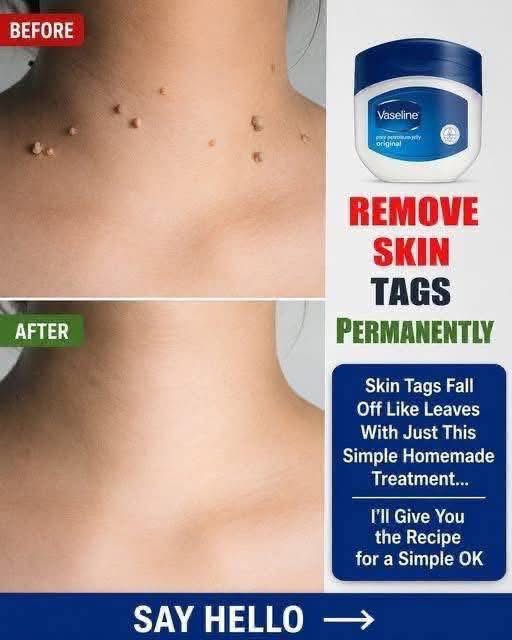
Social media posts sometimes claim that Vaseline or homemade mixtures can make skin tags disappear permanently. These claims can sound convincing, especially when they are accompanied by before-and-after pictures. However, Vaseline is not a proven treatment for removing skin tags.
Vaseline can help moisturize and protect the skin, but it does not have an established ability to make a skin tag disappear.
What Is a Skin Tag
A skin tag is a small, soft piece of tissue that grows from the surface of the skin. It may be attached to the skin by a narrow stalk or have a broader base.
Skin tags can be skin-colored, slightly darker, or sometimes reddish if they become irritated.
They commonly develop in areas where there is frequent friction, including:
- The neck
- Under the arms
- Around the eyelids
- Under the breasts
- The groin area
- Folds of skin
- Areas where clothing repeatedly rubs
Some people have only one skin tag, while others may develop several over time.
Skin tags are usually not dangerous. However, not every bump on the skin is a skin tag. Some moles, warts, cysts, and other skin conditions can look similar.
For that reason, it is important to be cautious before trying to remove an unfamiliar growth at home.
Can Vaseline Remove Skin Tags
Vaseline is a petroleum jelly commonly used to protect and moisturize dry or irritated skin.
It works by forming a protective layer over the skin, helping reduce moisture loss. This can make the surrounding skin feel softer and may reduce irritation caused by dryness or friction.
However, Vaseline is not a clinically established method for removing skin tags.
Applying Vaseline to a skin tag is therefore unlikely to make the growth fall off or disappear permanently.
This is important because many viral posts use phrases such as “remove skin tags permanently” or “skin tags fall off overnight.” Such claims should be treated with caution.
A product being described as natural, simple, or homemade does not necessarily mean that it can safely remove a skin growth.
Why Internet Skin Tag Remedies Can Be Misleading
Social media is full of recipes claiming to remove skin tags with household ingredients.
Some posts recommend ingredients such as vinegar, baking soda, essential oils, garlic, or other substances. Other posts suggest tying off a skin tag, cutting it, burning it, or freezing it at home.
These methods can potentially damage healthy skin.
Strong substances can cause irritation or chemical burns. Cutting a growth can cause bleeding and infection. Attempting to freeze or burn a growth without proper medical guidance can also result in skin damage and scarring.
There is another important problem: you may not actually have a skin tag.
A growth that looks like a skin tag in a photograph could be something else. If an unusual growth is treated at home without being identified, the correct diagnosis could be delayed.
Should You Remove a Skin Tag Yourself
It is generally safer not to cut, burn, or chemically destroy a skin tag yourself.
Even a small growth can bleed when injured. Home removal can also introduce bacteria into the wound and increase the risk of infection.
If a skin tag is causing discomfort, getting caught on jewelry or clothing, or bothering you cosmetically, a healthcare professional can examine it and discuss appropriate removal options.
Professional treatment is particularly important when you are not certain that the growth is actually a skin tag.
When Should You See a Dermatologist
Most ordinary skin tags are harmless. Nevertheless, you should have a skin growth evaluated if you notice something unusual.
Consider getting medical advice if the growth:
- Starts bleeding without being injured
- Becomes painful
- Changes significantly in color
- Changes in shape or appearance
- Grows quickly
- Becomes very irritated
- Looks substantially different from your other skin tags
- Keeps returning after treatment
- Is difficult to identify
You should also seek professional advice if you suddenly develop many new growths or if you are simply unsure what the growth is.
A dermatologist can examine the area and determine whether it appears to be a skin tag or another type of skin lesion.
How Doctors Remove Skin Tags
If removal is appropriate, a dermatologist or other qualified healthcare professional can use several established techniques.
The method chosen depends on the size, location, and characteristics of the skin tag.
Cryotherapy
Cryotherapy involves freezing the growth, commonly using liquid nitrogen.
The treated tissue may become swollen, blister, or form a small scab before healing. The skin tag can then disappear as the treated tissue is shed.
Electrosurgery
Electrosurgery uses controlled electrical energy to destroy the skin tag.
The treated area can develop a small scab while the skin heals.
Sterile Removal
Some skin tags can be removed with sterile medical instruments.
A healthcare professional can determine whether local anesthetic is appropriate, particularly for larger or sensitive growths.
Professional removal is preferable to attempting these techniques at home because the practitioner can first evaluate the growth and use appropriate equipment and technique.
Does Vaseline Have Any Benefits for the Skin
Although Vaseline does not remove skin tags, it can still be useful for certain skin-care purposes.
Petroleum jelly can help protect dry skin by creating a barrier that reduces water loss. It may also help protect irritated areas from friction.
For example, if a skin tag repeatedly rubs against clothing, protecting the surrounding skin from excessive friction may make the area more comfortable.
However, this should not be interpreted as evidence that Vaseline is removing the skin tag itself.
There is an important difference between protecting the skin around a growth and removing the growth.
How to Care for a Skin Tag at Home
If a skin tag has already been identified by a healthcare professional and is not causing problems, you may simply leave it alone.
Basic skin care can help prevent unnecessary irritation.
Keep the area clean and avoid repeatedly scratching or pulling the growth.
If the surrounding skin is dry, a gentle moisturizer or petroleum jelly can help improve the skin barrier.
When shaving around the area, take care to avoid cutting the skin tag.
If the skin tag catches on clothing or jewelry frequently, consider reducing the friction rather than trying to remove it yourself.
Why Cutting a Skin Tag Can Be Risky
A common internet suggestion is to cut a skin tag with scissors or another sharp object.
This is not a good idea.
Skin contains blood vessels, and cutting a growth can cause significant bleeding. Using household scissors or other non-sterile instruments can also introduce bacteria into the wound.
Even if the growth appears small, the resulting wound can become infected or heal with a scar.
There is also the possibility that the growth is not a skin tag at all.
For these reasons, professional assessment and removal are safer choices when treatment is desired.
What About Tying a String Around a Skin Tag
Another popular internet technique involves tying a thread or piece of string tightly around the base of a skin tag.
The theory is that restricting the blood supply will cause the tissue to die and eventually fall away.
Although this idea is frequently discussed online, attempting it yourself can cause pain, bleeding, infection, and other complications. It can also make it difficult to determine what the original growth looked like if medical assessment becomes necessary.
A healthcare professional can provide safer alternatives.
Can Skin Tags Be Prevented
There is no guaranteed way to prevent every skin tag.
However, reducing repeated friction may help reduce irritation in areas where skin tags commonly occur.
Simple measures include wearing comfortable clothing, avoiding unnecessary rubbing, and keeping skin folds clean and dry.
If you frequently develop skin tags, discuss this with a healthcare professional, especially if you notice a sudden change in the number or appearance of the growths.
What the Viral Vaseline Image Gets Wrong
The image that claims Vaseline can permanently remove skin tags presents a simple solution to a common problem.
The problem is that the claim goes beyond what Vaseline is known to do.
Vaseline is primarily a protective moisturizer. It is not a medically established skin-tag removal treatment.
Before-and-after pictures on social media can also be misleading because they may not show how the growth was actually treated. Lighting, camera angles, cropping, editing, and differences in the skin can make a dramatic change appear to have occurred.
A trustworthy health article should therefore avoid promising that a particular household ingredient will make skin tags disappear.
The Safest Approach
If you have a small growth that has already been identified as a skin tag and it does not bother you, leaving it alone is often the simplest option.
If you want it removed, professional treatment is the safer approach.
Avoid experimenting with strong chemicals, cutting instruments, burning methods, or unverified homemade recipes.
And if you are not sure whether the growth is actually a skin tag, have it examined before attempting any treatment.
Final Thoughts
Skin tags are common and usually harmless. They can be annoying or cosmetically undesirable, but they generally do not need to be removed unless they are causing problems or you want them removed.
Vaseline can moisturize and protect the surrounding skin, but there is no good evidence that simply applying Vaseline will permanently remove a skin tag.
The safest approach is to avoid aggressive home remedies and seek professional advice when removal is desired or when a growth looks unusual.
A viral health post may promise a quick solution, but skin deserves more care than a one-size-fits-all internet recipe. When it comes to an unfamiliar skin growth, proper identification and safe treatment are more important than getting fast results.