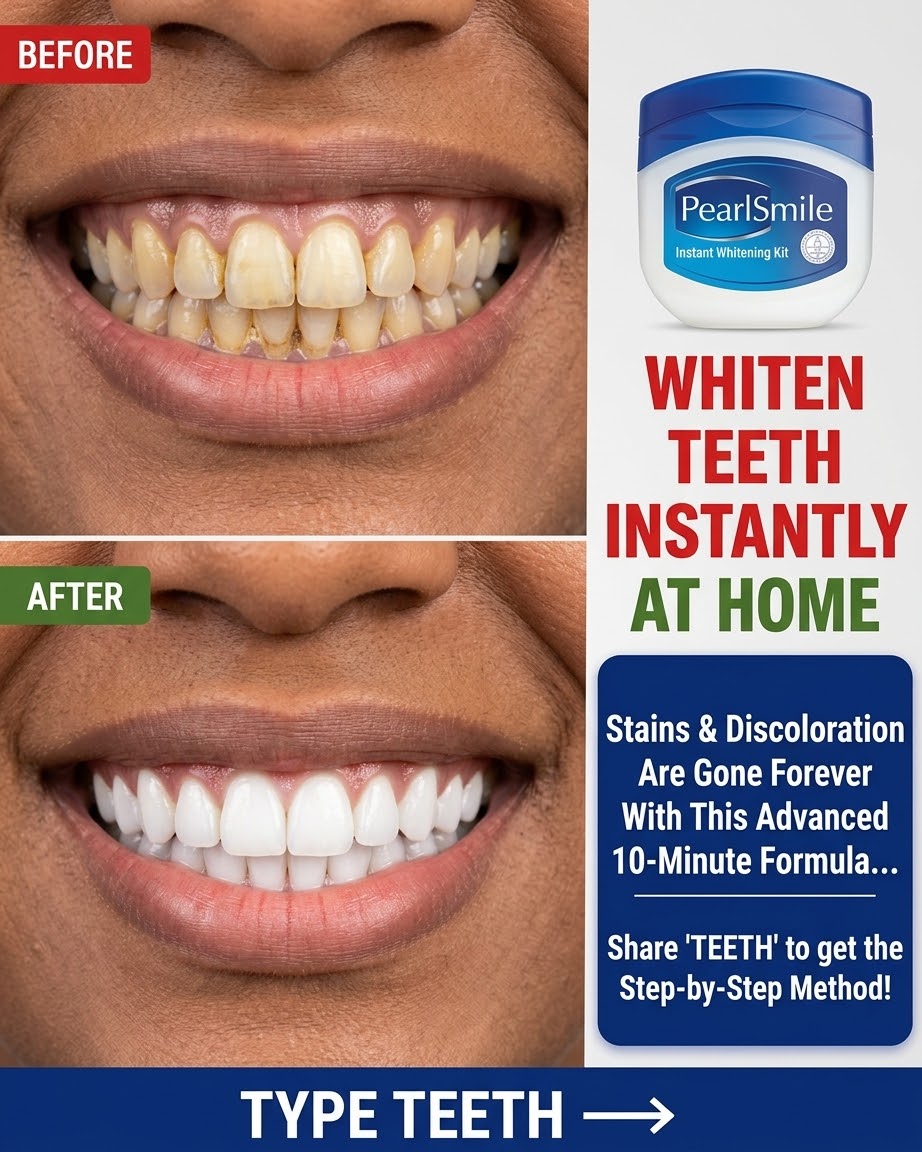
A bright, healthy-looking smile is something many people want. Because of this, teeth whitening products have become very popular, especially on social media. Many advertisements show dramatic before-and-after photographs and promise that yellow or stained teeth can become extremely white in only a few minutes.
The image promoting an instant whitening kit makes a strong promise: it suggests that stains and discoloration can disappear permanently after a 10-minute treatment. While teeth whitening can improve the appearance of natural teeth, these kinds of claims can create unrealistic expectations.
Teeth whitening does not work exactly the same way for everyone. The final result depends on the original color of the teeth, the cause of discoloration, the whitening product used, and the condition of the teeth and gums.
The good news is that there are safer ways to make your smile look brighter while protecting your oral health.
What Causes Yellow Teeth
Teeth naturally come in different shades. Healthy teeth are not necessarily bright white, and a slightly yellow or cream-colored appearance does not automatically mean that something is wrong.
Several factors can make teeth look darker or more yellow over time.
Food and Drinks
Coffee and tea are common sources of surface staining. Other foods and drinks with strong colors can also contribute to discoloration when consumed frequently.
Examples include:
- Coffee
- Tea
- Red wine
- Cola and other dark beverages
- Berries
- Tomato-based sauces
- Dark-colored foods
These substances can leave pigments on the surface of the teeth.
Smoking and Tobacco
Tobacco can cause noticeable staining and can make teeth appear yellow or brown over time.
Avoiding tobacco is one of the best things a person can do for their overall oral health as well as the appearance of their teeth.
Aging
Teeth naturally change as people get older.
The outer enamel can gradually become thinner, allowing more of the dentin underneath to show through. Dentin naturally has a more yellowish color than enamel.
As a result, teeth can appear darker with age even when a person maintains good oral hygiene.
Plaque and Tartar
Plaque is a sticky film that develops on the teeth. If it is not removed properly, it can contribute to a dull or discolored appearance.
Tartar, also called dental calculus, is hardened plaque that cannot always be removed effectively with ordinary brushing. A dental professional can remove it during a professional cleaning.
Can Teeth Be Whitened at Home
Yes, some teeth-whitening products are designed for home use. However, the effectiveness and safety depend on the ingredients, concentration, instructions, and condition of the person’s teeth.
Some products primarily remove surface stains, while others use bleaching ingredients to lighten the natural color of teeth.
It is important to understand that home whitening is not the same as a professional dental whitening procedure.
For people who want to whiten their teeth, dentist-provided or dentist-supervised options can be a safer choice because the dentist can first check the condition of the teeth and gums.
Can Teeth Become Perfectly White in 10 Minutes
There is no universal 10-minute treatment that will make everyone’s teeth perfectly white.
Some professional whitening procedures can produce noticeable results relatively quickly, but individual results vary.
The amount of whitening depends on the original tooth color and the type of discoloration. Some stains respond better to whitening than others.
Before-and-after photographs used in advertisements should also be interpreted carefully. Lighting, camera settings, image editing, and other factors can make the difference appear more dramatic than it would in everyday life.
For this reason, a picture showing extremely white teeth should not be considered a guarantee that the same result will happen for every person.
Is Teeth Whitening Permanent
Teeth whitening is not permanent.
Even after successful whitening, teeth can gradually become darker again. Everyday habits can contribute to new staining.
Coffee, tea, tobacco, certain foods, aging, and normal exposure to pigments can all affect the appearance of teeth over time.
This means claims that stains will disappear “forever” should be treated cautiously.
Maintaining good oral hygiene and limiting common sources of staining can help preserve a brighter appearance for longer.
How Whitening Products Work
Many dental bleaching products contain peroxide-based ingredients, such as hydrogen peroxide or carbamide peroxide.
These ingredients can interact with colored compounds inside the tooth and make the tooth appear lighter.
Other products, such as some whitening toothpastes, primarily help remove surface stains.
This distinction is important because removing surface stains is different from changing the natural color of the tooth.
A toothpaste may make teeth appear cleaner and brighter without producing the same degree of whitening as a bleaching treatment.
Whitening Toothpaste and Bleaching Products Are Different
Whitening toothpaste is often marketed as a simple way to get a brighter smile.
Many whitening toothpastes contain ingredients that help remove surface stains. They may be useful for maintaining a cleaner appearance, particularly for people who regularly consume staining foods or drinks.
Bleaching products work differently because they can lighten the natural color of the tooth.
Neither option guarantees perfectly white teeth.
The appropriate choice depends on the individual’s teeth, the cause of discoloration, and the desired result.
Is an At Home Whitening Kit Safe
Some at-home whitening products can be used safely when they are properly formulated and used exactly as directed.
However, not every product advertised online has the same quality or safety standards.
A product should not be considered safe simply because it has attractive packaging or dramatic before-and-after photographs.
When using a whitening product, always follow the manufacturer’s instructions. Do not use a larger amount, increase the treatment frequency, or leave the product on longer than recommended.
Using more whitening product does not necessarily produce better results and may increase the chance of irritation or sensitivity.
Common Side Effects of Teeth Whitening
Tooth whitening can sometimes cause temporary side effects.
The most common problems include tooth sensitivity and irritation of the gums.
You may notice sensitivity when consuming:
- Cold water
- Ice cream
- Hot drinks
- Sweet foods
- Very cold foods
Some people may also experience temporary gum irritation if whitening material comes into contact with the gums.
If discomfort is severe, persistent, or unusual, stop using the product and speak with a dentist.
Why You Should Not Overuse Whitening Products
It can be tempting to continue whitening your teeth when you want a brighter smile.
However, repeated or inappropriate use can increase the risk of sensitivity and irritation.
Whitening should be approached as a cosmetic treatment rather than something that needs to be performed constantly.
Once you have achieved an appropriate result, maintaining good oral hygiene and reducing staining habits may be more useful than repeatedly applying strong whitening products.
Whitening Does Not Whiten Crowns and Veneers
One important fact that is often overlooked in whitening advertisements is that natural teeth and dental restorations do not necessarily respond in the same way.
Crowns, veneers, dentures, fillings, and other restorations may not become lighter when natural teeth are whitened.
This can sometimes result in a difference in color between natural teeth and existing dental work.
If you have visible crowns, veneers, or fillings and are considering whitening, it is a good idea to discuss the treatment with your dentist first.
When You Should See a Dentist Before Whitening
Teeth whitening is primarily cosmetic, but it should not be used to cover up a dental problem.
You should consider seeing a dentist before whitening if you have:
- Tooth pain
- Bleeding gums
- Swollen gums
- Significant tooth sensitivity
- Cavities
- Cracked teeth
- Gum disease
- A tooth that suddenly becomes darker
- Unexplained discoloration
- Extensive dental restorations
A dentist can determine whether the discoloration is suitable for cosmetic whitening or whether another problem needs attention first.
Why One Dark Tooth Needs Special Attention
If all of your teeth gradually become slightly darker, the cause may be related to aging, diet, or surface staining.
But if one tooth suddenly becomes significantly darker than the others, it should not simply be treated with a whitening product.
A change in the color of an individual tooth can sometimes be associated with an underlying dental issue.
Getting the tooth examined can help identify the cause before attempting cosmetic treatment.
Avoid Dangerous Homemade Whitening Recipes
Social media frequently promotes homemade teeth-whitening recipes using household ingredients.
Common examples include lemon juice, vinegar, baking soda, salt, charcoal, or mixtures of several substances.
Natural does not automatically mean safe for tooth enamel.
Acidic substances can damage enamel when used improperly or repeatedly. Abrasive substances can also cause problems when aggressively scrubbed against the teeth.
For this reason, it is better to avoid experimenting with strong homemade whitening mixtures.
If you want to whiten your teeth, choose a product specifically designed for oral use and follow its instructions.
What About Baking Soda
Baking soda is sometimes included in toothpastes and oral-care products because it can help with cleaning and surface stain removal.
However, using large amounts of baking soda as a homemade whitening treatment is not the same as using a properly formulated dental product.
It should not be mixed with acidic ingredients such as lemon juice or vinegar in an attempt to create a stronger whitening treatment.
Aggressive scrubbing is also not recommended.
The goal should be to clean the teeth without unnecessarily irritating the enamel or gums.
Simple Habits for a Brighter Looking Smile
You do not need an aggressive whitening routine to maintain a clean and attractive smile.
Brush Twice a Day
Brush your teeth twice daily with fluoride toothpaste.
Use gentle movements rather than brushing aggressively.
Clean Between Your Teeth
Flossing or using an appropriate interdental cleaner can remove plaque and food particles from places that a toothbrush cannot easily reach.
Drink Water
Drinking water throughout the day can help rinse away food particles and reduce prolonged exposure to some staining substances.
Reduce Staining Drinks
If you frequently drink coffee, tea, or other dark beverages, reducing how often you consume them may help limit new surface stains.
Avoid Tobacco
Avoiding tobacco can help prevent staining while also supporting better oral health.
Visit a Dentist Regularly
Professional dental examinations and cleanings can help identify problems early and remove deposits that cannot always be removed with ordinary brushing.
How to Maintain Teeth After Whitening
If you have whitened your teeth, maintaining the result is important.
Continue brushing twice daily and cleaning between your teeth.
Try to limit frequent exposure to foods and drinks that cause staining.
If you drink coffee or tea regularly, you do not necessarily need to eliminate them completely, but reducing frequency and maintaining good oral hygiene can help.
Avoid repeatedly whitening your teeth simply because you want them to become as white as possible.
Natural-looking teeth are not necessarily pure white.
What the Advertisement in the Image Gets Wrong
The advertisement uses powerful phrases such as “whiten teeth instantly” and claims that stains and discoloration are gone forever.
These statements should not be interpreted as universal medical or dental results.
Teeth whitening can lighten natural teeth, but the amount of whitening varies between individuals. The results are also not permanent.
Some people can experience tooth sensitivity or gum irritation, and existing dental restorations may not whiten in the same way as natural teeth.
Therefore, the before-and-after photograph in an advertisement should be considered an example rather than a guaranteed result.
A Safer Approach to Teeth Whitening
If you want a brighter smile, start with your oral health.
Make sure your teeth and gums are healthy before beginning a whitening treatment.
If you have significant staining, sensitivity, pain, cavities, gum problems, or dental restorations, speak with a dentist.
If whitening is appropriate, a dentist can help you choose an option that matches your teeth and your goals.
For mild surface staining, improving daily oral hygiene and using an appropriate whitening toothpaste may be enough.
For deeper discoloration, a dentist can discuss professional or dentist-supervised whitening options.
Frequently Asked Questions
Can Vaseline whiten teeth?
No. Vaseline is not a teeth-whitening treatment and should not be used as a substitute for a dental whitening product.
Can lemon juice whiten teeth?
Using lemon juice on teeth is not recommended as a homemade whitening method because acidic substances can damage tooth enamel.
Can yellow teeth become white?
Natural teeth can often be lightened through appropriate whitening treatments, but the degree of whitening varies from person to person.
Does whitening last forever?
No. Teeth can gradually become stained again, so whitening results are not permanent.
Is tooth sensitivity after whitening normal?
Temporary sensitivity can occur after whitening. If the sensitivity is severe or does not improve, consult a dentist.
Can crowns and veneers be whitened?
Whitening primarily affects natural tooth structure. Crowns and veneers may not change color in the same way as natural teeth.
Final Thoughts
Teeth whitening can be an effective cosmetic option for people who want a brighter smile, but dramatic social media promises should always be approached with caution.
There is no single 10-minute treatment that will produce perfectly white teeth for everyone, and no whitening treatment can guarantee that stains will disappear permanently.
The safest strategy is to protect your natural teeth, maintain good oral hygiene, avoid harmful homemade mixtures, and use appropriate whitening products according to their instructions.
If you want stronger or faster whitening, professional dental advice can help you choose a suitable option while reducing unnecessary risks.
A healthy smile is more important than achieving an unrealistic shade of white. The best whitening approach is one that improves appearance while keeping your teeth and gums healthy.
Key Takeaways
- Yellowish teeth are not necessarily unhealthy.
- Coffee, tea, tobacco, food, aging, and plaque can contribute to discoloration.
- Teeth whitening can lighten natural teeth but results are not permanent.
- A 10-minute treatment cannot guarantee the same result for everyone.
- Whitening products can sometimes cause temporary tooth sensitivity or gum irritation.
- Crowns, veneers, fillings, and other restorations may not whiten like natural teeth.
- Avoid aggressive homemade whitening recipes.
- Do not use lemon juice or vinegar directly on your teeth as a whitening treatment.
- Do not overuse whitening products.
- Consult a dentist if you have pain, cavities, gum problems, severe sensitivity, or unexplained tooth discoloration.
- Good oral hygiene is essential for maintaining a clean and healthy-looking smile.
Dental health disclaimer: This article is for general educational purposes only and is not a substitute for professional dental advice, diagnosis, or treatment. If you have tooth pain, gum problems, significant sensitivity, or an unexplained change in tooth color, consult a qualified dental professional.