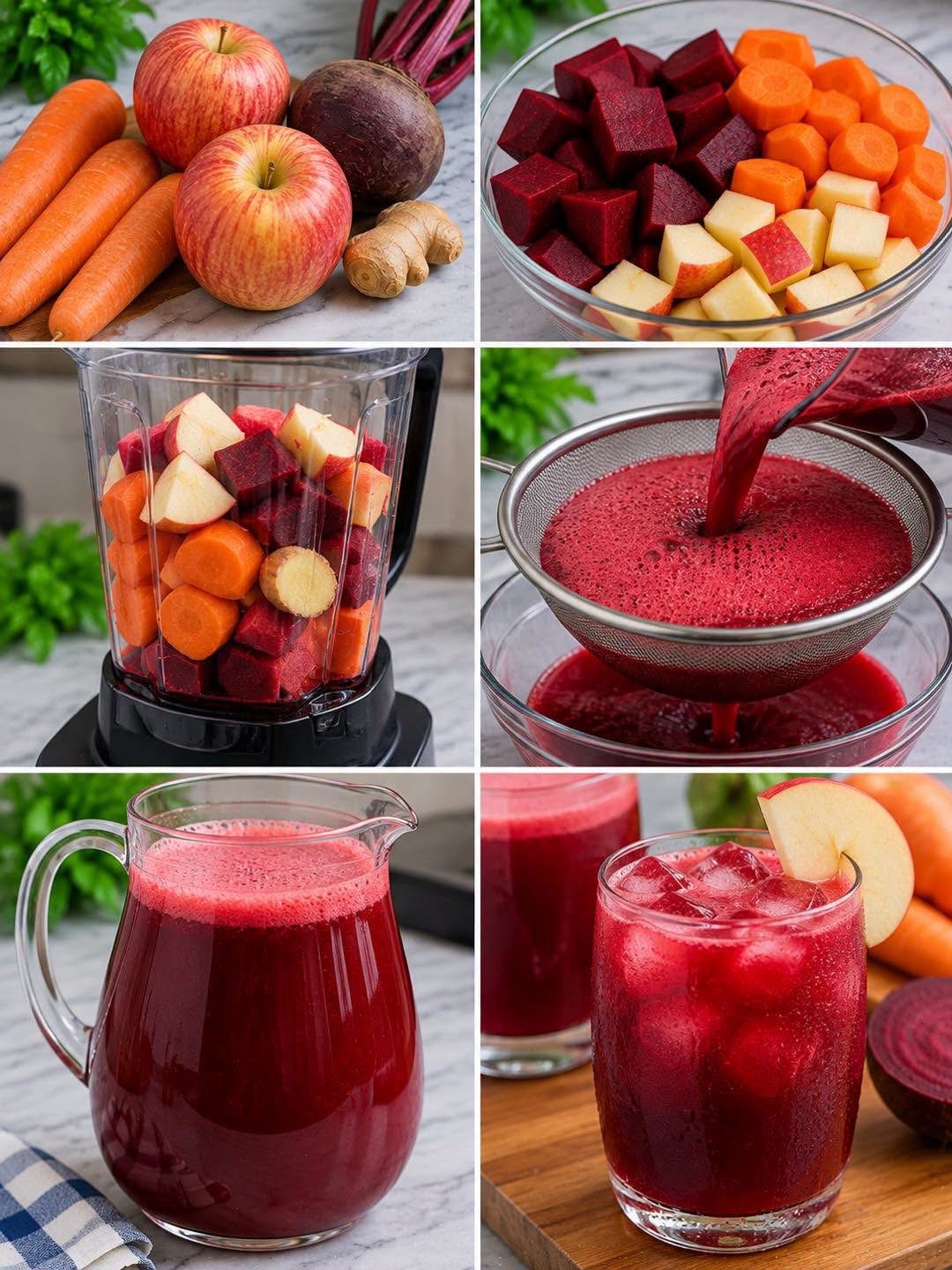
Beetroot, carrot, and apple juice is a colorful homemade drink that combines the earthy taste of beetroot with the natural sweetness of carrots and apples. Fresh ginger can also be added for a little extra flavor. This combination is popular among people looking for simple ways to include more fruits and vegetables in their daily routine.
The drink gets its deep red color from beetroot, while carrots contribute beta-carotene and apples provide natural sweetness. Each ingredient offers different nutrients, making this juice a flavorful option when enjoyed as part of a balanced diet.
However, no juice can guarantee better health in a specific number of days or replace medical treatment. The nutritional value of the finished drink also depends on the ingredients, portion size, and whether the pulp is retained or removed.
In this article, you will learn about the ingredients, potential nutritional benefits, an easy preparation method, and practical tips for enjoying beetroot, carrot, and apple juice safely.
What Is Beetroot Carrot and Apple Juice
Beetroot, carrot, and apple juice is a homemade beverage prepared by blending or juicing these three ingredients. Fresh ginger is an optional addition that gives the drink a slightly spicy taste.
The ingredients complement one another in both flavor and color. Beetroot provides an earthy taste, carrots add sweetness, and apples help create a smoother, fruitier flavor.
Depending on the preparation method, the drink may contain varying amounts of fiber. Blending the ingredients and keeping the pulp generally retains more fiber than straining the mixture into a clear juice.
This distinction matters because whole fruits and vegetables provide fiber that may be reduced when their pulp is removed.
Ingredients and Their Nutritional Value
Each ingredient contributes different nutrients to this homemade drink.
1. Beetroot
Beetroot is a root vegetable known for its deep red-purple color. It contains folate, potassium, and naturally occurring pigments called betalains.
Beetroot also contains dietary nitrate, which researchers have studied for its possible effects on blood vessel function and blood pressure. Some studies have examined beetroot juice specifically, but the results cannot automatically be applied to every homemade juice recipe.
Beetroot is not a guaranteed treatment for high blood pressure, anemia, or other medical conditions. Its nutritional value is best understood as part of a varied diet.
2. Carrots
Carrots are well known for their beta-carotene content. The body can convert beta-carotene into vitamin A, a nutrient that supports normal vision, immune function, and skin health.
Carrots also provide other plant compounds and some dietary fiber when the pulp is consumed.
Adding carrots to this drink helps balance beetroot’s earthy flavor with a naturally sweet taste.
3. Apples
Apples provide natural sweetness and contain plant compounds, including polyphenols. Whole apples are also a source of dietary fiber, particularly when eaten with their skin.
When apples are juiced and the pulp is discarded, much of their fiber is lost. Using a blender and retaining the pulp can help preserve more of the original fruit’s fiber.
Apples make the drink more palatable without requiring added sugar.
4. Fresh Ginger
Ginger is optional and can be added in a small quantity for its warm, spicy flavor. It contains naturally occurring compounds such as gingerols.
Ginger has been studied for several potential health effects, but adding a little ginger to this juice does not make the drink a cure for illness. People who use medicines or have medical conditions should consider their individual circumstances before consuming large amounts of ginger regularly.
Potential Benefits of Beetroot Carrot and Apple Juice
This juice can contribute nutrients to a balanced diet, but its effects depend on the overall eating pattern and the amount consumed.
1. It Provides Vitamins and Minerals
Beetroot, carrots, and apples supply a range of nutrients, including folate, potassium, and beta-carotene. The exact amounts in a serving depend on the size and proportions of the ingredients.
These nutrients contribute to normal body functions. For example, folate supports normal cell division, potassium helps with nerve and muscle function, and vitamin A supports normal vision and immune function.
The juice should complement other nutrient-rich foods rather than replace balanced meals.
2. It Adds Colorful Plant Compounds to the Diet
The red pigments in beetroot and the orange pigments in carrots are examples of naturally occurring plant compounds.
Eating a variety of colorful fruits and vegetables is a practical way to increase dietary diversity. However, the color of a food does not prove that it has a particular medicinal effect.
The best approach is to enjoy this drink alongside a broad range of vegetables, fruits, legumes, whole grains, and other nutritious foods.
3. It May Support Normal Blood Vessel Function
Beetroot contains dietary nitrate, which the body can convert into nitric oxide. Nitric oxide helps regulate the widening of blood vessels.
Research on certain beetroot products, particularly beetroot juice, has investigated possible effects on blood pressure. Results vary, and the effect of a homemade beetroot, carrot, and apple mixture is not guaranteed.
People with high blood pressure should continue following their healthcare professional’s advice and should not replace prescribed medication with homemade juice.
4. It Supplies Beta-Carotene
Carrots are a useful source of beta-carotene, which the body can convert into vitamin A as needed.
Vitamin A contributes to normal vision, immune function, and the maintenance of healthy tissues. The amount of beta-carotene absorbed can vary with food preparation and the presence of dietary fat in a meal.
This juice can contribute to beta-carotene intake, but it should not be described as a treatment for eyesight problems.
5. It Can Be a Convenient Way to Enjoy Produce
Some people find it easier to consume fruits and vegetables in a drink, particularly when they enjoy the flavor.
Preparing juice at home also allows you to control the ingredients and avoid unnecessary added sugars. Still, juice should not completely replace whole fruits and vegetables because the texture and fiber content can differ considerably.
For everyday nutrition, eating whole produce and drinking water remain useful habits.
6. It Contributes to Fluid Intake
The water naturally present in apples, carrots, and beetroot contributes to the drink’s fluid content.
This can help make the juice a refreshing beverage, particularly when served chilled. However, it is not necessary to drink this specific juice to stay hydrated. Water remains an excellent everyday choice.
How to Make Beetroot Carrot and Apple Juice at Home
The following recipe uses simple ingredients and does not require added sugar.
Ingredients
- 1 small beetroot
- 2 medium carrots
- 1 apple
- A small piece of fresh ginger, optional
- A little clean drinking water, if needed for blending
Preparation Method
Step 1: Wash the ingredients.
Wash the beetroot, carrots, and apple thoroughly under clean running water. Remove any dirt and damaged areas.
Step 2: Prepare the vegetables and fruit.
Peel the beetroot if desired and remove the carrot ends. Remove the apple core and seeds. Cut everything into small pieces suitable for your blender.
Step 3: Add the ingredients to the blender.
Place the beetroot, carrots, apple, and optional ginger into the blender. Add a small amount of water to help the ingredients blend.
Step 4: Blend until smooth.
Blend until the mixture reaches your preferred consistency. Add a little more water if the mixture is too thick.
Step 5: Decide whether to strain.
For more fiber, keep the pulp and drink the blended mixture as a smoothie. If you prefer a thinner juice, you can strain it, but remember that straining removes some of the fiber.
Step 6: Serve fresh.
Pour the drink into a clean glass and enjoy it soon after preparation. If you do not drink it immediately, refrigerate it promptly in a clean, covered container.
This recipe is a food preparation idea, not a medical treatment or a prescribed daily regimen.
Is It Better to Blend or Juice the Ingredients
Both methods can produce a flavorful drink, but they have different nutritional characteristics.
Blending
Blending combines the ingredients while usually retaining most of the pulp. This generally preserves more fiber and creates a thicker drink.
Fiber can contribute to normal digestion and help make meals more satisfying.
Juicing and Straining
Juicing or straining separates much of the liquid from the pulp. The resulting drink may be smoother, but it usually contains less fiber.
Depending on the quantity consumed, juice can also make it easier to consume the natural sugars from several fruits and vegetables quickly.
For many people, blending and retaining the pulp is a useful option. Both methods can fit into a balanced diet, depending on personal preference and nutritional needs.
Should You Drink This Juice Every Day
There is no universal requirement to drink beetroot, carrot, and apple juice every day. The best frequency depends on your overall diet, health needs, and serving size.
A moderate serving can be included in a varied eating pattern, but drinking larger amounts does not necessarily provide additional benefits.
If you enjoy the combination, you can alternate it with whole fruit, vegetable salads, soups, and other drinks. This helps provide a wider variety of nutrients and textures.
People with diabetes or those monitoring blood glucose should consider the amount of fruit used and whether the pulp is removed. Even without added sugar, the drink contains naturally occurring sugars.
Important Safety Considerations
Although the ingredients are common foods, a few precautions can help you enjoy this drink sensibly.
1. Be Mindful of Natural Sugars
Apples and carrots contain natural sugars. Juicing and removing pulp can make it easier to consume the ingredients quickly and may reduce the amount of fiber compared with eating them whole.
People who need to manage blood glucose should consider portion size and their individual dietary plan. A healthcare professional or registered dietitian can provide personalized guidance.
2. Beetroot Can Change Urine or Stool Color
Some people notice a reddish or pinkish color in their urine or stool after consuming beetroot. This can happen because of beetroot pigments.
However, do not automatically assume that red urine or stool is caused by beetroot, especially if the color persists, recurs, or occurs with pain or other symptoms. Seek medical advice when in doubt.
3. Consider Oxalates if You Have a History of Kidney Stones
Beetroot contains oxalates, which can be relevant to some people who form calcium oxalate kidney stones.
Whether you need to limit beetroot depends on your medical history and individual dietary advice. If you have recurrent kidney stones or have been told to follow a low-oxalate diet, consult your healthcare professional before making beetroot juice a regular habit.
4. Be Careful if You Have Low Blood Pressure
Because beetroot products have been studied for their potential effects on blood pressure, people who already have low blood pressure or take blood-pressure medication may wish to discuss frequent consumption of concentrated beetroot juice with a healthcare professional.
A normal serving of this homemade drink is not the same as a concentrated supplement, but individual circumstances still matter.
5. Wash Produce and Use Clean Equipment
Raw produce can carry dirt and microorganisms. Wash the ingredients thoroughly and clean the blender, cutting board, knife, and storage container after use.
Fresh homemade juice is not pasteurized, so it should be handled carefully. Refrigerate it promptly and avoid leaving it at room temperature for extended periods.
Discard the drink if it develops an unusual smell, appearance, or other signs of spoilage.
Common Myths About Beetroot Carrot and Apple Juice
Myth 1 It Detoxifies the Body
There is no good evidence that this juice removes unspecified toxins from the body. The liver, kidneys, and other organs carry out essential functions involved in processing and eliminating waste.
The juice can be part of a healthy diet, but it should not be promoted as a detoxification treatment.
Myth 2 It Cures Anemia
Beetroot is often associated with blood health, but drinking this juice is not a proven treatment for anemia. Anemia can have several causes, including iron deficiency, vitamin deficiencies, and certain medical conditions.
Anyone experiencing persistent fatigue, weakness, dizziness, or other possible symptoms should seek appropriate medical assessment rather than relying on juice.
Myth 3 It Guarantees Weight Loss
No individual juice guarantees weight loss. Weight management depends on multiple factors, including overall energy intake, activity, sleep, and health conditions.
This drink can fit into a balanced eating pattern, but large servings may contribute a substantial amount of energy and natural sugars.
Myth 4 It Replaces Whole Fruits and Vegetables
Juice provides some nutrients from its ingredients, but straining removes much of the fiber. Whole fruits and vegetables also offer chewing, texture, and greater variety in how food is consumed.
It is generally better to use juice as one option among many rather than as a complete replacement for whole produce.
Frequently Asked Questions
What are the benefits of beetroot carrot and apple juice?
It provides nutrients and plant compounds from its ingredients, including beta-carotene from carrots and betalains from beetroot. The specific benefits depend on the recipe and the overall diet, and the drink is not a proven treatment for disease.
Can I make this juice without ginger?
Yes. Ginger is optional and is mainly included for flavor. The drink can be prepared using only beetroot, carrots, and apples.
Is blending better than straining?
Blending usually retains more of the ingredients’ fiber because the pulp remains in the drink. Straining creates a thinner beverage but removes some fiber.
Can people with diabetes drink it?
That depends on the person’s dietary plan, blood glucose management, serving size, and the amount of apple used. People with diabetes should discuss suitable portions with their healthcare professional if they are unsure.
How should homemade juice be stored?
Drink it soon after preparation when possible. Otherwise, place it in a clean, covered container and refrigerate it promptly. Fresh homemade juice is not sterile, so it should not be left at room temperature for extended periods.
Does this juice improve eyesight?
Carrots contain beta-carotene, which the body can convert into vitamin A. Vitamin A supports normal vision, but drinking this juice has not been shown to correct eyesight problems or replace eye care.
Final Thoughts
Beetroot, carrot, and apple juice is a colorful homemade beverage that combines the earthy flavor of beetroot with the sweetness of carrots and apples. It can provide nutrients and plant compounds as part of a varied diet, and fresh ginger can be added for extra flavor.
Its value depends on how it is prepared, how much is consumed, and the person’s individual health needs. Keeping the pulp generally provides more fiber, while using whole fruits and vegetables remains an important part of balanced nutrition.
Enjoy this drink for its taste and convenience rather than treating it as a miracle remedy. Wash ingredients carefully, prepare it with clean equipment, and seek professional advice if you have dietary restrictions or a medical condition that may affect your choices.
Disclaimer: This article is for general educational purposes only and does not replace personalized medical advice, diagnosis, or treatment.