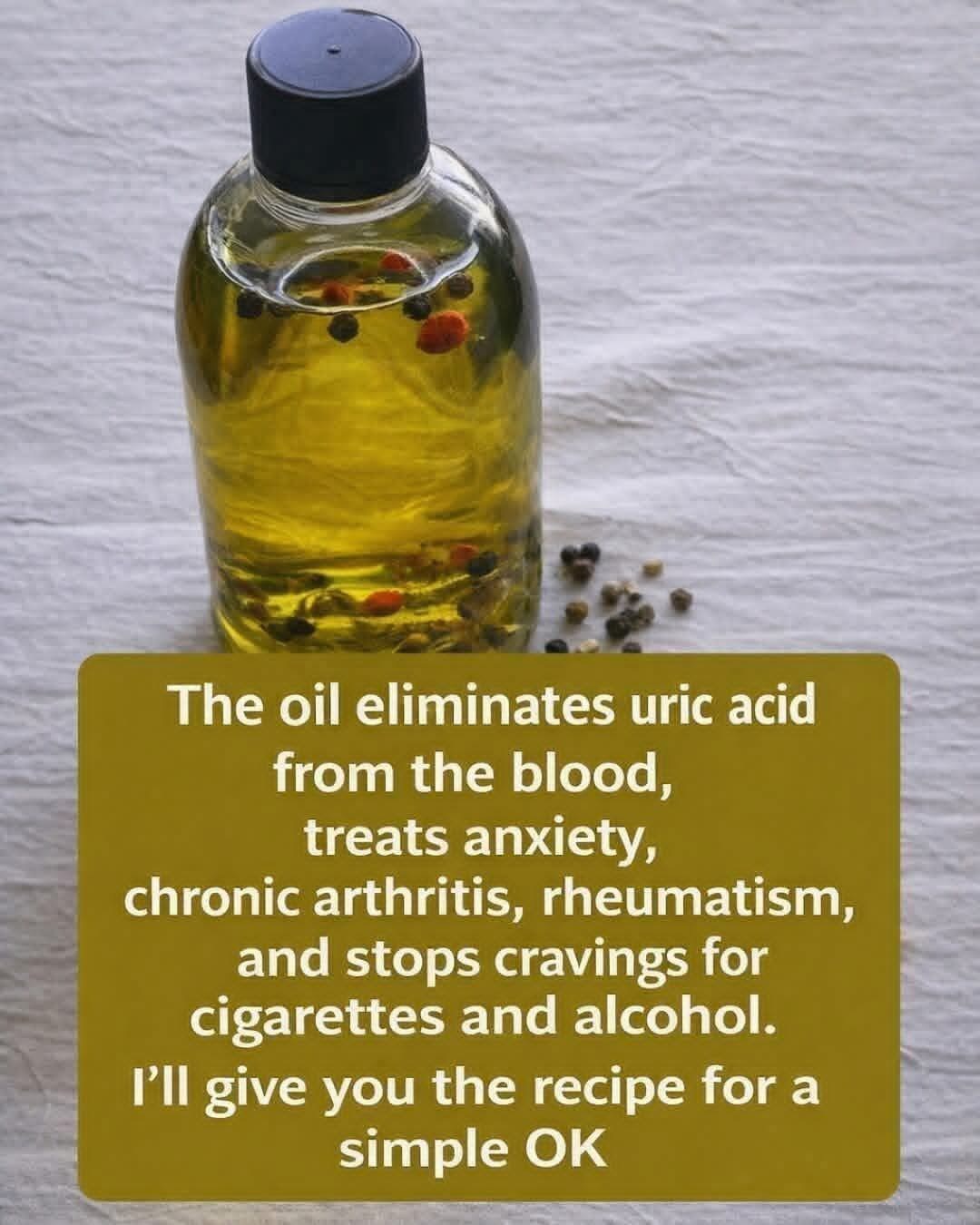
Claims about homemade oils and natural remedies are common online. One popular claim suggests that a simple oil infused with herbs and spices can eliminate uric acid from the blood, reduce anxiety, improve chronic arthritis and rheumatism, and stop cravings for cigarettes and alcohol.
These claims may sound appealing because the ingredients used in traditional home remedies can have interesting nutritional and botanical properties. However, it is important to distinguish between traditional use and scientifically established medical benefits.
There is currently no simple infused oil that has been proven to remove excess uric acid from the blood, cure arthritis, treat anxiety, or reliably eliminate cravings for cigarettes or alcohol. Some ingredients commonly used in infused oils may have antioxidant or anti inflammatory properties, but that does not mean that an infused oil can replace medical treatment.
This article explains what these claims mean, what infused oils may actually offer, how to prepare one safely, and when professional medical advice is important.
What Is an Infused Oil
An infused oil is a carrier oil that has been combined with herbs, spices, or other plant ingredients. Common carrier oils include olive oil, sunflower oil, coconut oil, and other edible oils.
The plant ingredients are placed in the oil so that some of their fat soluble compounds can move into the oil. Depending on the ingredients and preparation method, the resulting oil may have a different flavor, aroma, and nutritional profile.
Infused oils are commonly used in cooking and are also used in traditional wellness practices.
A homemade infused oil can be enjoyable as a food ingredient, but it should not automatically be considered a medicine.
Can Oil Remove Uric Acid From the Blood
One of the strongest claims associated with remedies like the one shown in the image is that the oil can eliminate uric acid from the blood.
This claim should be treated carefully.
Uric acid is a natural waste product produced when the body breaks down purines. The kidneys normally remove much of the uric acid through urine. When uric acid levels become too high, crystals can form in and around joints and may contribute to gout.
Eating a particular infused oil does not provide a proven method for removing excessive uric acid from the bloodstream.
People who have high uric acid levels or gout should discuss their condition with a healthcare professional. Depending on the situation, management may involve dietary changes, adequate hydration, weight management when appropriate, and prescribed medication.
An infused oil can be part of a balanced diet, but it should not be promoted as a treatment for high uric acid.
What About Arthritis and Rheumatism
The words arthritis and rheumatism describe a wide range of conditions involving joints, muscles, connective tissues, or inflammation.
Because these conditions have different causes, there is no single food or oil that can treat all of them.
Some herbs and spices contain compounds that have demonstrated antioxidant or anti inflammatory activity in laboratory research. However, results from laboratory experiments do not necessarily mean that consuming a homemade preparation will produce the same effect in humans.
For someone experiencing persistent joint pain, swelling, stiffness, redness, or reduced movement, identifying the underlying cause is much more important than relying on a homemade remedy.
A healthy diet may support general health, but it should be considered part of an overall lifestyle rather than a replacement for appropriate medical care.
Can Infused Oil Help With Anxiety
Another claim is that the oil can treat anxiety.
Anxiety can range from occasional stress to a significant mental health condition that affects sleep, concentration, relationships, school, work, and everyday activities.
There is no good reason to assume that a homemade infused oil can treat an anxiety disorder.
Some people may find cooking, preparing food, or following a relaxing routine enjoyable. Certain aromas may also create a sense of comfort for some individuals. However, feeling relaxed from a pleasant smell is different from treating an anxiety disorder.
People experiencing persistent or severe anxiety should consider speaking with a qualified healthcare professional.
Healthy sleep, physical activity, social connection, relaxation techniques, and professional support can all be useful depending on the individual situation.
Can It Stop Cigarette Cravings
The claim that an infused oil can stop cigarette cravings is also not established.
Nicotine dependence involves changes in the brain and behavior. Cravings can be triggered by nicotine withdrawal, stress, routines, social situations, and environmental cues.
Quitting smoking can be difficult, but effective evidence based treatments are available.
People trying to quit may benefit from behavioral support, counseling, nicotine replacement products, or other approved treatments recommended by a healthcare professional.
A homemade oil may be used as a food, but it should not be presented as a reliable method for treating nicotine dependence.
Can It Stop Alcohol Cravings
Alcohol cravings can also have many causes and may be associated with alcohol dependence.
An infused oil has not been established as a treatment for alcohol use disorder.
Anyone who drinks heavily or regularly and wants to stop should be careful about suddenly stopping without medical guidance. For some people, alcohol withdrawal can be dangerous and may require medical supervision.
Professional support can make the process safer and more effective.
What Ingredients Are Commonly Used in Infused Oils
Many different ingredients can be used to flavor an oil.
Common choices include garlic, rosemary, thyme, chili peppers, black pepper, basil, oregano, ginger, and various spices.
The nutritional properties depend on the ingredients and the quantity consumed.
Olive oil is one popular choice because it contains predominantly monounsaturated fat and is widely used in Mediterranean style diets.
Herbs and spices can also help people make meals more flavorful without depending heavily on salt or highly processed sauces.
The main benefit may therefore be culinary. A flavorful oil can make vegetables, grains, beans, fish, or other foods more enjoyable.
A Simple Homemade Infused Oil
If you want to make an infused oil for culinary purposes, keep the recipe simple.
Ingredients
1 cup of extra virgin olive oil
1 teaspoon of dried rosemary
1 teaspoon of dried oregano
Half a teaspoon of dried thyme
Half a teaspoon of black peppercorns
A small amount of dried chili if desired
Preparation
Place the dried herbs and spices into a clean, completely dry glass container.
Pour the olive oil over the ingredients and make sure they are fully covered.
Close the container tightly and keep it in a cool, dark place.
For a simple culinary infusion, allow the flavors to develop for several days.
Strain the oil through a clean fine mesh strainer before transferring it to a clean bottle.
Label the bottle with the ingredients and preparation date.
For homemade infused oils, food safety is important. Fresh garlic and fresh herbs can introduce moisture into the oil and create conditions that allow dangerous bacteria to grow. For this reason, homemade oils containing fresh ingredients should not simply be stored at room temperature for long periods.
When preparing infused oils at home, using properly dried ingredients and following reliable food safety guidance is preferable.
How to Use Infused Oil in Everyday Meals
A homemade infused oil can be used in many simple ways.
You can drizzle a small amount over roasted vegetables or use it as a dressing for a salad.
It can also be added to cooked beans, lentils, potatoes, rice, pasta, or grilled vegetables.
Another option is to use a small amount as a finishing oil over soup or cooked grains.
Because infused oil is still oil, portion size matters. Oils are energy dense, so a small amount can provide plenty of flavor.
The goal should be to use the oil as part of a balanced eating pattern rather than consuming large quantities because of unproven health claims.
A Healthy Approach to High Uric Acid
If your concern is uric acid, lifestyle choices can be more meaningful than relying on a homemade remedy.
Drinking enough fluids can support normal kidney function and urine production.
A balanced diet that includes vegetables, whole grains, appropriate protein sources, and minimally processed foods can support overall health.
People with gout may also need individualized advice regarding foods and drinks that can contribute to attacks.
Alcohol, sugary drinks, and certain high purine foods can be relevant for some people with gout, although dietary recommendations should be individualized.
If you have been told that your uric acid is high, a blood test and medical evaluation are more useful than trying to determine the level from symptoms alone.
When Joint Pain Needs Medical Attention
Joint pain should not automatically be blamed on uric acid.
Many different conditions can cause joint symptoms, including osteoarthritis, rheumatoid arthritis, gout, injuries, infections, and other inflammatory conditions.
Seek medical attention if joint pain is severe, persistent, associated with significant swelling, or accompanied by fever or other concerning symptoms.
A healthcare professional can determine whether blood tests, imaging, or other investigations are necessary.
Correct diagnosis matters because treatment depends on the cause.
Why Natural Remedies Can Be Misleading
The word natural is often interpreted as meaning safe or effective.
In reality, natural substances can have powerful biological effects, and some can interact with medications or cause side effects.
Another common problem is the difference between laboratory research and real world human evidence.
For example, researchers may discover that a compound found in a plant has antioxidant activity in a laboratory experiment. That does not prove that eating a homemade preparation containing that plant will treat a particular disease.
Good health information should consider the quality of evidence, the amount of an ingredient used, how it is prepared, and whether studies in humans support the claimed benefit.
The Bottom Line
Infused oils can be delicious additions to a healthy diet, especially when made with herbs and spices that add flavor to everyday meals.
However, there is no good evidence that a homemade infused oil can eliminate uric acid from the blood, cure chronic arthritis or rheumatism, treat an anxiety disorder, or reliably stop cravings for cigarettes or alcohol.
These conditions can require very different approaches.
If you enjoy infused oil, use it primarily as a flavorful food ingredient. If you have high uric acid, persistent joint pain, anxiety, nicotine dependence, or problems with alcohol, consider getting appropriate professional advice rather than depending on a viral recipe.
Natural foods can support a healthy lifestyle, but a simple recipe should not be presented as a cure for complex medical conditions.