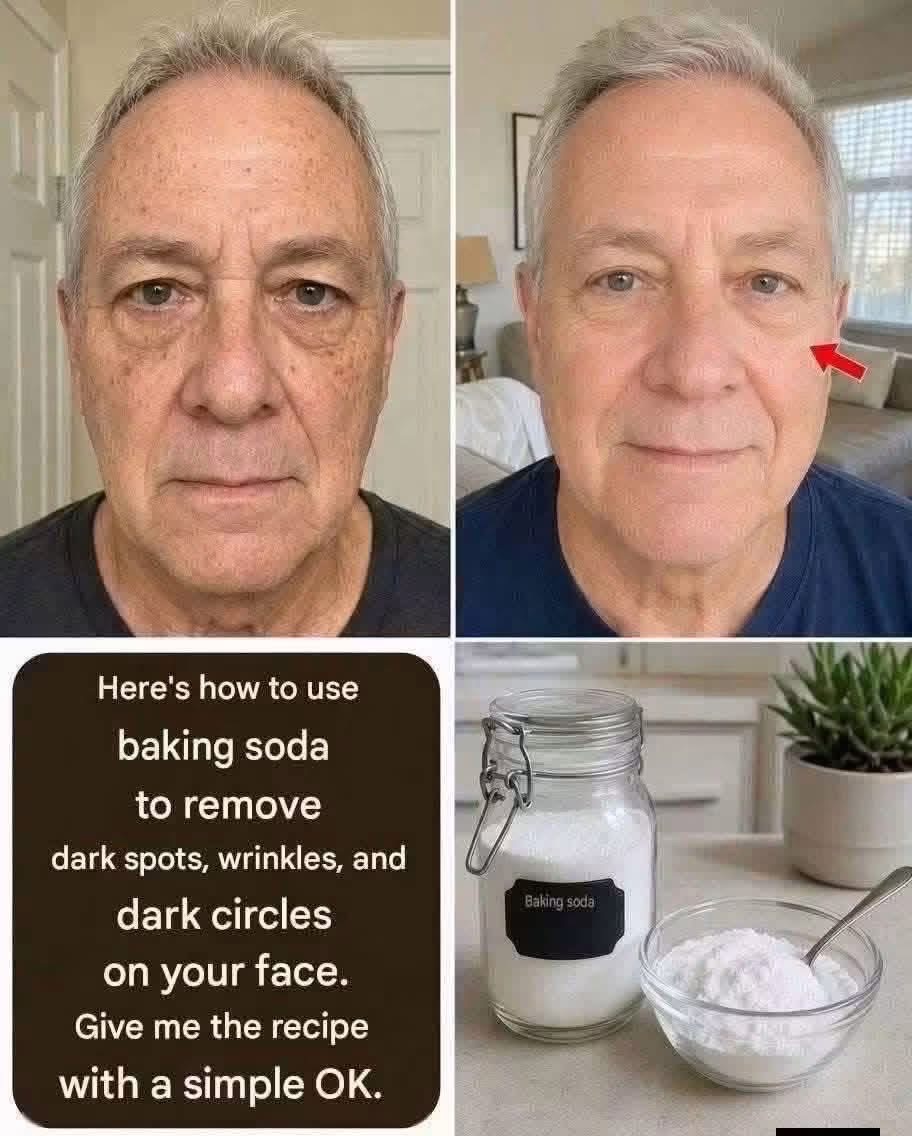
Baking soda is a common household ingredient that appears in many homemade skincare recipes. Social media posts sometimes claim that baking soda can remove dark spots, wrinkles, and dark circles and make the skin look younger within a short period.
These claims can be attractive, especially when before and after photographs appear to show dramatic results. However, baking soda is not a proven treatment for wrinkles, pigmentation, or dark circles. In fact, applying it directly to the face can irritate the skin and potentially make some pigmentation problems worse.
If you are interested in using baking soda as part of your skincare routine, it is important to understand what it can and cannot do and how to avoid unnecessary skin damage.
What Is Baking Soda
Baking soda, also known as sodium bicarbonate, is a white alkaline powder commonly used in cooking and household cleaning.
It is sometimes included in homemade beauty treatments because its fine texture can provide mild physical exfoliation and because it is alkaline.
The skin, however, naturally has a mildly acidic surface known as the acid mantle. Products that significantly change the skin’s natural pH can interfere with the skin barrier.
This is one reason why a kitchen ingredient that seems harmless may not be appropriate for regular facial use.
Can Baking Soda Remove Dark Spots
Dark spots can develop for many different reasons.
Sun exposure, inflammation, acne, hormonal changes, and skin injuries can all contribute to uneven pigmentation. Because the causes are different, treatment depends on what is producing the pigmentation.
Baking soda has not been established as a safe and effective treatment for facial hyperpigmentation.
Rubbing baking soda onto the skin may temporarily remove some surface dead skin cells, making the skin appear smoother or brighter. However, this does not mean that the underlying pigment has been removed.
More importantly, irritation caused by aggressive exfoliation can trigger inflammation. In some people, inflammation can lead to increased pigmentation, particularly after acne or other skin injuries.
For this reason, using harsh homemade scrubs to remove dark spots can sometimes have the opposite effect.
Can Baking Soda Remove Wrinkles
Wrinkles are a normal part of skin aging.
They develop through a combination of factors including natural aging, changes in collagen and elastin, repeated facial movement, and cumulative exposure to ultraviolet radiation.
Baking soda cannot rebuild collagen or reverse the biological processes responsible for wrinkles.
A homemade baking soda treatment may temporarily make the skin feel different because of surface exfoliation, but this should not be confused with actually reducing wrinkles.
If your goal is healthier and younger looking skin, sun protection and a consistent skincare routine are much more useful approaches.
What About Dark Circles
Dark circles under the eyes can have many causes.
Genetics, skin thickness, visible blood vessels, pigmentation, allergies, lack of sleep, dehydration, and the natural structure of the area around the eyes can all contribute.
The skin around the eyes is particularly delicate.
Applying baking soda near the eyes can cause irritation, dryness, or accidental eye exposure. For this reason, baking soda should not be used as an under eye treatment.
If dark circles are persistent, identifying their likely cause is more useful than applying a harsh household powder to the area.
Why Baking Soda Can Irritate Facial Skin
The skin has a protective barrier that helps retain moisture and protect against environmental irritants.
Baking soda is alkaline, while healthy facial skin normally has a mildly acidic environment.
Frequent exposure to alkaline substances can disturb the skin barrier. This may result in dryness, tightness, burning, redness, itching, or increased sensitivity.
People with sensitive skin may be particularly vulnerable to irritation.
Physical rubbing can also contribute to irritation. Combining a rough scrub with an alkaline substance can be especially uncomfortable for compromised skin.
A Safer Alternative to Homemade Baking Soda Scrubs
If your goal is simply to remove dead skin cells and improve the appearance of dull skin, consider using a skincare product specifically formulated for facial use.
Facial exfoliants are designed with the skin’s characteristics in mind and are generally more predictable than kitchen ingredients.
Gentle exfoliation should not cause significant burning or prolonged redness.
If a skincare product causes strong irritation, discontinue use and allow the skin to recover.
There is no need to scrub the face aggressively to make it look clean.
A Simple Gentle Skincare Routine
A basic skincare routine does not need to contain dozens of products.
Morning
Start with a gentle facial cleanser or simply rinse with water if your skin does not require cleansing.
Apply a moisturizer appropriate for your skin type.
Finish with a broad spectrum sunscreen.
Sun protection is especially important when the goal is preventing dark spots and premature skin aging.
Evening
Cleanse the skin gently to remove sunscreen, makeup, sweat, and accumulated dirt.
Apply a moisturizer to support the skin barrier.
If you want to address pigmentation, acne, or signs of aging, consider introducing evidence based skincare ingredients gradually rather than experimenting with strong household substances.
Sun Protection Is More Important Than Baking Soda
Ultraviolet radiation is one of the most important environmental factors contributing to premature skin aging and pigmentation.
Regular sun protection can help reduce cumulative UV damage and prevent existing pigmentation from becoming more noticeable.
A broad spectrum sunscreen can be used as part of a daily skincare routine.
Wearing a hat, seeking shade, and avoiding prolonged direct sunlight can also reduce UV exposure.
For someone concerned about dark spots and wrinkles, these habits are considerably more relevant than using baking soda on the face.
What to Use for Dark Spots
There are many possible causes of dark spots, so treatment should depend on the cause.
Gentle skincare and consistent sun protection are good starting points.
Some professionally formulated skincare products contain ingredients designed to improve uneven pigmentation. Depending on the situation, dermatologists may recommend ingredients such as vitamin C, niacinamide, retinoids, azelaic acid, or other treatments.
Not every ingredient is appropriate for every person, and some can cause irritation if introduced too quickly.
Persistent or changing pigmentation should be evaluated by a healthcare professional, especially if a spot has unusual characteristics.
What to Use for Wrinkles
Wrinkle prevention begins with protecting the skin from ultraviolet radiation.
Moisturizing can also make the surface of the skin appear smoother by improving hydration.
For people interested in evidence based anti aging skincare, certain topical ingredients have considerably more scientific support than baking soda. Retinoids are one example, although they can cause irritation and should be introduced carefully.
A dermatologist can help determine which products are appropriate for an individual’s skin and concerns.
Why Before and After Photos Can Be Misleading
Before and after photographs are frequently used to promote homemade skincare recipes.
However, photographs can change dramatically because of lighting, camera settings, facial expression, makeup, image quality, skin hydration, and the time between photographs.
A brighter photograph can make pigmentation appear less visible.
Different lighting can also make wrinkles and shadows appear deeper or less noticeable.
Therefore, a photograph alone does not prove that a particular ingredient caused the claimed improvement.
Can Baking Soda Be Used Anywhere on the Body
Baking soda is sometimes used in household and personal care applications, but that does not mean it is appropriate for every part of the body.
The face is particularly sensitive to irritating substances.
Areas around the eyes, lips, and other delicate skin should receive additional caution.
If you have a skin condition, damaged skin, an open wound, eczema, or significant irritation, applying household powders or homemade mixtures may make the problem worse.
What to Do If Baking Soda Irritates Your Skin
If you have already applied baking soda and experience burning, redness, itching, or significant dryness, stop using it.
Gently rinse the area with lukewarm water and avoid further exfoliation.
A simple fragrance free moisturizer can help support the skin barrier.
If the irritation is severe, persistent, involves the eyes, or causes swelling or other concerning symptoms, seek appropriate medical advice.
Do not continue applying the product simply because an online recipe recommends using it repeatedly.
The Bottom Line
Baking soda is a useful household ingredient, but it should not be considered a proven treatment for dark spots, wrinkles, or dark circles.
Although it may temporarily exfoliate the surface of the skin, applying baking soda directly to the face can disrupt the skin barrier and cause irritation. Irritation may also make pigmentation more noticeable in some people.
For healthier looking skin, focus on gentle cleansing, regular moisturizing, daily sun protection, and skincare products formulated for facial use.
If dark spots, wrinkles, or dark circles are persistent or concerning, a dermatologist can help determine their cause and recommend appropriate treatment.
The most effective skincare routine is usually not the most complicated one. Consistency, gentle care, and protection from the sun are far more useful than relying on viral homemade recipes that promise dramatic results.