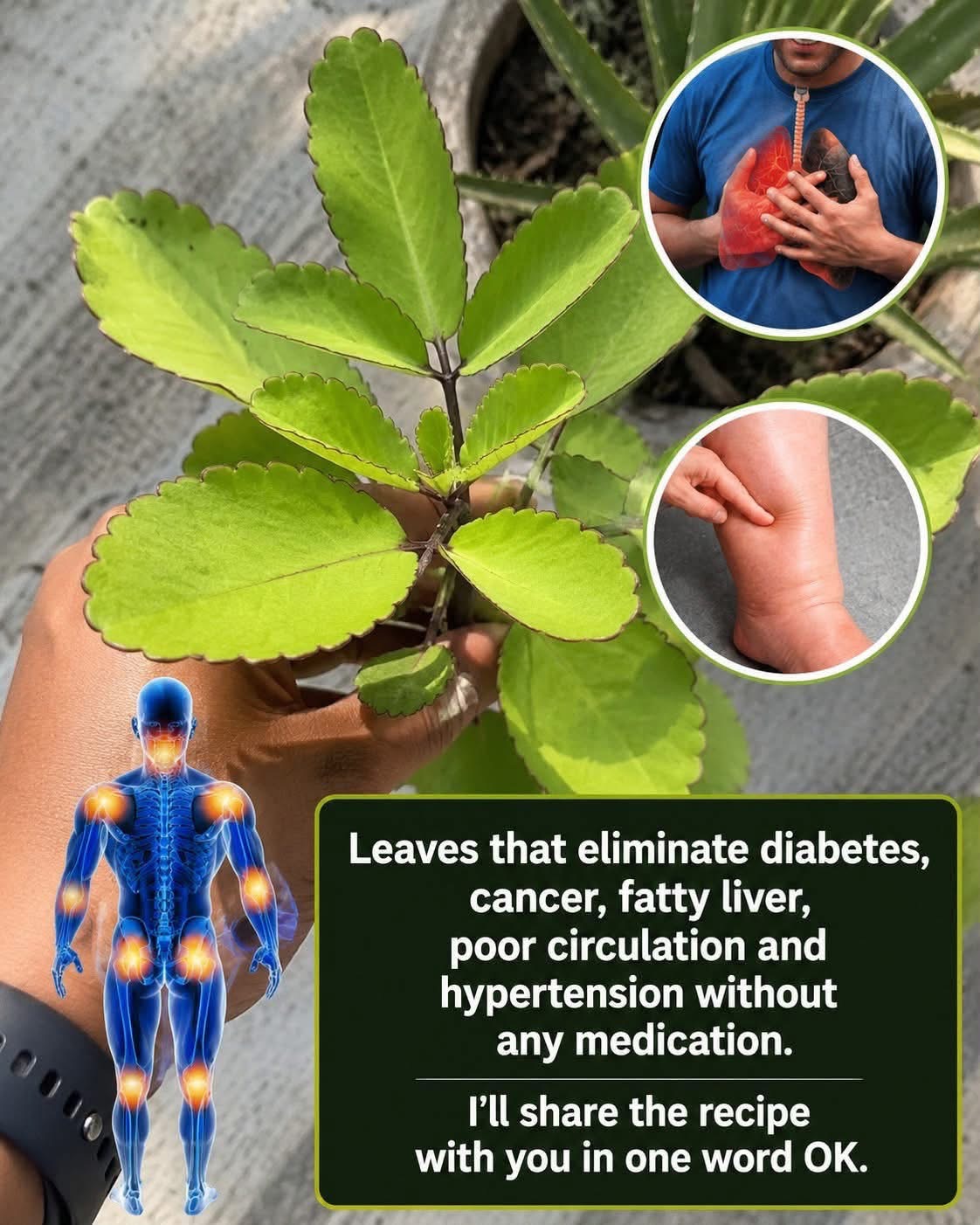
Kalanchoe is a popular succulent plant known for its thick, fleshy leaves and attractive appearance. It is grown in many homes and gardens because it is easy to care for and can survive in relatively dry conditions. In traditional practices, different Kalanchoe species have also been used as herbal plants.
Images of Kalanchoe leaves are sometimes shared online with claims that the plant can eliminate diabetes, cancer, fatty liver, high blood pressure, poor circulation, and other serious health conditions. These claims should be treated carefully. A plant may have interesting traditional uses and contain biologically active compounds, but that does not mean it can replace medical treatment.
This article explains what Kalanchoe is, its traditional uses, possible areas of scientific interest, and important safety considerations.
What Is Kalanchoe
Kalanchoe is a group of succulent plants belonging to the Crassulaceae family. Many species have thick leaves that store water, which helps the plant survive during periods of limited rainfall.
Some Kalanchoe plants have broad green leaves with slightly rounded or scalloped edges. Depending on the species, the leaves may also produce small plantlets along their margins.
Kalanchoe plants are popular ornamental plants because they are attractive and generally easy to grow. Some species have also been used traditionally in different parts of the world.
However, identifying the exact species is important because Kalanchoe is a large group of plants and their chemical composition can differ.
Why Kalanchoe Leaves Attract Attention
Kalanchoe leaves contain various naturally occurring compounds. Researchers have investigated several Kalanchoe species because of their antioxidant and other biological properties.
This scientific interest has contributed to many health claims on social media. Unfortunately, online posts often go much further than the available evidence.
There is an important difference between saying that a plant contains compounds that are being studied and saying that the plant can cure a disease.
For example, laboratory research may investigate how a plant extract behaves in cells or animals. Such research can be useful for discovering new possibilities, but it does not automatically prove that eating the leaves will treat a disease in humans.
Traditional Uses of Kalanchoe
Different Kalanchoe species have been used traditionally for a variety of purposes. Depending on the region and species, preparations made from the leaves have been associated with traditional approaches to minor skin problems, inflammation, discomfort, and other conditions.
Traditional use can be an interesting starting point for scientific research. At the same time, traditional use should not be confused with proven medical treatment.
The way a plant was traditionally prepared can also be very different from the way someone might prepare it at home. Dosage, species identification, preparation method, and individual health conditions can all affect safety.
Kalanchoe and Diabetes
One of the most common claims online is that Kalanchoe leaves can eliminate diabetes.
There is currently no good reason to consider Kalanchoe a replacement for established diabetes treatment. Diabetes is a chronic condition that can affect the heart, kidneys, eyes, nerves, and blood vessels when blood glucose remains poorly controlled.
Some plant extracts may show effects on blood glucose in laboratory or animal research, but this is not enough to demonstrate that a plant can safely control diabetes in people.
Anyone living with diabetes should continue following the treatment plan recommended by their healthcare professional. Stopping prescribed medication because of an online herbal remedy can be dangerous.
Kalanchoe and Cancer
Another major claim associated with Kalanchoe is that its leaves can eliminate cancer.
This is an especially important claim to approach with caution. Cancer is not one single disease. It includes many different types, each with different causes, biological characteristics, and treatments.
Some compounds from plants are studied in laboratory settings because they may affect cancer cells. However, a laboratory finding does not mean that eating the plant can cure cancer in a person.
People with cancer should not replace surgery, chemotherapy, radiation therapy, immunotherapy, targeted treatment, or other medically recommended approaches with Kalanchoe or another unproven remedy.
Kalanchoe and Fatty Liver
Fatty liver disease is another condition sometimes mentioned in posts about medicinal plants.
Improving liver health usually involves addressing the underlying causes and risk factors. Depending on the type of liver disease, this may involve changes in diet, physical activity, body weight, alcohol consumption, medications, and treatment of associated health conditions.
There is not enough evidence to recommend Kalanchoe leaves as a treatment for fatty liver.
If someone has been diagnosed with liver disease, it is important to discuss herbal products with a healthcare professional because some substances can potentially affect the liver or interact with medications.
Kalanchoe and Blood Pressure
High blood pressure is another condition that should not be treated casually.
Blood pressure can remain high without obvious symptoms while gradually increasing the risk of heart disease, stroke, kidney problems, and other complications.
Although researchers may investigate plants for possible effects on cardiovascular functions, this does not mean that Kalanchoe can reliably lower blood pressure in humans.
People taking blood pressure medication should not stop or change their medication because of a social media post about Kalanchoe leaves.
Kalanchoe and Poor Circulation
Poor circulation can have many possible causes. It may be associated with blood vessel disease, diabetes, smoking, heart conditions, nerve problems, or other medical issues.
Simply consuming a plant cannot be assumed to correct the underlying cause.
Persistent swelling, pain, numbness, unusual coldness, skin color changes, or other circulation-related symptoms deserve proper medical evaluation.
Possible Antioxidant Properties
One reason medicinal plants receive scientific attention is their content of naturally occurring antioxidant compounds.
Antioxidants are substances that can help protect cells from certain forms of oxidative stress. Kalanchoe species contain various plant compounds that researchers have studied for their biological activity.
However, antioxidant activity measured in a laboratory should not be interpreted as proof that consuming the plant prevents or cures a particular disease.
A healthy diet containing a variety of vegetables, fruits, legumes, whole grains, nuts, and other nutritious foods remains a more established way to obtain a broad range of beneficial plant compounds.
Is It Safe to Eat Kalanchoe Leaves
This is one of the most important questions.
Not every plant that looks like a medicinal herb is safe to eat. Kalanchoe species contain compounds that can be harmful under certain circumstances, and the safety of consuming leaves can depend on the species, quantity, preparation, and individual health status.
Some Kalanchoe plants contain bufadienolide cardiac glycosides. These compounds can affect the heart and are associated with toxicity when sufficient amounts are consumed.
For this reason, people should not assume that a Kalanchoe plant growing in a garden is automatically safe to eat.
Children and pets require particular caution because accidental ingestion can occur.
Possible Medication Interactions
Herbal plants can interact with medications just like other biologically active substances.
A person taking medication for blood pressure, heart problems, diabetes, or another chronic condition should be particularly careful before using concentrated herbal preparations.
Possible interactions may depend on the plant species and the compounds present in the preparation.
If you regularly take prescription or over the counter medication, ask a doctor or pharmacist before consuming Kalanchoe as a remedy.
How to Identify Kalanchoe
Kalanchoe plants are usually recognizable by their thick, succulent leaves. Many species have fleshy green leaves with rounded or scalloped edges.
However, visual identification from a photograph is not always enough to determine the exact species.
This matters because different plants can look similar while having different chemical compositions and safety profiles.
If you are considering using a plant medicinally, accurate identification is much more important than simply matching a photograph found online.
Growing Kalanchoe at Home
Kalanchoe is often grown as an ornamental succulent.
It generally prefers bright light and well-draining soil. Overwatering can cause problems because succulent roots can be damaged when the soil stays wet for long periods.
Allowing the soil to dry between watering is often helpful, although the ideal watering schedule depends on the plant, pot, soil, temperature, and growing environment.
Kalanchoe can also be propagated from leaves, stems, or small plantlets depending on the species.
Do Not Believe Every Herbal Health Claim
Social media has made it easy for dramatic health claims to spread quickly.
A post may say that a particular leaf can cure several unrelated diseases at once. Such statements should immediately raise questions.
Diabetes, cancer, fatty liver disease, hypertension, and circulation problems have different causes and require different approaches. A single plant cannot reasonably be assumed to eliminate all of them without strong clinical evidence.
When evaluating a herbal remedy, look for evidence from well-designed human studies rather than relying only on testimonials, viral videos, or before-and-after stories.
When to Speak With a Healthcare Professional
Anyone with a diagnosed medical condition should seek appropriate professional care rather than relying on an unproven herbal treatment.
It is especially important to seek medical advice if you have persistent symptoms, unexplained weight changes, chest discomfort, severe weakness, difficulty breathing, swelling, unusual bleeding, or other concerning symptoms.
For people already taking medication, discussing herbal products with a doctor or pharmacist can help reduce the risk of interactions.
Final Thoughts
Kalanchoe is an interesting succulent plant with a long history of traditional use and ongoing scientific interest. Its leaves contain naturally occurring compounds that researchers continue to investigate.
However, claims that Kalanchoe leaves can eliminate diabetes, cancer, fatty liver, hypertension, or poor circulation are not established medical facts. These serious conditions should not be treated by replacing proven medical care with an unverified herbal remedy.
If you enjoy Kalanchoe as a garden or houseplant, it can certainly be appreciated for its unusual leaves and easy-growing nature. If you are considering consuming it for health purposes, first identify the species accurately and speak with a qualified healthcare professional.
The safest approach is to view Kalanchoe as a plant of scientific and traditional interest rather than a miracle cure.