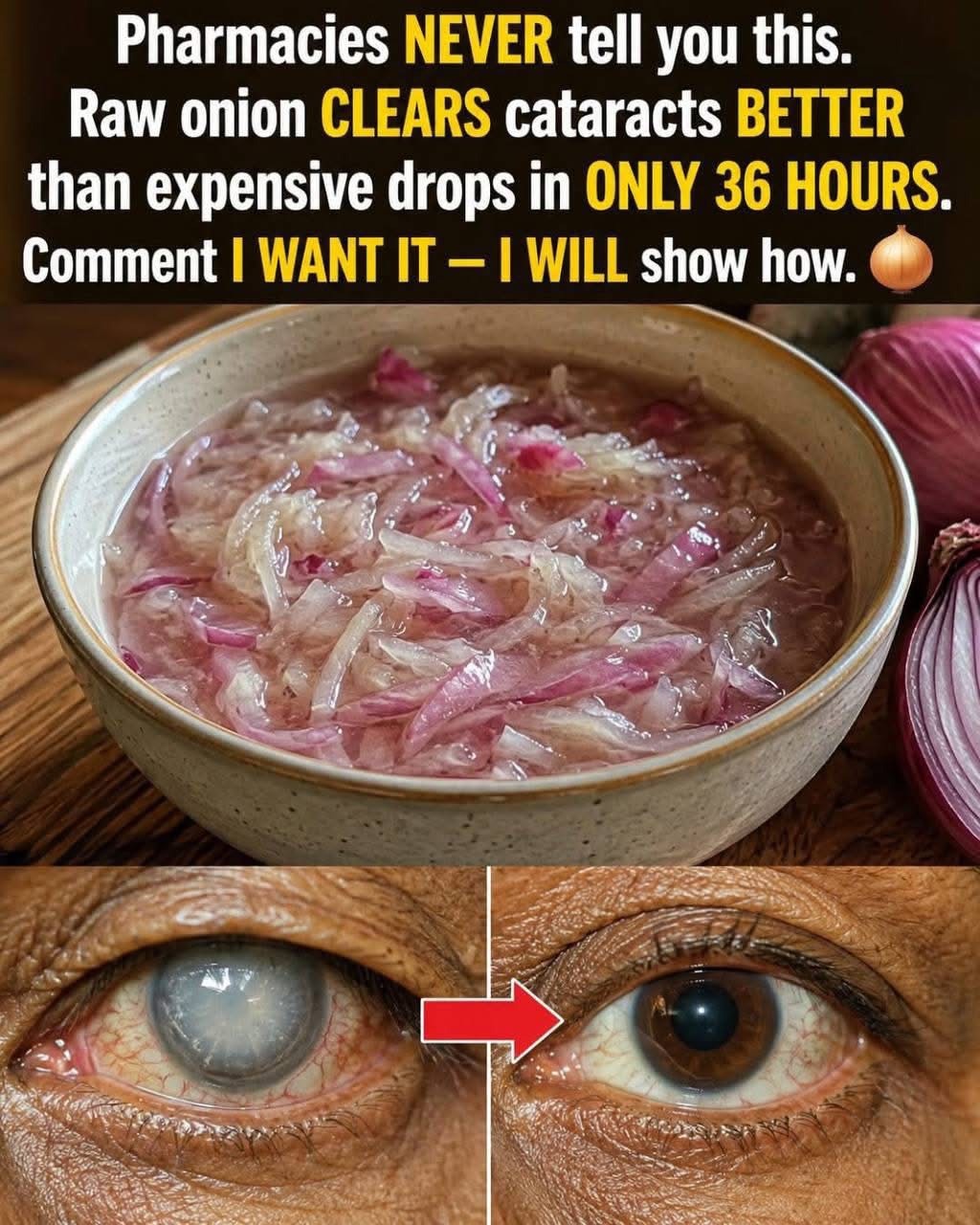
Cataracts are one of the most common causes of cloudy vision, especially as people get older. Because cataracts develop gradually, many people search for natural remedies that promise to restore clear eyesight without surgery.
One viral claim suggests that raw onion can clear cataracts in as little as 36 hours and work better than expensive eye drops. Although onions are nutritious and contain many beneficial plant compounds, there is no reliable evidence that eating raw onion can remove or reverse a cataract.
Understanding the difference between supporting eye health and treating an existing eye condition is important. A healthy diet can provide nutrients that support normal vision, but it cannot be assumed to dissolve a cataract.
What Is a Cataract
A cataract occurs when the normally clear lens inside the eye becomes cloudy.
The lens sits behind the iris and pupil and helps focus light onto the retina. When the lens becomes cloudy, light does not pass through it normally, which can gradually affect vision.
Cataracts commonly develop with aging, although other factors can contribute to their development.
Symptoms may include:
- Blurry or cloudy vision
- Difficulty seeing at night
- Increased sensitivity to bright lights
- Halos around lights
- Faded or less vivid colors
- Frequent changes in glasses prescription
- Difficulty reading or seeing distant objects clearly
Cataracts usually develop gradually rather than appearing suddenly.
Can Raw Onion Remove Cataracts
The claim that raw onion can clear cataracts within 36 hours is not supported by established medical evidence.
Eating onion can be part of a healthy diet, but there is no proven mechanism by which eating raw onion rapidly removes the cloudy lens responsible for a cataract.
A cataract is a physical change in the eye’s lens. Once significant clouding develops, simply consuming a particular food does not make the lens transparent again.
This is why dramatic before and after images shared online should be treated carefully.
Why Onions Are Still a Healthy Food
Rejecting the cataract claim does not mean onions are unhealthy.
Onions contain nutrients and naturally occurring plant compounds that can contribute to a balanced diet.
They are commonly used in salads, soups, sauces, vegetable dishes, sandwiches, and many other meals.
Onions also contain antioxidant compounds, including flavonoids.
Antioxidants are important components of a healthy diet because they help protect cells from oxidative stress.
However, the presence of antioxidants in a food does not mean that the food can cure a specific eye disease.
Antioxidants and Eye Health
Oxidative stress has been studied in relation to aging and several eye conditions.
A diet rich in vegetables and fruits provides a wide range of antioxidants and other nutrients.
This is one reason nutrition is considered an important part of overall health.
Foods that contribute to a healthy eating pattern may include:
- Leafy green vegetables
- Carrots
- Bell peppers
- Tomatoes
- Citrus fruits
- Berries
- Beans
- Nuts and seeds
- Whole grains
- Onions and other vegetables
Eating these foods supports general nutrition, but no single food should be considered a cure for cataracts.
The Difference Between Prevention and Treatment
This distinction is particularly important when reading health information online.
A food may contain nutrients associated with healthy aging without being able to treat an established disease.
For example, eating vegetables can contribute to a nutritious diet, but that does not mean vegetables can reverse every condition associated with aging.
Similarly, onions can be part of a healthy diet without being a cataract treatment.
A healthy lifestyle may help support long term eye health, while established cataracts may require evaluation and treatment by an eye care professional.
Why Cataracts Become Cloudy
The lens contains proteins and other structures that help it remain transparent.
As people age, changes occur within the lens. Over time, these changes can cause the lens to become less transparent.
Several factors can increase the likelihood of cataract development, including aging, certain health conditions, smoking, previous eye injuries, prolonged exposure to ultraviolet radiation, and some medications.
The exact risk varies from person to person.
Because cataracts involve changes within the eye’s lens, treatment depends on the severity of the condition and its effect on daily life.
Early Cataract Symptoms
Early cataracts may not cause major problems.
Some people notice that their vision is slightly blurry or that colors do not appear as bright as they once did.
Others may notice that driving at night becomes more difficult because headlights appear unusually bright or surrounded by halos.
Vision changes can have many possible causes, so it is important not to assume that every cloudy or blurry vision problem is a cataract.
An eye examination can help identify the actual cause.
Cataracts and Blurry Vision
Cloudy vision is one of the classic symptoms of cataracts, but blurry vision can also occur for many other reasons.
Dry eyes, refractive errors, certain retinal conditions, glaucoma, infections, medication effects, and other eye problems can affect vision.
This is why relying on a homemade remedy can be risky.
If vision is changing, identifying the underlying cause is more important than trying an unproven recipe.
Why Eye Drops Cannot Simply Dissolve Every Cataract
The image claims that raw onion works better than expensive eye drops.
This creates a misleading comparison.
Eye drops are designed for particular eye conditions and symptoms. Different types of drops have different purposes.
Some lubricating drops can relieve symptoms caused by dry eyes, while other prescription eye drops are used for specific medical conditions.
There is no general over the counter eye drop that should be assumed to dissolve an established cataract.
Anyone with cataracts should discuss appropriate treatment with an eye care professional rather than choosing treatment based on price or social media claims.
Cataract Surgery
When cataracts become severe enough to interfere with everyday activities, surgery may be considered.
Cataract surgery involves removing the cloudy natural lens and replacing it with an artificial lens.
It is one of the most commonly performed procedures for restoring vision affected by significant cataracts.
Whether surgery is appropriate depends on factors such as how much the cataract affects vision, daily activities, overall eye health, and the individual’s circumstances.
A qualified eye care professional can explain the available options.
Can Diet Support Healthy Eyes
Although food cannot be presented as a cure for cataracts, nutrition is still important for maintaining overall health.
A balanced diet provides vitamins, minerals, antioxidants, healthy fats, protein, and other nutrients needed by the body.
Instead of focusing on one miracle ingredient, it is generally better to eat a variety of foods.
Colorful vegetables and fruits can provide a wide range of naturally occurring nutrients and plant compounds.
Healthy fats from foods such as nuts, seeds, and fish can also be part of a balanced eating pattern.
Protecting Your Eyes From Sunlight
Protecting the eyes from excessive ultraviolet exposure is another sensible habit.
When spending extended periods outdoors, sunglasses that provide appropriate ultraviolet protection can help reduce exposure to ultraviolet radiation.
A hat with a brim can also provide additional protection.
These habits are simple and can be incorporated into everyday life.
Avoid Putting Raw Onion in the Eye
The viral image may lead some people to believe that onion juice or pieces of raw onion should be placed directly into the eye.
This is not a safe way to treat a cataract.
Raw onion can irritate the eyes and cause burning, watering, redness, and discomfort.
Putting homemade preparations into the eye can also introduce contaminants and potentially cause injury or infection.
The eye is a sensitive organ and should not be treated with kitchen ingredients unless a qualified professional specifically recommends an appropriate medical product.
Be Careful With Homemade Eye Remedies
The internet contains many recipes involving foods, herbs, oils, and other household ingredients.
Something being natural does not automatically make it suitable for use inside the eye.
Eye drops and other ophthalmic products are manufactured under conditions designed to control contamination and ensure appropriate ingredients and concentrations.
Homemade mixtures generally do not provide the same safeguards.
If a product is intended for use in the eye, it should be specifically designed and approved for ophthalmic use.
When to Get an Eye Examination
Anyone experiencing persistent changes in vision should consider having their eyes examined.
An eye examination can help determine whether cataracts are present and whether another condition may be responsible for the symptoms.
Regular eye examinations can also help detect certain eye problems before they become advanced.
This is especially important for older adults and people who have risk factors for eye disease.
Warning Signs That Need Urgent Attention
Not every vision problem is a cataract.
Sudden loss of vision, sudden severe eye pain, flashes of light, a large increase in floaters, a dark curtain or shadow across the vision, or significant redness accompanied by pain can require urgent medical assessment.
These symptoms should not be treated with food remedies.
Prompt professional evaluation is the safest approach.
How to Approach Viral Health Claims
Social media posts often use dramatic phrases such as “pharmacies never tell you this” or promise results in a very short period.
These statements are designed to attract attention.
A useful way to evaluate such claims is to ask:
Does the claim have evidence from human clinical studies?
Is the treatment recommended by qualified medical organizations?
Is there a clear explanation of how the treatment works?
Are the before and after photographs independently verified?
Does the claim promise an unusually fast cure?
Does it encourage people to avoid doctors or established treatments?
The more dramatic the promise, the more carefully the evidence should be checked.
Healthy Foods Versus Miracle Cures
There is nothing wrong with enjoying onions.
They can add flavor to meals while contributing useful plant compounds to the diet.
The problem begins when a nutritious food is promoted as a guaranteed cure for a serious medical condition.
Healthy eating should be viewed as part of a broader approach to health rather than a replacement for diagnosis and treatment.
The same principle applies to garlic, ginger, turmeric, black seed, lemon, and other foods frequently promoted online.
They may have nutritional value, but nutritional value and medical treatment are not the same thing.
Simple Ways to Support Long Term Eye Health
There are several practical habits that can support general eye health.
Eat a varied and balanced diet that includes plenty of vegetables and fruits.
Avoid smoking, as smoking is associated with several serious health problems, including eye disease.
Protect your eyes from excessive ultraviolet exposure.
Manage conditions such as diabetes and high blood pressure with appropriate medical care.
Give your eyes appropriate protection when working around dust, chemicals, or objects that could cause injury.
Have your vision checked when recommended or whenever you notice persistent changes.
These habits are much more reliable than depending on a single food.
Frequently Asked Questions
Can eating raw onion cure cataracts
There is no reliable evidence that eating raw onion can cure or rapidly reverse cataracts.
Can onion clear cataracts in 36 hours
There is no established medical evidence supporting the claim that onion can clear cataracts within 36 hours.
Is onion good for eye health
Onions can be part of a healthy diet and contain naturally occurring plant compounds. However, this does not mean that onions can treat cataracts.
Can I put onion juice in my eyes
Putting raw onion juice or homemade onion preparations directly into the eyes can cause irritation and is not a recommended cataract treatment.
Do cataracts disappear naturally
Significant cataracts generally do not become clear simply because someone eats a particular food or drinks a particular mixture. An eye professional can assess the cataract and discuss appropriate treatment.
What is the treatment for cataracts
When cataracts significantly affect vision and daily activities, cataract surgery may be considered. An eye care professional can determine whether treatment is appropriate.
Can healthy food prevent cataracts
A healthy diet contributes to overall health and may support healthy aging, but no individual food can be guaranteed to prevent cataracts.
Should I stop using prescribed eye drops because of natural remedies
No. Do not stop prescribed treatment based on a social media post. Discuss any concerns about your treatment with your healthcare professional.
Final Thoughts
The claim that raw onion can clear cataracts better than eye drops in only 36 hours is not supported by reliable medical evidence.
Onions are nutritious foods and can be part of a healthy eating pattern, but there is an important difference between supporting general health and treating an established eye condition.
Cataracts involve clouding of the eye’s natural lens, and significant cataracts may eventually require professional treatment. Eating onion cannot be presented as a proven way to make a cloudy lens clear again.
It is also important not to put raw onion, onion juice, or other homemade mixtures directly into the eyes. These preparations can cause irritation and may introduce harmful contaminants.
If you are experiencing cloudy vision, glare, halos, difficulty seeing at night, or other persistent changes in eyesight, an eye examination is a much safer and more reliable step than relying on a viral recipe.
Onions can be a healthy food, but they should not be presented as a miracle cure for cataracts.