Cataracts are one of the most common causes of vision problems, particularly as people get older. Because cataracts develop gradually, many people look for simple home remedies, herbs, or natural treatments that might improve their eyesight without surgery.
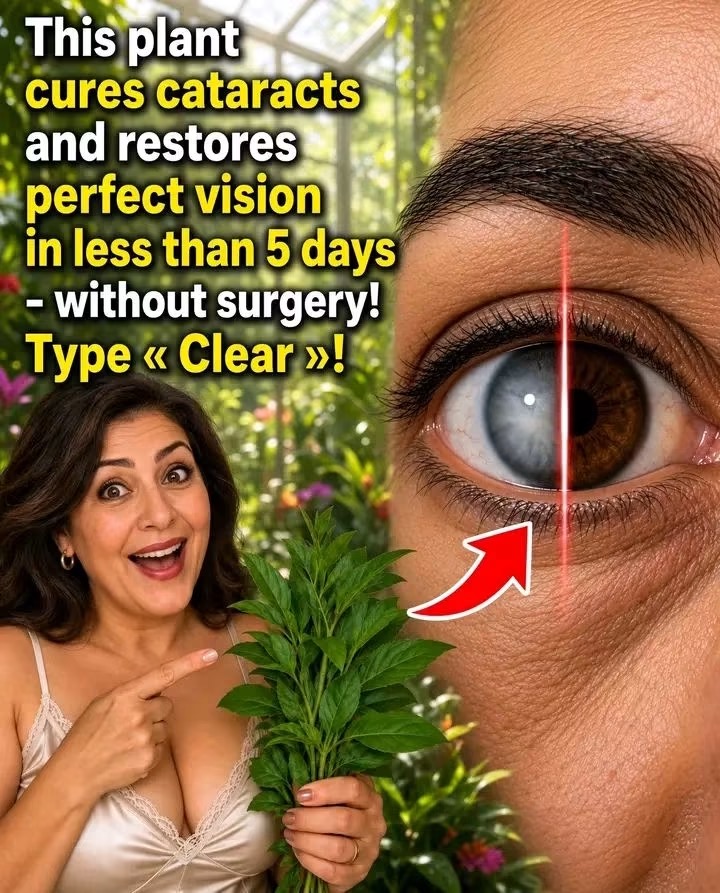
Social media posts sometimes make dramatic claims about plants that supposedly remove cataracts within a few days and restore perfect vision without medical treatment. One viral image, for example, claims that a particular plant can cure cataracts and restore perfect vision in less than five days.
These claims can be appealing, but they should be treated carefully.
There is currently no established evidence that a household plant, herbal drink, or homemade eye remedy can remove an existing cataract in five days or restore perfect vision without appropriate medical treatment.
The good news is that modern cataract treatment is highly effective for people whose cataracts significantly affect their daily lives.
What Is a Cataract
A cataract occurs when the natural lens inside the eye becomes cloudy.
The lens normally helps focus light onto the retina, allowing us to see clearly. When the lens becomes cloudy, light does not pass through it normally, and vision can gradually become blurry, hazy, or less clear.
Cataracts commonly develop with age, but they can also be associated with factors such as diabetes, certain medications, previous eye injuries, or other medical conditions.
The symptoms can develop slowly, which means some people may not immediately realize that their vision is changing.
Common symptoms include:
- Blurry or cloudy vision
- Difficulty seeing at night
- Increased sensitivity to bright lights
- Glare around headlights
- Faded or less vivid colors
- Frequent changes in glasses prescription
- Difficulty reading
- Double vision in some cases
- Problems performing everyday activities
Because several eye conditions can cause similar symptoms, an eye examination is important before assuming that the problem is a cataract.
Can a Plant Cure Cataracts
There is currently no proven plant that can remove an established cataract in a few days.
The National Eye Institute states that surgery is currently the only way to get rid of a cataract. Early cataracts may sometimes be managed temporarily with brighter lighting, anti-glare sunglasses, magnification, or an updated glasses prescription, but these measures do not remove the cloudy lens.
This is an important distinction.
A healthy food may provide vitamins, minerals, antioxidants, or other plant compounds. That does not mean it can reverse a cloudy lens that has already developed a cataract.
Nutrition is important for general health, including eye health, but it should not be confused with a treatment that physically removes a cataract.
What About Herbal Remedies
Herbs and plants contain many biologically active compounds, and scientists continue to study their potential effects on human health.
However, laboratory research is different from proving that a plant can cure a disease in people.
A substance may show antioxidant or protective effects in laboratory experiments without being able to reverse a cataract when consumed as a tea, juice, or supplement.
The dose, absorption, metabolism, safety, and interaction with medications all matter.
For that reason, claims such as “this plant removes cataracts in five days” require strong clinical evidence involving people with cataracts.
Without such evidence, the claim should not be treated as an established medical fact.
Can Vitamins Prevent or Reverse Cataracts
A common reason people believe that a particular plant can cure cataracts is because many plants contain antioxidants.
Antioxidants are important nutrients and compounds found in many fruits and vegetables. However, taking antioxidants does not automatically mean that an existing cataract will disappear.
Large clinical research conducted by the National Eye Institute investigated nutritional supplements and cataracts. The AREDS and AREDS2 studies found that the tested supplement formulations did not have an overall effect on cataract.
This does not mean that a healthy diet is unimportant.
Eating a varied diet containing vegetables, fruits, whole grains, protein sources, and other nutritious foods can support overall health.
It simply means that nutrition should not be presented as a guaranteed cure for an established cataract.
Why the Five Day Claim Is Misleading
The claim that cataracts can be cured in less than five days is especially concerning because cataracts usually develop gradually.
A cataract is a physical clouding of the natural lens of the eye.
Simply drinking a plant-based preparation does not have a proven ability to make that cloudy lens become clear again within several days.
People experiencing vision problems should also be careful because not every cloudy or blurry vision problem is caused by a cataract.
Glaucoma, diabetic eye disease, macular degeneration, corneal problems, retinal conditions, and other eye disorders can also affect vision.
Delaying an eye examination because of a viral remedy could therefore mean delaying treatment for another eye condition.
Is Cataract Surgery Really Necessary
Not everyone with a cataract needs surgery immediately.
The National Eye Institute explains that surgery may be recommended when cataracts begin interfering with everyday activities such as reading, driving, or watching television. People with early cataracts may sometimes manage their symptoms with brighter lighting, anti-glare measures, magnification, or updated glasses.
However, when a cataract significantly affects vision and quality of life, cataract surgery is the established treatment.
The NHS also states that cataract surgery is the only way to get rid of cataracts. During the procedure, the cloudy natural lens is removed and replaced with an artificial lens.
How Cataract Surgery Works
Cataract surgery involves removing the cloudy natural lens and replacing it with an artificial intraocular lens.
The procedure is commonly performed using local anesthesia.
The surgeon makes a small opening, breaks up and removes the cloudy lens, and places an artificial lens inside the eye.
According to the NHS, the operation usually takes around 20 to 45 minutes and most people can go home the same day.
Recovery varies from person to person, and the eye specialist provides specific instructions for aftercare.
Cataract surgery is a medical procedure, so it has potential risks and complications, although serious complications are uncommon.
Can Cataracts Go Away on Their Own
Cataracts generally do not simply disappear on their own.
They may progress slowly, and the effect on vision can vary between people.
Some people with early cataracts can continue their normal activities for a long time without surgery. Others may eventually find that their vision has become too poor for reading, driving, working, or other everyday tasks.
Regular eye examinations can help monitor changes and determine when treatment may be appropriate.
Can Eye Drops Cure Cataracts
At present, there are no commonly available eye drops proven to remove an established cataract.
Eye drops are often used during cataract surgery and during recovery, but this is different from using eye drops to dissolve the cataract itself.
Some websites and social media accounts promote homemade mixtures, herbal drops, oils, honey, lemon, or other substances for cataracts.
Putting unapproved substances directly into the eye can be dangerous.
The eye is highly sensitive, and substances that are safe to eat are not necessarily safe to put into the eye.
Why You Should Not Put Homemade Remedies in Your Eyes
The surface of the eye can be damaged by inappropriate substances.
Homemade eye remedies may contain microorganisms, incorrect concentrations, contaminants, or irritating compounds.
Even natural ingredients can cause inflammation or injury.
A product intended for oral consumption is not automatically sterile or suitable for use in the eye.
This is especially important when dealing with a condition that affects vision.
If an eye product is needed, it should be specifically designed and approved for ophthalmic use, and it should be used according to professional advice.
Can a Healthy Diet Support Eye Health
A healthy diet is an important part of general health and can support the body in many ways.
A varied diet can include:
- Leafy green vegetables
- Colorful fruits and vegetables
- Beans and legumes
- Whole grains
- Fish and other sources of healthy fats
- Nuts and seeds
- Adequate protein
- Sufficient water
These foods provide a range of nutrients that the body needs.
However, eating healthy foods should not be presented as a guarantee that cataracts will disappear.
Good nutrition and medical treatment have different roles.
Protecting Your Eyes
There are several practical habits that can support eye health.
Protecting your eyes from excessive ultraviolet exposure is one useful step. Sunglasses that provide appropriate UV protection and a hat can help reduce exposure to strong sunlight.
Managing conditions such as diabetes and maintaining regular medical care can also be important for overall eye health.
Smoking is another factor associated with several eye diseases, so avoiding tobacco is beneficial for general health.
Regular eye examinations are particularly important as people get older or when vision changes occur.
What About Cataract Supplements
Some supplements are heavily promoted online as “natural cataract cures.”
People should be careful with these claims.
The National Eye Institute’s AREDS research found that the studied supplement formulations did not prevent or treat cataracts overall. The research also demonstrated why supplements designed for one eye condition should not automatically be assumed to work for another.
For example, AREDS2 supplements are associated with specific benefits for certain people with age-related macular degeneration, but that does not mean the same supplements remove cataracts.
Taking high doses of vitamins or minerals without medical advice can also have risks.
A New Cataract Treatment Research Is Not the Same as a Proven Plant Cure
Scientists are actively researching alternatives and improvements to cataract treatment.
In 2024, the National Eye Institute reported research involving a protein called RNF114 that reversed cataracts in animal models involving ground squirrels and rats. Researchers described this as a possible future surgery-free strategy, not an established treatment for people.
This distinction is important.
Scientific research can identify promising possibilities without meaning that a treatment is already available or proven in humans.
A laboratory or animal study should never be turned into a social media claim that a plant can cure cataracts in five days.
When Should You See an Eye Doctor
You should arrange an eye examination if you notice persistent changes in your vision.
Important symptoms include:
- Increasingly blurry vision
- Difficulty reading
- Problems driving at night
- Increasing glare
- Sudden changes in vision
- Eye pain
- New flashes of light
- A sudden increase in floaters
- A dark curtain or shadow across your vision
Some sudden symptoms can indicate an urgent eye problem rather than a cataract.
The NHS advises urgent assessment for sudden flashes, a sudden increase in floaters, a dark curtain or shadow across vision, or sudden blurred vision because these can be signs of retinal problems.
Frequently Asked Questions
Can a plant cure cataracts in five days?
There is no established clinical evidence that a plant can cure an existing cataract within five days.
Can cataracts be cured without surgery?
At present, surgery is the established way to remove an existing cataract. Early cataracts may sometimes be managed temporarily with glasses, better lighting, or other practical measures, but these do not remove the cataract.
Can herbal eye drops remove cataracts?
There is no proven herbal eye drop that can remove an established cataract. Homemade substances should not be put into the eye because they may cause injury or infection.
Can vitamins reverse cataracts?
There is no reliable evidence that taking vitamins can reverse an established cataract. Large clinical research has not shown an overall cataract benefit from the AREDS or AREDS2 supplement formulations.
Is cataract surgery safe?
Cataract surgery is a common and generally successful procedure, but like every operation, it has potential risks. An eye specialist can explain the benefits and risks for an individual patient.
Do I need surgery immediately after being diagnosed with a cataract?
Not necessarily. Early cataracts may not interfere significantly with daily activities. The decision to have surgery is generally based on how much the cataract affects vision and everyday life.
Final Thoughts
The idea of curing cataracts with a plant in less than five days may sound attractive, but there is currently no reliable evidence supporting this claim.
Cataracts involve clouding of the natural lens inside the eye. Healthy foods and plants can provide valuable nutrients, but they should not be confused with proven cataract treatment.
For people with early cataracts, updated glasses, brighter lighting, and other practical measures may help with vision. When cataracts begin to interfere significantly with daily activities, cataract surgery is the established treatment for removing the cloudy lens.
The safest approach is to have vision changes evaluated by an eye-care professional rather than relying on a viral recipe or homemade eye remedy.
Key Takeaways
- There is no established evidence that a plant cures cataracts in five days.
- Cataracts are caused by clouding of the natural lens inside the eye.
- Healthy foods can support general nutrition but are not proven to remove cataracts.
- There are no commonly available eye drops proven to eliminate an established cataract.
- Homemade mixtures should not be placed directly into the eyes.
- Early cataracts can sometimes be managed with better lighting, anti-glare measures, magnification, or updated glasses.
- Cataract surgery is currently the established way to remove an existing cataract.
- New surgery-free approaches are being researched, but promising animal research is not the same as an approved human treatment.
- Sudden vision changes require prompt professional assessment.
Health Disclaimer
This article is for general educational purposes only and does not diagnose, treat, cure, or prevent any disease. If you have cataracts, blurred vision, eye pain, sudden vision changes, or another eye condition, consult a qualified eye-care professional. Do not put homemade plant extracts, juices, oils, or other non-approved substances into your eyes.